


Introduction
In late March 2022, the Ronin Network — the Ethereum-adjacent sidechain purpose-built for Axie Infinity — disclosed that attackers had drained roughly 173,600 ETH and 25.5M USDC from its bridge contract. At then-prevailing prices the loss was widely reported at around $625M, making it the largest crypto theft on record at the time. The attribution to North Korea’s Lazarus Group, confirmed by the U.S. Treasury weeks later, turned what looked like a protocol failure into a geopolitical case study.
Nearly four years later, Ronin’s operators have announced a different kind of disclosure: the network will migrate from its existing permissioned sidechain architecture to an OP Stack Layer 2 settling to Ethereum. The framing in announcements emphasizes scalability, alignment with the broader Ethereum rollup ecosystem, and continuity for the games already deployed on Ronin. But the more interesting question, and the one this piece focuses on, is what the migration changes about the trust assumptions that allowed the 2022 hack to happen in the first place.
We treat Ronin as a single, instructive arc — a chain that started as an explicit trade of decentralization for throughput, paid for that trade with the largest bridge exploit to date, spent years rebuilding validator topology and reimbursing users, and is now resolving the remaining structural tension by giving up sidechain status altogether. The question is whether changing the architectural label from “sidechain” to “rollup” meaningfully changes the failure modes a sophisticated adversary can target, or whether it shifts them to a different layer of the stack.
Why Ronin existed in the first place

To understand the attack, it helps to understand why Ronin was built the way it was. In 2020 and 2021, Axie Infinity was the dominant on-chain game by user activity, with several million monthly active addresses at peak — almost all of them interacting with Axie NFTs and the in-game SLP and AXS tokens. Ethereum mainnet fees during that period regularly exceeded what a typical Axie player in the Philippines or Venezuela could afford to pay for a single in-game transaction. The mismatch between the game’s unit economics and L1 gas costs was existential.
Sky Mavis, Axie’s developer, responded by building Ronin: an Ethereum-compatible sidechain using a Proof-of-Authority consensus mechanism with a small validator set. Sidechain here has a precise meaning: Ronin had its own consensus, its own validators, and its own security budget, and it connected to Ethereum only via a custodial bridge contract. There was no cryptographic guarantee from Ethereum that Ronin’s state transitions were valid; Ronin’s safety rested entirely on the honesty and operational security of its validator set.
That design was a deliberate trade. PoA with a handful of vetted validators delivers the throughput and predictable fees that an on-chain game requires. The cost is that the bridge — the contract on Ethereum holding the deposited assets — is only as safe as the signatures controlling it. At launch and through early 2022, Ronin’s bridge required five of nine validator signatures to authorize withdrawals. Four of those nine were operated directly by Sky Mavis. A fifth, run by the Axie DAO, had at one point delegated signing rights to Sky Mavis to handle a load spike, and that delegation was never revoked.
This is the structural fact that mattered. The bridge’s threshold was five of nine, but the effective threshold for a single organization was, for a period, five of five — because Sky Mavis controlled four validators outright and held delegated signing authority over a fifth. A compromise of Sky Mavis’s internal key management was therefore a compromise of the bridge.
The Lazarus attack vector

The 2022 attack, as later reconstructed by Sky Mavis’s own post-mortems and subsequent reporting, combined two distinct intrusions.
The social engineering component
The initial foothold was not a smart contract exploit. Investigators described a spear-phishing campaign targeting Sky Mavis engineers, in which attackers posed as recruiters from a fictitious company and conducted multiple rounds of mock interviews. Late in that process, a target received a document containing malware. Once executed, the payload gave the attackers access to internal Sky Mavis systems, and from there to validator infrastructure.
This is the part of the post-mortem most often glossed over in industry summaries, but it is the operationally important one. The attackers did not break cryptography; they did not find a re-entrancy bug; they did not exploit an oracle. They obtained the private keys to four validators by compromising the humans and machines that held them. Any system whose safety reduces to “this small group of operators will not be socially engineered” carries this risk by construction.
The delegated signature
Four validators alone were not enough — the threshold was five. The fifth signature came from the Axie DAO validator. As Sky Mavis disclosed after the fact, that validator had delegated its signing authority to Sky Mavis in November 2021 during a period of heavy network load, and the access list controlling that delegation had not been revoked when load normalized. By the time of the attack, anyone who controlled Sky Mavis’s relevant infrastructure could also produce a signature on behalf of the Axie DAO validator. The attackers did exactly that.
With five valid signatures in hand, they submitted two withdrawal transactions on the Ethereum side — one for roughly 173,600 ETH and a second for around 25.5M USDC — and the bridge contract paid out as designed. There was nothing wrong, in a narrow sense, with the bridge contract’s logic. It received five valid signatures from authorized addresses and honored the withdrawal request.
The detection gap
A detail that compounds the failure: the attack occurred on March 23, 2022, but was not detected until March 29, six days later, when a user reported being unable to withdraw 5,000 ETH. There was no automated alerting that flagged a withdrawal of this magnitude in real time. For nearly a week, the protocol’s largest-ever outflow sat unobserved. This is a monitoring failure layered on top of the consensus failure, and it tells you something about how immature operational tooling around even very large bridges was at the time.
Aftermath and reimbursement

The recovery process is worth examining because it is one of the few cases where an exploited bridge of this size achieved something close to full user restitution, and the mechanics of that restitution shaped Ronin’s subsequent posture.
In early April 2022, Sky Mavis closed a $150M funding round led by Binance with participation from Animoca, a16z, and others, explicitly earmarked to backstop the bridge shortfall. Combined with Sky Mavis’s and Axie’s own balance sheets, the company committed to making affected users whole in ETH terms. The Ronin bridge was paused immediately after detection and remained offline for roughly three months while the validator set was expanded and the bridge contract was redesigned and audited.
When the bridge relaunched in late June 2022, user funds were restored, but a meaningful quantity of ETH on the Ronin side remained uncollateralized on a fully one-for-one basis with assets in the bridge contract. Sky Mavis publicly committed to a multi-year repayment schedule and reported, in subsequent disclosures, progress toward closing that gap. The point for our purposes is not to score the repayment but to note that the project survived a $625M loss — something most protocols of comparable size would not have — because of three factors: a deep-pocketed corporate sponsor in Sky Mavis, an external strategic investor willing to lead the recapitalization, and a user base concentrated enough that coordination on a reimbursement plan was tractable. None of those conditions generalize.
In parallel, U.S. Treasury’s OFAC sanctioned the wallet address associated with the stolen funds in April 2022, formalizing the attribution to Lazarus. A substantial portion of the stolen ETH moved through Tornado Cash in the weeks that followed, and the sanctions response to that laundering — including the August 2022 designation of Tornado Cash itself — became one of the most consequential regulatory actions in crypto history. Ronin was, in this sense, the catalyzing event for a broader policy shift, though that thread is outside our scope here.
Validator expansion
Operationally, the most important post-incident change was the expansion of the validator set. Ronin moved over subsequent months from nine validators toward a target of around twenty, and then continued expanding toward larger numbers, with new validators including organizations such as Binance, Nansen, Animoca, and several gaming guilds. Sky Mavis’s own share of the validator set was reduced. The Axie DAO delegation arrangement was unwound.
This is a real improvement, and it raises the cost of an equivalent attack. But it does not change the underlying trust model. A larger PoA set is still a permissioned set; the security still depends on operational discipline at a finite, named group of organizations; and the threshold for collusion or compromise is still finite. If the original failure mode was “concentrated validator keys can be socially engineered,” the post-2022 architecture made that mode more expensive to exploit without eliminating it.
What an OP Stack migration actually changes
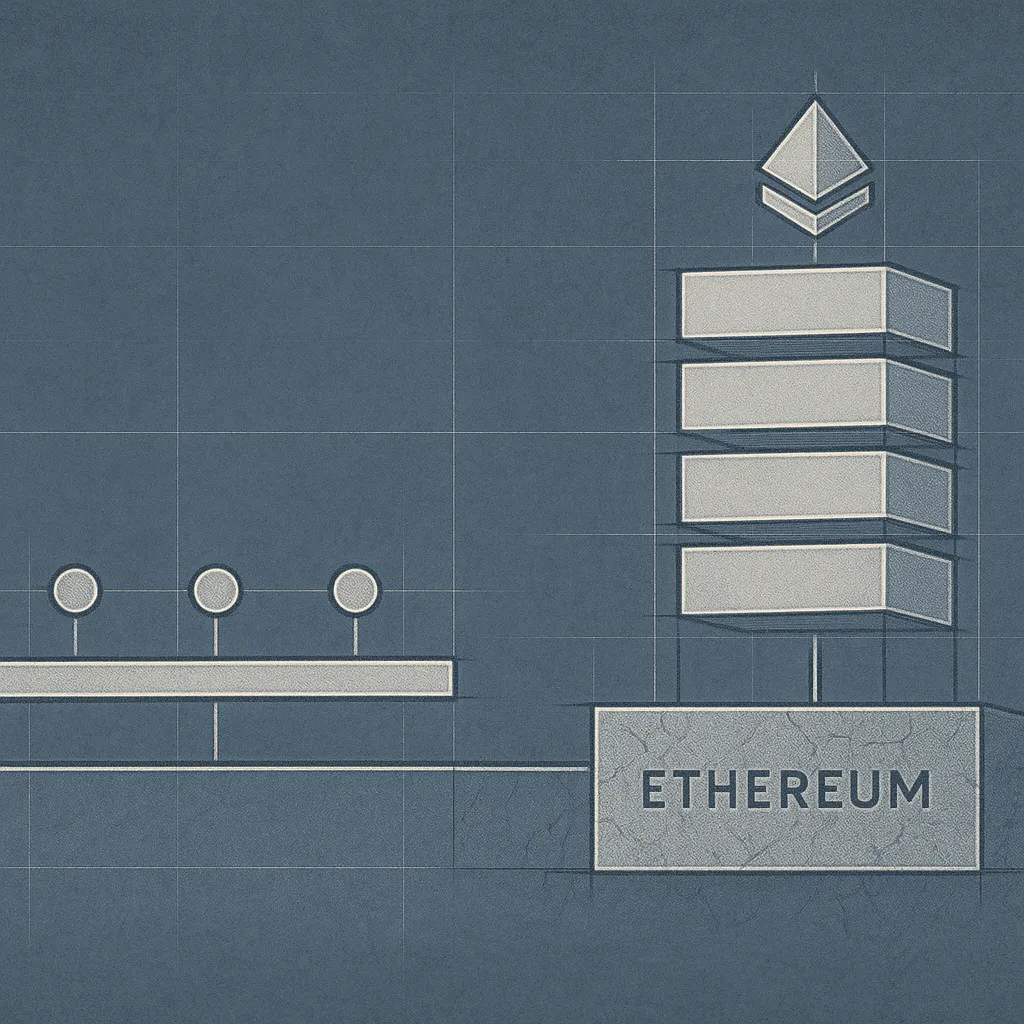
The proposed migration moves Ronin from a sidechain to an optimistic rollup built on the OP Stack — the modular codebase originated by OP Labs and shared across the Superchain ecosystem (Base, Optimism Mainnet, and others). To assess what this changes about the trust model, it helps to be precise about how the two architectures differ where it matters.
Data availability and state validity
A sidechain like Ronin posts no transaction data to Ethereum. The full history of Ronin lives on Ronin’s own nodes, and Ethereum has no way to independently verify that any given Ronin state was produced by a valid execution of Ronin’s rules. The bridge contract on Ethereum trusts the validator signatures it receives. That is the entire security model.
An OP Stack rollup, by contrast, posts compressed transaction batches to Ethereum — historically as calldata, and more recently, after EIP-4844, as blobs. From those batches, any party can independently reconstruct the rollup’s state and check whether the state root claimed by the sequencer is the correct one. If a claimed state root is invalid, a fault proof can in principle be submitted during the challenge window to revert it.
This is a structurally different security property. Withdrawals from an OP Stack rollup to Ethereum are not authorized by a multisig signing off on state; they are authorized by a state root that has cleared the challenge window without a valid fault proof being submitted. The hostile cost of forging a withdrawal is therefore not “compromise N of M signing keys” — it is “produce an invalid state root and prevent any honest party from challenging it for the duration of the challenge window.”
In practice, the picture is more complicated. As of late 2025, several OP Stack chains still rely on a Security Council multisig with the ability to override the fault proof system, and fault proofs themselves are a relatively recent addition to the production OP Stack — they went live on Optimism Mainnet in mid-2024 and are being progressively rolled out across the Superchain. The OP Stack roadmap describes stages of decentralization, and most chains today sit somewhere between fully trusted and fully trustless.
So the honest comparison is not “permissioned sidechain versus trustless rollup.” It is “permissioned sidechain with PoA validators versus optimistic rollup with a centralized sequencer, an emerging fault proof system, and a Security Council multisig as backstop.” That is still a meaningful improvement — data availability on Ethereum alone is a substantial step — but it is not a categorical shift to trustlessness.
Sequencer centralization
In an OP Stack chain, transaction ordering is performed by a sequencer, which in current Superchain deployments is run by the chain’s operating organization. A compromised sequencer cannot steal user funds — it cannot produce an invalid state root that clears the challenge window — but it can censor transactions and reorder them within its window. For Ronin’s gaming use case, sequencer behavior matters less for fund safety and more for application fairness; an in-game economy where the sequencer can selectively delay or reorder transactions has user-facing problems even if no one can drain the bridge.
The migration therefore changes the locus of trust. Instead of trusting a PoA validator set with custody of bridge assets, users trust a sequencer with ordering and a fault proof system (plus Security Council) with state validity. The first concern (custody) is the one the 2022 attack exploited and is meaningfully addressed. The second concern (ordering) is new and matters for application design.
The forced inclusion path
OP Stack rollups expose a mechanism, often called the forced inclusion or L1-deposit path, by which a user can submit a transaction directly through an Ethereum L1 contract that the sequencer must eventually include. This gives users a censorship-resistance escape hatch independent of the sequencer’s cooperation. The latency on this path is higher than ordinary L2 transactions, but its existence changes the worst case: a user whose withdrawal is being censored has a defined recourse.
This was not available on the sidechain. If Ronin’s validators had refused to process a withdrawal in 2022, a user had no on-chain remedy; their only option was off-chain coordination with Sky Mavis. The L1 escape hatch is not glamorous infrastructure, but it is the kind of thing whose value becomes apparent only in adversarial conditions.
What it does not change

Several risks Ronin carried as a sidechain persist in some form after the migration.
Bridge risk during transition
Any migration of this scale requires moving canonical asset representations from the existing Ronin sidechain to the new L2. Historically, chain migrations have created concentrated windows of risk: bridge contracts holding large balances during the transition, new contracts being audited under time pressure, and user flows being routed through novel paths. The 2022 hack itself targeted exactly this kind of bridging infrastructure, and the most acute period of risk for the migration is likely to be the migration window itself rather than steady-state operation afterward.
The detail to watch is how Ronin handles the canonical bridge between the old chain state and the new L2. If the design uses a clean state snapshot at a defined block height, with on-chain proofs of inclusion for user balances, the trust footprint of the transition is smaller. If it relies on operator-controlled migration scripts with multisig sign-off on balance attestations, the transition reintroduces a concentrated trust point of the kind the long-term architecture is trying to eliminate.
Smart contract surface
The OP Stack itself, the canonical bridge contracts on Ethereum, and Ronin’s application contracts are all complex software. The 2022 attack did not exploit smart contract logic, but other major losses since — across Wormhole, Nomad, Multichain, and others — have. Migrating to a rollup substitutes one set of contract risks for another rather than eliminating contract risk altogether. The OP Stack contracts have been audited extensively and are battle-tested on chains holding very large TVL, but the surface area for a hostile, well-resourced state actor is not zero.
Operational security at the operator
The 2022 attack began with spear-phishing of Sky Mavis engineers. After the migration, Sky Mavis still runs critical infrastructure — the sequencer, likely the initial fault proof proposer, components of the upgrade keys. The set of people who could be socially engineered into compromising critical signing material is different but not empty. An OP Stack chain whose sequencer keys are compromised by a Lazarus-style intrusion does not lose user funds in the way Ronin did in 2022, but it does lose liveness and can be coerced into ordering decisions that damage applications. The operational security question — how does this organization protect its keys from a state-level adversary — does not go away.
Application-layer concentration
Ronin’s economic activity remains heavily concentrated in a small number of games, with Axie Infinity historically dominant and a second tier of titles built on top of the chain. The migration does not change the fact that a single application’s user trajectory determines most of the chain’s transaction volume. This is a business risk rather than a security risk, but it shapes how robust the chain’s economics will be on the other side of the migration.
Implications and open questions

Ronin’s arc is unusual in crypto because it spans almost the full lifecycle of an architectural decision: a deliberate trade of decentralization for performance, a catastrophic exploitation of that trade by a sophisticated adversary, a recapitalization and partial restitution that most projects could not have funded, and finally a re-architecting that walks back the original trade. Few protocols get the chance to revise a foundational decision after losing $625M; most are simply gone.
The migration’s value depends on whether one treats the 2022 hack as primarily a key management failure or primarily an architectural failure. If it was a key management failure, then a larger and better-segmented PoA set — which Ronin already implemented — was the correct fix, and moving to OP Stack is mostly a scaling and ecosystem-alignment decision. If it was an architectural failure, then the move to a rollup is the structural correction: it removes from the trust perimeter the property (validator key custody of bridge assets) that the attackers exploited. We think both framings are partially correct, and that the architectural framing is the more important one because it does not depend on the operator’s future discipline.
Several things are worth watching as the migration proceeds.
First, the maturity of the fault proof system on Ronin’s L2 at launch. A rollup whose fault proofs are not yet live, or whose Security Council can override them with a low threshold, retains a meaningful share of the trust assumptions of a sidechain. The relevant questions are: who sits on the Security Council, what is the threshold, what is the timelock on upgrades, and what is the published roadmap for removing the override capability.
Second, the migration mechanics for in-flight assets. Any operator-controlled bridging step is the highest-risk part of the entire transition. If a snapshot-and-proof approach is used, the migration is auditable; if a custodial intermediary is used, the migration window is a target.
Third, the sequencer architecture. A centralized sequencer is the OP Stack default and is acceptable as a starting point, but the long-running concern for a gaming chain is whether the sequencer’s ordering decisions will be predictable, censorship-resistant via the L1 path, and eventually distributed. The Superchain’s stated direction is toward decentralized sequencing; the timeline for any given chain is not.
Fourth, what happens to Ronin’s ecosystem revenue model. PoA validators on Ronin earned fees; OP Stack chains generate sequencer revenue that, by convention in the Superchain, is partially shared upstream. The economic restructuring underneath the architectural one is non-trivial and shapes incentives for everyone who runs infrastructure on the chain.
The broader lesson, applicable beyond Ronin, is that the line between “sidechain” and “rollup” is the line between trusting a finite set of named operators and trusting Ethereum’s data availability and proof system. That line has costs — rollups inherit Ethereum’s economics and latency in ways sidechains do not — but it is the line that determines whether a $625M loss requires a corporate balance sheet to absorb or whether it is structurally prevented. Four years on, Ronin appears to be choosing the latter. Whether the choice is executed cleanly is the part that has not happened yet.
서론
2022년 3월 말, Axie Infinity를 위해 특별히 설계된 이더리움 사이드체인 **로닌 네트워크(Ronin Network)**는 공격자들이 브릿지 컨트랙트에서 약 173,600 ETH와 2,550만 USDC를 탈취했다고 공시했다. 당시 시세 기준으로 피해액은 약 6억 2,500만 달러로 보고되었으며, 이는 당시까지 역대 최대 규모의 암호화폐 도난 사건이었다. 몇 주 후 미국 재무부가 북한의 라자루스 그룹(Lazarus Group) 소행으로 공식 확인하면서, 단순한 프로토콜 사고로 보였던 이 사건은 지정학적 사례 연구로 격상되었다.
약 4년이 지난 지금, 로닌의 운영사는 전혀 다른 종류의 발표를 내놓았다. 기존의 허가형 사이드체인 아키텍처에서 이더리움에 정산하는 OP Stack 레이어 2로 마이그레이션한다는 것이다. 공식 발표는 확장성, 이더리움 롤업 생태계와의 연계, 그리고 이미 배포된 게임들의 연속성을 강조한다. 하지만 더 흥미로운 질문은, 이 글이 집중하는 바로 그 질문은, 이 마이그레이션이 2022년 해킹을 가능하게 했던 신뢰 가정(trust assumption)을 실질적으로 무엇을 바꾸느냐는 것이다.
우리는 로닌을 하나의 완결된 교훈적 궤적으로 다룬다. 처음에는 처리량을 위해 탈중앙화를 명시적으로 포기했고, 그 대가로 역대 최대 규모의 브릿지 익스플로잇을 당했으며, 수년간 밸리데이터 구조를 재건하고 사용자들에게 보상하는 과정을 거쳐, 이제는 사이드체인이라는 지위 자체를 포기함으로써 남아 있던 구조적 긴장을 해소하려 하고 있다. 핵심 질문은 이것이다. 아키텍처 레이블을 “사이드체인”에서 “롤업”으로 바꾸는 것이 정교한 공격자가 노릴 수 있는 실패 모드를 의미 있게 바꾸는가, 아니면 그저 스택의 다른 계층으로 이동시키는 데 그치는가.
로닌이 존재했던 이유
공격을 이해하려면 로닌이 왜 그런 방식으로 설계되었는지부터 이해해야 한다. 2020년과 2021년, Axie Infinity는 사용자 활동 기준으로 가장 지배적인 온체인 게임이었으며, 최고조에는 수백만 개의 월간 활성 주소가 Axie NFT와 게임 내 토큰인 SLP, AXS와 상호작용했다. 당시 이더리움 메인넷 수수료는 필리핀이나 베네수엘라의 일반 Axie 플레이어가 게임 내 트랜잭션 한 건에 지불하기 어려운 수준을 정기적으로 상회했다. 게임의 단위 경제와 L1 가스 비용 사이의 괴리는 사업 존속 자체를 위협했다.
Axie의 개발사 Sky Mavis는 이에 대응해 로닌을 구축했다. 소규모 밸리데이터 집합으로 지분증명 권위(Proof-of-Authority, PoA) 합의 메커니즘을 사용하는 이더리움 호환 사이드체인이었다. 여기서 사이드체인이란 정확한 의미를 가진다. 로닌은 자체적인 합의와 밸리데이터, 자체 보안 예산을 갖고 있었으며, 이더리움과는 오직 수탁형 브릿지 컨트랙트를 통해서만 연결되었다. 이더리움으로부터 로닌의 상태 전이가 유효하다는 암호학적 보증은 존재하지 않았다. 로닌의 안전성은 오로지 밸리데이터 집합의 정직성과 운영 보안에 달려 있었다.
이 설계는 의도적인 트레이드오프였다. 소수의 검증된 밸리데이터로 구성된 PoA는 온체인 게임에 필요한 처리량과 예측 가능한 수수료를 제공한다. 그 대가는 이더리움에서 예치 자산을 보관하는 브릿지 컨트랙트의 보안이 이를 제어하는 서명의 안전성에 전적으로 달린다는 것이다. 출시 당시부터 2022년 초까지, 로닌의 브릿지는 출금 승인에 9개 밸리데이터 중 5개의 서명을 요구했다. 이 중 4개는 Sky Mavis가 직접 운영했다. 다섯 번째는 Axie DAO가 운영했는데, 한때 트래픽 급증을 처리하기 위해 서명 권한을 Sky Mavis에 위임했고, 그 위임이 한 번도 철회되지 않았다.
이것이 결정적인 구조적 사실이었다. 브릿지의 임계값은 9분의 5였지만, 한 조직에 실질적으로 요구되는 임계값은 한동안 5분의 5였다. Sky Mavis가 4개의 밸리데이터를 직접 통제하고 다섯 번째에 대한 서명 권한을 위임받고 있었기 때문이다. Sky Mavis의 내부 키 관리가 침해되는 순간 브릿지도 함께 침해되는 구조였다.
라자루스 공격 벡터
이후 Sky Mavis의 사후 분석과 후속 보도를 통해 재구성된 2022년 공격은 두 가지 별개의 침입이 결합된 형태였다.
소셜 엔지니어링 요소
최초 거점 확보는 스마트 컨트랙트 익스플로잇이 아니었다. 조사관들은 Sky Mavis 엔지니어들을 표적으로 한 스피어 피싱 캠페인을 묘사했다. 공격자들은 가상의 회사 리크루터를 사칭해 여러 차례 모의 면접을 진행했고, 그 과정 후반부에 한 표적에게 악성 코드가 담긴 문서를 전달했다. 실행되자마자 해당 페이로드는 공격자에게 Sky Mavis 내부 시스템에 대한 접근권을 부여했고, 이를 통해 밸리데이터 인프라까지 침투할 수 있었다.
업계 요약본에서 가장 자주 생략되는 부분이 바로 이 사후 분석 내용이지만, 운영적으로 가장 중요한 대목이다. 공격자들은 암호학을 뚫지 않았다. 재진입 버그를 찾지도, 오라클을 익스플로잇하지도 않았다. 그들은 키를 보유한 사람과 기계를 침해함으로써 4개 밸리데이터의 개인 키를 손에 넣었다. 안전성이 “이 소수의 운영자 집단은 소셜 엔지니어링을 당하지 않을 것”이라는 전제로 귀결되는 시스템은 구조적으로 이 위험을 내재한다.
위임된 서명
4개의 밸리데이터만으로는 부족했다. 임계값은 5였다. 다섯 번째 서명은 Axie DAO 밸리데이터에서 나왔다. Sky Mavis가 사후에 공개한 바에 따르면, 해당 밸리데이터는 2021년 11월 네트워크 부하가 극심하던 시기에 서명 권한을 Sky Mavis에 위임했고, 부하가 정상화된 후에도 접근 목록에서 그 위임이 철회되지 않았다. 공격 당시, Sky Mavis의 관련 인프라를 통제하는 자라면 누구든 Axie DAO 밸리데이터를 대신해 서명을 생성할 수 있었다. 공격자들은 정확히 그렇게 했다.
유효한 서명 5개를 확보한 뒤, 그들은 이더리움 측에 두 건의 출금 트랜잭션을 제출했다. 약 173,600 ETH에 해당하는 것과 약 2,550만 USDC에 해당하는 것이었다. 브릿지 컨트랙트는 설계된 대로 자금을 지급했다. 좁은 의미에서 브릿지 컨트랙트의 로직 자체에는 아무런 문제도 없었다. 승인된 주소에서 유효한 서명 5개를 받았고, 출금 요청을 이행했을 뿐이다.
탐지 공백
실패를 더욱 심화시킨 세부 사항이 있다. 공격은 2022년 3월 23일에 발생했지만, 3월 29일 한 사용자가 5,000 ETH 출금이 불가능하다고 신고하기 전까지 6일간 발견되지 않았다. 이 규모의 출금을 실시간으로 감지하는 자동 알림 시스템이 존재하지 않았다. 거의 일주일 동안 프로토콜 역사상 최대 규모의 자금 유출이 아무도 모르게 방치되었다. 이는 합의 실패 위에 모니터링 실패가 겹쳐진 것으로, 당시 대형 브릿지를 둘러싼 운영 도구가 얼마나 미성숙했는지를 잘 보여준다.
사후 대응과 보상
복구 과정은 살펴볼 가치가 있다. 이 규모의 익스플로잇을 당한 브릿지 중 사용자 자산을 거의 완전히 복구한 보기 드문 사례이며, 그 복구 방식이 로닌의 이후 행보를 결정지었기 때문이다.
2022년 4월 초, Sky Mavis는 **바이낸스(Binance)**가 주도하고 Animoca, a16z 등이 참여한 1억 5,000만 달러 규모의 펀딩 라운드를 마감했다. 이 자금은 명시적으로 브릿지 손실 충당을 위한 것이었다. Sky Mavis와 Axie 자체 재무를 합쳐, 회사는 피해 사용자들에게 ETH 기준으로 전액 보상하겠다고 약속했다. 로닌 브릿지는 발견 즉시 중단되었고, 밸리데이터 집합을 확장하고 브릿지 컨트랙트를 재설계·감사하는 동안 약 세 달간 운영이 중단되었다.
2022년 6월 말 브릿지가 재가동될 때 사용자 자금은 복구되었지만, 로닌 측의 ETH 상당량은 브릿지 컨트랙트 자산과 완전한 1:1 비율로 담보되지 않은 상태가 일정 기간 지속되었다. Sky Mavis는 공개적으로 수년에 걸친 상환 일정을 약속했고, 이후 공시를 통해 그 격차를 좁혀가고 있음을 보고했다. 여기서 우리가 주목할 것은 상환 점수를 매기는 것이 아니라, 이 프로젝트가 6억 2,500만 달러의 손실에서 살아남았다는 사실이다. 비슷한 규모의 대부분 프로토콜이라면 불가능했을 일이며, 이것이 가능했던 이유는 세 가지다. 든든한 재무를 갖춘 기업 스폰서인 Sky Mavis, 재자본화를 주도할 의지가 있는 외부 전략적 투자자, 그리고 보상 계획을 조율할 수 있을 만큼 충분히 집중된 사용자 기반. 이 중 어떤 조건도 일반화할 수 없다.
한편, 미국 재무부 OFAC은 2022년 4월 탈취 자금과 연관된 지갑 주소를 제재하며 라자루스 귀속을 공식화했다. 탈취된 ETH의 상당 부분은 그 후 몇 주간 **토네이도 캐시(Tornado Cash)**를 통해 이동했고, 그 자금 세탁에 대한 규제 대응, 특히 2022년 8월 토네이도 캐시 자체에 대한 제재는 암호화폐 역사상 가장 중대한 규제 조치 중 하나가 되었다. 로닌은 이런 의미에서 더 광범위한 정책 전환의 촉매제가 된 사건이었지만, 그 맥락은 이 글의 범위를 벗어난다.
밸리데이터 확장
운영 측면에서 사후 처리의 가장 중요한 변화는 밸리데이터 집합의 확장이었다. 로닌은 이후 수개월에 걸쳐 9개에서 약 20개를 목표로 확장했고, 이후에도 계속 늘려 바이낸스, Nansen, Animoca, 다수의 게이밍 길드 등 새로운 조직들을 포함시켰다. 밸리데이터 집합에서 Sky Mavis의 비중은 축소되었고, Axie DAO 위임 구조도 해소되었다.
이는 실질적인 개선이며, 동일한 공격의 비용을 높인다. 그러나 근본적인 신뢰 모델은 변하지 않는다. 더 큰 PoA 집합도 여전히 허가형 집합이다. 보안은 여전히 유한하고 이름이 알려진 조직들의 운영 규율에 달려 있으며, 담합이나 침해의 임계값도 여전히 유한하다. 원래 실패 모드가 “집중된 밸리데이터 키가 소셜 엔지니어링에 취약하다”였다면, 2022년 이후 아키텍처는 그 모드를 제거하지 않고 단지 더 비싸게 만들었을 뿐이다.
OP Stack 마이그레이션이 실제로 바꾸는 것
제안된 마이그레이션은 로닌을 사이드체인에서 OP Labs가 개발하고 슈퍼체인(Superchain) 생태계(Base, Optimism Mainnet 등)가 공유하는 모듈형 코드베이스인 OP Stack 기반의 **옵티미스틱 롤업(optimistic rollup)**으로 전환한다. 이것이 신뢰 모델에서 무엇을 바꾸는지 평가하려면, 두 아키텍처가 중요한 지점에서 어떻게 다른지를 정확히 짚어야 한다.
데이터 가용성과 상태 유효성
로닌 같은 사이드체인은 트랜잭션 데이터를 이더리움에 게시하지 않는다. 로닌의 전체 히스토리는 로닌 자체 노드에 존재하며, 이더리움은 특정 로닌 상태가 로닌 규칙의 유효한 실행으로 생성되었는지 독립적으로 검증할 방법이 없다. 이더리움의 브릿지 컨트랙트는 수신한 밸리데이터 서명을 신뢰할 뿐이다. 이것이 전체 보안 모델이다.
반면 OP Stack 롤업은 압축된 트랜잭션 배치를 이더리움에 게시한다. 과거에는 calldata로, EIP-4844 이후로는 블롭(blob) 형태로 게시한다. 이 배치를 통해 누구든 롤업의 상태를 독립적으로 재구성하고, 시퀀서가 주장한 상태 루트가 정확한지 확인할 수 있다. 주장된 상태 루트가 유효하지 않다면, 챌린지 기간 동안 원칙적으로 결함 증명(fault proof)을 제출해 이를 되돌릴 수 있다.
이것은 구조적으로 다른 보안 속성이다. OP Stack 롤업에서 이더리움으로의 출금은 상태에 서명한 멀티시그가 승인하는 것이 아니라, 유효한 결함 증명 없이 챌린지 기간을 통과한 상태 루트가 승인한다. 따라서 출금 위조의 공격 비용은 “N개 중 M개의 서명 키를 침해하라”가 아니라 “유효하지 않은 상태 루트를 생성하고 챌린지 기간 동안 정직한 당사자 누구도 이를 이의 제기하지 못하도록 막아라”가 된다.
실제로는 상황이 더 복잡하다. 2025년 말 기준으로, 여러 OP Stack 체인들은 결함 증명 시스템을 재정의할 수 있는 보안 위원회(Security Council) 멀티시그에 여전히 의존하고 있으며, 결함 증명 자체도 프로덕션 OP Stack에 비교적 최근에 추가되었다. Optimism Mainnet에는 2024년 중반에 도입되었고, 슈퍼체인 전반에 걸쳐 점진적으로 적용되고 있다. OP Stack 로드맵은 탈중앙화 단계를 기술하고 있으며, 오늘날 대부분의 체인은 완전한 신뢰 모델과 완전한 무신뢰 모델 사이 어딘가에 위치한다.
따라서 공정한 비교는 “허가형 사이드체인 대 무신뢰 롤업”이 아니다. “PoA 밸리데이터를 갖춘 허가형 사이드체인 대 중앙집중형 시퀀서, 성숙 단계에 있는 결함 증명 시스템, 그리고 안전망으로서의 보안 위원회 멀티시그를 갖춘 옵티미스틱 롤업”이 맞다. 이것도 의미 있는 개선이다. 이더리움에서의 데이터 가용성만으로도 상당한 진전이다. 하지만 무신뢰성으로의 범주적 전환은 아니다.
시퀀서 중앙화
OP Stack 체인에서 트랜잭션 순서 결정은 시퀀서가 담당하며, 현재 슈퍼체인 배포에서는 체인 운영 조직이 시퀀서를 운영한다. 침해된 시퀀서는 사용자 자금을 탈취할 수 없다. 챌린지 기간을 통과할 유효하지 않은 상태 루트를 생성할 수 없기 때문이다. 그러나 트랜잭션을 검열하거나 자신의 윈도우 내에서 순서를 재조정할 수 있다. 로닌의 게임 유스케이스에서 시퀀서 동작은 자금 안전보다 애플리케이션 공정성의 문제다. 시퀀서가 선택적으로 트랜잭션을 지연하거나 재정렬할 수 있는 게임 내 경제는, 브릿지가 고갈되지 않더라도 사용자 경험상 문제가 있다.
따라서 마이그레이션은 신뢰의 초점을 바꾼다. 브릿지 자산의 수탁을 PoA 밸리데이터 집합에 맡기는 대신, 사용자는 순서 결정을 시퀀서에, 상태 유효성을 결함 증명 시스템(및 보안 위원회)에 위임한다. 첫 번째 우려(수탁)는 2022년 공격이 악용한 지점으로 의미 있게 개선된다. 두 번째 우려(순서 결정)는 새로운 것으로 애플리케이션 설계에 중요하다.
강제 포함 경로
OP Stack 롤업은 강제 포함(forced inclusion) 또는 L1 예치 경로라고 불리는 메커니즘을 제공한다. 사용자가 시퀀서의 협조와 무관하게 이더리움 L1 컨트랙트를 통해 트랜잭션을 직접 제출하면, 시퀀서가 이를 결국 포함시켜야 하는 구조다. 이는 시퀀서에 독립적인 검열 저항 탈출구를 사용자에게 제공한다. 이 경로의 지연 시간은 일반 L2 트랜잭션보다 높지만, 그 존재 자체가 최악의 시나리오를 바꾼다. 출금이 검열당하는 사용자에게 정의된 구제 수단이 생기는 것이다.
사이드체인에서는 이것이 불가능했다. 2022년에 로닌의 밸리데이터들이 출금 처리를 거부했다면, 사용자는 온체인 구제 수단이 없었다. Sky Mavis와의 오프체인 조율만이 유일한 방법이었다. L1 탈출구는 화려한 인프라가 아니지만, 그 가치는 적대적 상황이 닥쳤을 때야 비로소 드러난다.
바뀌지 않는 것
사이드체인으로서 로닌이 가졌던 리스크 중 일부는 마이그레이션 이후에도 어떤 형태로든 지속된다.
전환 중 브릿지 리스크
이 규모의 마이그레이션은 기존 로닌 사이드체인에서 새 L2로 표준 자산 표현을 이전하는 작업을 수반한다. 역사적으로 체인 마이그레이션은 집중적인 위험 구간을 만들어냈다. 전환 중에 대규모 잔액을 보유하는 브릿지 컨트랙트, 시간 압박 속에 감사받는 새 컨트랙트, 새로운 경로를 통해 유입되는 사용자 흐름이 그것이다. 2022년 해킹 자체가 정확히 이런 브릿지 인프라를 표적으로 삼았으며, 마이그레이션의 가장 급격한 위험 구간은 마이그레이션 이후 안정 운영 상태가 아니라 마이그레이션 기간 자체일 가능성이 높다.
주목할 세부 사항은 로닌이 구체인 상태와 새 L2 사이의 표준 브릿지를 어떻게 처리하느냐다. 정의된 블록 높이의 명확한 상태 스냅샷과 사용자 잔액에 대한 온체인 포함 증명을 사용한다면 전환의 신뢰 노출이 작아진다. 잔액 증명에 대한 멀티시그 승인이 포함된 운영자 제어 마이그레이션 스크립트에 의존한다면, 장기 아키텍처가 제거하려는 종류의 집중 신뢰 지점이 전환 과정에서 다시 등장한다.
스마트 컨트랙트 공격 표면
OP Stack 자체, 이더리움의 표준 브릿지 컨트랙트, 그리고 로닌의 애플리케이션 컨트랙트는 모두 복잡한 소프트웨어다. 2022년 공격은 스마트 컨트랙트 로직을 악용하지 않았지만, 이후 Wormhole, Nomad, Multichain 등에서 발생한 주요 손실들은 그러했다. 롤업으로 마이그레이션하는 것은 컨트랙트 리스크를 제거하는 것이 아니라 한 집합의 컨트랙트 리스크를 다른 집합으로 대체하는 것이다. OP Stack 컨트랙트는 광범위하게 감사를 받았고 대규모 TVL을 보유한 체인에서 실전 검증을 거쳤지만, 자원이 풍부한 국가 행위자에게 공격 표면이 영(零)은 아니다.
운영사의 운영 보안
2022년 공격은 Sky Mavis 엔지니어에 대한 스피어 피싱으로 시작되었다. 마이그레이션 이후에도 Sky Mavis는 시퀀서, 아마도 초기 결함 증명 제안자, 업그레이드 키의 구성 요소 등 핵심 인프라를 계속 운영한다. 핵심 서명 자료를 침해하도록 소셜 엔지니어링할 수 있는 대상이 달라지지만 사라지지는 않는다. 시퀀서 키가 라자루스식 침입으로 침해된 OP Stack 체인은 2022년 로닌처럼 사용자 자금을 잃지는 않겠지만, 라이브니스를 잃고 애플리케이션에 피해를 주는 순서 결정을 강요당할 수 있다. 이 조직이 국가 수준의 적으로부터 키를 어떻게 보호하느냐는 운영 보안 질문은 사라지지 않는다.
애플리케이션 계층 집중
로닌의 경제 활동은 소수의 게임에 집중되어 있으며, 역사적으로 Axie Infinity가 지배적이고 그 위에 구축된 두 번째 계층의 타이틀들이 있다. 마이그레이션은 단일 애플리케이션의 사용자 궤적이 체인 트랜잭션 볼륨의 대부분을 결정한다는 사실을 바꾸지 않는다. 이것은 보안 리스크라기보다 사업 리스크이지만, 마이그레이션 이후 체인 경제가 얼마나 견고할지를 결정짓는다.
시사점과 열린 질문들
로닌의 궤적은 암호화폐 세계에서 드물게 아키텍처 결정의 거의 전체 생애주기를 아우른다. 성능을 위해 의도적으로 탈중앙화를 포기하고, 정교한 적에게 그 포기의 대가를 치르고, 대부분의 프로젝트가 감당할 수 없는 재자본화와 부분적 보상을 이행하고, 끝내 원래의 트레이드오프를 되돌리는 재설계로 마무리된다. 6억 2,500만 달러의 손실 이후 근본적인 결정을 수정할 기회를 얻는 프로토콜은 거의 없다. 대부분은 그냥 사라진다.
마이그레이션의 가치는 2022년 해킹을 주로 키 관리 실패로 볼 것인지, 아니면 아키텍처 실패로 볼 것인지에 달려 있다. 키 관리 실패였다면, 로닌이 이미 구현한 더 크고 세분화된 PoA 집합이 올바른 해결책이었고, OP Stack으로의 이전은 주로 확장성과 생태계 연계를 위한 결정이다. 아키텍처 실패였다면, 롤업으로의 전환이 구조적 교정이다. 공격자들이 악용한 속성, 즉 신뢰 경계 내에서의 밸리데이터 키가 브릿지 자산을 수탁한다는 구조를 제거하기 때문이다. 우리는 두 관점 모두 부분적으로 옳으며, 아키텍처 관점이 더 중요하다고 생각한다. 운영자의 미래 규율에 의존하지 않기 때문이다.
마이그레이션이 진행되면서 주목할 몇 가지 사항이 있다.
첫째, 출시 시점 로닌 L2의 결함 증명 시스템 성숙도다. 결함 증명이 아직 활성화되지 않았거나, 보안 위원회가 낮은 임계값으로 이를 재정의할 수 있는 롤업은 사이드체인의 신뢰 가정을 상당 부분 유지한다. 관련 질문들은 이것이다. 보안 위원회는 누가 구성하는가, 임계값은 얼마인가, 업그레이드 타임락은 얼마인가, 재정의 기능을 제거하기 위한 공개 로드맵은 무엇인가.
둘째, 진행 중인 자산의 마이그레이션 방식이다. 운영자 제어 브릿지 단계가 있다면, 그것이 전체 전환 과정에서 가장 위험한 부분이다. 스냅샷과 증명 방식을 사용한다면 마이그레이션은 감사 가능하다. 수탁 중개자를 사용한다면 마이그레이션 기간이 표적이 된다.
셋째, 시퀀서 아키텍처다. 중앙집중형 시퀀서는 OP Stack의 기본값이며 출발점으로는 수용 가능하지만, 게임 체인으로서 장기적 우려는 시퀀서의 순서 결정이 예측 가능하고, L1 경로를 통해 검열 저항적이며, 궁극적으로 분산화되는지 여부다. 슈퍼체인의 표명된 방향은 분산형 시퀀싱이지만, 개별 체인의 일정은 정해지지 않았다.
넷째, 로닌 생태계 수익 모델의 변화다. 로닌의 PoA 밸리데이터는 수수료를 수익으로 얻었다. OP Stack 체인은 시퀀서 수익을 창출하며, 슈퍼체인의 관행에 따라 그 일부가 업스트림으로 공유된다. 아키텍처 변화 아래 놓인 경제 구조 재편은 결코 사소하지 않으며, 체인 인프라를 운영하는 모든 이해관계자의 인센티브를 재형성한다.
로닌을 넘어 더 광범위하게 적용되는 교훈은 이것이다. “사이드체인”과 “롤업”의 경계는 유한한 이름 있는 운영자 집합을 신뢰하느냐, 아니면 이더리움의 데이터 가용성과 증명 시스템을 신뢰하느냐의 경계다. 그 경계에는 비용이 따른다. 롤업은 사이드체인과 달리 이더리움의 경제와 지연을 물려받는다. 그러나 그것은 6억 2,500만 달러의 손실을 기업 재무로 흡수해야 하는지, 아니면 구조적으로 예방되는지를 결정짓는 경계다. 4년이 지난 지금, 로닌은 후자를 선택하는 것으로 보인다. 그 선택이 깔끔하게 실행되는지는 아직 일어나지 않은 부분이다.
はじめに
2022年3月下旬、Axie Infinity専用に構築されたEthereumサイドチェーンRonin Networkは、ブリッジコントラクトからおよそ173,600 ETHと2,550万USDCが流出したことを公表した。当時の価格で約6億2,500万ドルに相当するこの被害は、当時の暗号資産史上最大の盗難として広く報じられた。数週間後に米財務省が正式に認定した北朝鮮のLazarus Groupによる犯行という帰属は、一見プロトコルの障害に見えたものを地政学的な事例研究へと変えた。
それから約4年後、Roninの運営チームは別の種類の発表を行った。既存の許可型サイドチェーンアーキテクチャから、EthereumにセトルメントするOP Stackベースのレイヤー 2へ移行するというものだ。公式発表ではスケーラビリティ、より広いEthereumロールアップエコシステムとの整合性、そしてRonin上にすでにデプロイされているゲームの継続性が強調されている。しかし本稿が焦点を当てるのは、2022年のハックを可能にした信頼前提がこの移行によって実際に何が変わるのか、という問いだ。
本稿ではRoninを一本の筋として扱う。分散性とスループットを意図的にトレードオフするところから始まり、そのトレードオフの代償として史上最大のブリッジエクスプロイトを受け、バリデータ構成の再構築とユーザーへの弁済に数年を費やし、そして今、サイドチェーンの地位そのものを手放すことで残存する構造的矛盾を解消しようとしている——そういった連続したアークとして分析する。問いは、アーキテクチャのラベルを「サイドチェーン」から「ロールアップ」に変えることで、精巧な攻撃者が狙える障害モードが意味のある形で変わるのか、それともスタックの別のレイヤーに移し替えられるだけなのか、という点にある。
Roninが存在した理由
攻撃を理解するには、なぜRoninがそのような設計で作られたかを理解する必要がある。2020年から2021年にかけて、Axie Infinityはユーザー活動量で見てオンチェーンゲームの首位に君臨し、ピーク時には数百万の月間アクティブアドレスを抱えていた——その大半がAxieのNFTやゲーム内トークンであるSLP・AXSと直接やり取りしていた。当時のEthereumメインネットのガス代は、フィリピンやベネズエラの典型的なAxieプレイヤーが1回のゲーム内取引に払える金額を常態的に上回っていた。ゲームのユニットエコノミクスとL1ガスコストの乖離は、プロジェクトの存続に関わる問題だった。
Axieの開発元であるSky MavisはRoninを構築することでこれに対応した。小規模なバリデータセットによる**プルーフ・オブ・オーソリティ(PoA)**コンセンサスを用いたEthereumと互換性のあるサイドチェーンだ。ここでいうサイドチェーンは厳密な意味を持つ。Roninは独自のコンセンサス、独自のバリデータ、独自のセキュリティバジェットを持ち、Ethereumとはカストディアルなブリッジコントラクトを通じてのみ接続していた。RoninのステートトランジションがEthereumから暗号的に保証されることはなく、Roninの安全性はバリデータセットの誠実さとオペレーショナルセキュリティに完全に依存していた。
この設計は意図的なトレードオフだった。少数の信頼できるバリデータによるPoAは、オンチェーンゲームが必要とするスループットと予測可能な手数料を実現できる。その代償は、Ethereumに預けた資産を保持するブリッジコントラクトの安全性が、それを制御する署名と同程度にしか保証されないことだ。ローンチ時から2022年初頭にかけて、Roninのブリッジは出金承認に9名のバリデータのうち5名の署名を必要としていた。その9名のうち4名はSky Mavisが直接運営しており、5番目はAxie DAOが運営していたが、負荷スパイクへの対処としてある時点でSky Mavisへ署名権を委任しており、その委任は解除されないままだった。
これが決定的な構造的事実だった。ブリッジのしきい値は9分の5だったが、単一組織にとっての実効的なしきい値は事実上5分の5だった——Sky Mavisは4つのバリデータを直接制御し、5番目の委任署名権限も持っていたからだ。Sky Mavisの内部キー管理が侵害されれば、それはそのままブリッジの侵害を意味した。
Lazarusの攻撃ベクター
2022年の攻撃は、Sky Mavis自身のポストモーテムとその後の調査報道によって再現された通り、2つの独立した侵入を組み合わせたものだった。
ソーシャルエンジニアリングの要素
最初の足がかりはスマートコントラクトのエクスプロイトではなかった。調査担当者が明らかにしたのは、Sky Mavisのエンジニアを標的にしたスピアフィッシングキャンペーンだ。攻撃者は架空の企業のリクルーターを装い、複数回にわたる模擬面接を実施した。その過程で標的はマルウェアを含むドキュメントを受け取り、実行されたペイロードが攻撃者にSky Mavisの内部システム、そしてバリデータインフラへのアクセスを与えた。
業界のまとめ記事では最も軽く扱われがちなこの部分こそ、運用上の観点では最も重要だ。攻撃者は暗号を破ったのではない。リエントランシーのバグを見つけたのでも、オラクルを悪用したのでもない。バリデータの秘密鍵を保持していた人間とマシンを侵害することで、4つのバリデータの秘密鍵を入手した。安全性が「この少人数のオペレータはソーシャルエンジニアリングにかからない」という前提に帰着するシステムは、その設計上この種のリスクを本質的に抱えている。
委任署名
4つのバリデータだけでは不十分だった——しきい値は5だったからだ。5番目の署名はAxie DAOのバリデータから得られた。Sky Mavisが後から開示したところによれば、そのバリデータは2021年11月にネットワーク負荷が高い時期にSky Mavisへ署名権限を委任しており、負荷が正常化した後もそのアクセスリストは解除されていなかった。攻撃時点では、Sky Mavisの関連インフラを制御できた者は誰でも、Axie DAOバリデータの名義で署名を生成できる状態だった。攻撃者はまさにそれを実行した。
5つの有効な署名を手にした攻撃者は、Ethereum側で2件の出金トランザクションを送信した——1件はおよそ173,600 ETH、もう1件は約2,550万USDCで、ブリッジコントラクトは設計通りに支払いを実行した。狭い意味では、ブリッジコントラクトのロジックに誤りは一切なかった。認証されたアドレスから5つの有効な署名を受け取り、出金要求に応じたのだ。
検知の遅れ
この障害をさらに深刻にする事実がある。攻撃が発生したのは2022年3月23日だったが、ユーザーが5,000 ETHの出金ができないと報告した3月29日まで6日間、誰も気づかなかったことだ。これほどの大規模出金をリアルタイムで検知する自動アラートは存在しなかった。プロトコル史上最大の資金流出は、約1週間にわたって誰の目にも留まらなかった。これはコンセンサスの障害に重ねて生じたモニタリングの失敗であり、当時いかに大規模なブリッジでさえオペレーショナルツールが未熟だったかを物語っている。
事後対応と弁済
回復プロセスは検討に値する。これほどの規模のブリッジエクスプロイトでほぼ完全なユーザー弁済を達成したケースは稀であり、その弁済の仕組みがRoninのその後の姿勢を形成したからだ。
2022年4月初旬、Sky MavisはBinanceが主導し、Animoca、a16zなどが参加した1億5,000万ドルの資金調達ラウンドをクローズした。これは明示的にブリッジの不足分を補填するための資金だった。Sky MavisとAxieの自己資本と合わせ、同社は影響を受けたユーザーにETH建てで全額を補償することを約束した。Roninブリッジは検知直後に停止され、バリデータセットの拡張とブリッジコントラクトの再設計・監査が完了するまで約3ヶ月間オフラインのままだった。
2022年6月下旬にブリッジが再稼働した際、ユーザー資金は回復されたが、Ronin側のETHの一定量はブリッジコントラクト内の資産と1対1で完全に担保されてはいなかった。Sky Mavisは複数年にわたる返済スケジュールを公約し、その後の開示でギャップ解消への進捗を報告した。ここで注目すべきは弁済の出来を評価することではなく、6億2,500万ドルの損失からプロジェクトが生き残れた理由だ。それを可能にした要因は3つある。財力のある企業スポンサーであるSky Mavisの存在、資本再構成をリードする意思を持った外部の戦略的投資家、そして弁済計画の合意に向けた調整が現実的に可能なほど凝集したユーザーベース。これらの条件はどれも一般化できない。
並行して、米財務省のOFACは2022年4月に盗難資金に関連するウォレットアドレスを制裁し、Lazarusへの帰属を正式に確認した。盗まれたETHの相当部分はその後数週間のうちにTornado Cashを経由して動き、この資金洗浄への制裁対応——2022年8月のTornado Cash自体の指定を含む——は暗号資産史上最も重大な規制措置の一つとなった。その意味でRoninは、より広範な政策転換の起爆剤となったが、その糸は本稿の射程外だ。
バリデータの拡張
運用上、最も重要な事後対応はバリデータセットの拡張だった。Roninはその後数ヶ月かけて9名から約20名を目標に拡張し、さらに大きな規模へと拡大を続け、Binance、Nansen、Animoca、複数のゲーミングギルドといった組織が新たにバリデータとして参加した。Sky Mavisのバリデータセットに占めるシェアは縮小され、Axie DAOの委任スキームも解消された。
これは実質的な改善であり、同等の攻撃のコストを引き上げた。しかし根本的な信頼モデルは変わっていない。より大きなPoAセットも依然として許可型である。セキュリティは有限の名前の知れた組織群のオペレーショナルセキュリティに依存し続けており、共謀や侵害のしきい値は依然として有限だ。元の障害モードが「集中したバリデータ鍵はソーシャルエンジニアリングで奪われうる」というものだったとすれば、2022年以降のアーキテクチャはそのモードをより高コストにしたが、根絶はしていない。
OP Stack移行が実際に変えるもの
提案されている移行は、RoninをサイドチェーンからEthereumにセトルメントするオプティミスティックロールアップへと転換するものだ。OP Labsが生み出し、Superchainエコシステム(Base、Optimism Mainnetほか)を横断して共有されるモジュラーなコードベースOP Stackを採用する。信頼モデルにとって重要な点で2つのアーキテクチャがどう異なるかを正確に把握することが、変化を評価する上で不可欠だ。
データアベイラビリティとステート有効性
RoninのようなサイドチェーンはトランザクションデータをEthereumに投稿しない。Roninの完全な履歴はRonin自身のノード上に存在し、EthereumにはRoninの任意のステートがRoninのルールに従った有効な実行から生成されたことを独立に検証する手段がない。Ethereum上のブリッジコントラクトは受け取ったバリデータの署名を信頼するだけだ。それがセキュリティモデルの全体だった。
これに対し、OP Stackのロールアップは圧縮されたトランザクションバッチをEthereumに投稿する——かつてはcalldataとして、EIP-4844以降はより最近blobとして。これらのバッチから、任意の当事者がロールアップのステートを独立に再構成し、シーケンサーが主張するステートルートが正しいものかどうかを確認できる。主張されたステートルートが無効であれば、チャレンジウィンドウ中にフォルトプルーフを提出してそれを覆すことが原理上可能だ。
これは構造的に異なるセキュリティ特性だ。OP Stackロールアップからのイーサリアムへの出金は、ステートに署名するマルチシグではなく、チャレンジウィンドウを有効なフォルトプルーフの提出なしに通過したステートルートによって承認される。偽の出金を生成するための敵対的コストは「N of Mの署名鍵を侵害する」ではなく、「無効なステートルートを生成し、チャレンジウィンドウの全期間にわたって誠実な当事者によるチャレンジを阻止する」ことになる。
実際にはより複雑な状況がある。2025年末時点で、複数のOP StackチェーンはフォルトプルーフシステムをオーバーライドできるSecurity Councilマルチシグに依然として依存しており、フォルトプルーフ自体もOP Stackのプロダクション環境では比較的最近の追加事項だ——Optimism Mainnetに2024年中頃に導入され、Superchain全体に段階的に展開されつつある。OP Stackのロードマップは分散化のステージを描いているが、現在ほとんどのチェーンは完全に信頼ありと完全にトラストレスの間のどこかに位置している。
つまり正直な比較は「許可型サイドチェーン対トラストレスロールアップ」ではない。「PoAバリデータを持つ許可型サイドチェーン対、中央集権的なシーケンサー・発展途上のフォルトプルーフシステム・バックストップとしてのSecurity Councilマルチシグを持つオプティミスティックロールアップ」の比較だ。それでも意味のある改善ではある——Ethereum上のデータアベイラビリティだけでも実質的な前進だ——しかしトラストレス性への絶対的な転換ではない。
シーケンサーの中央集権性
OP Stackチェーンでは、トランザクションの順序付けはシーケンサーが担うが、現在のSuperchainデプロイメントではチェーンの運営組織がそれを運営する。侵害されたシーケンサーがユーザー資金を盗むことはできない——チャレンジウィンドウを通過する無効なステートルートを生成することはできない——が、トランザクションを検閲したり、自身のウィンドウ内で並べ替えたりすることはできる。Roninのゲーミングユースケースでは、シーケンサーの挙動は資金の安全性よりもアプリケーションの公平性に影響する。シーケンサーが特定のトランザクションを選択的に遅延または並べ替えられるゲーム内経済は、ブリッジが枯渇しなくてもユーザーに対する問題を抱えている。
この移行は信頼の所在を変える。ブリッジ資産のカストディをPoAバリデータセットに委ねる代わりに、ユーザーはステートの有効性をシーケンサーに加えてフォルトプルーフシステム(およびSecurity Council)に委ねることになる。最初の懸念(カストディ)は2022年の攻撃が利用したものであり、意味のある形で対処されている。2番目の懸念(順序付け)は新たに生じるものであり、アプリケーション設計に影響する。
強制インクルージョンパス
OP Stackのロールアップは、強制インクルージョンまたはL1デポジットパスと呼ばれる仕組みを提供している。ユーザーがシーケンサーが最終的に含めなければならないトランザクションをEthereumのL1コントラクトを通じて直接送信できるものだ。これはシーケンサーの協力に依存しない検閲耐性のエスケープハッチをユーザーに与える。このパスのレイテンシは通常のL2トランザクションより高いが、その存在が最悪のシナリオを変える。出金が検閲されているユーザーには明確な対処手段がある。
サイドチェーンにはこれがなかった。2022年にRoninのバリデータが出金処理を拒否した場合、ユーザーにはオンチェーンの救済手段がなく、Sky Mavisへのオフチェーンでの働きかけしかなかった。L1エスケープハッチは地味なインフラだが、その価値が明らかになるのはまさに敵対的な状況においてだ。
変わらないもの
Roninがサイドチェーンとして抱えていたリスクの一部は、移行後も何らかの形で残り続ける。
移行期のブリッジリスク
この規模の移行では、既存のRoninサイドチェーンから新しいL2へ、正規の資産表現を移動させる必要がある。歴史的に見て、チェーンの移行は集中的なリスクウィンドウを生み出してきた。移行中に大量の残高を保持するブリッジコントラクト、時間的プレッシャーの下で監査される新しいコントラクト、新しいパスに誘導されるユーザーフロー。2022年のハック自体がまさにこの種のブリッジインフラを標的にしており、この移行において最もリスクが集中する期間は、安定稼働後ではなく移行ウィンドウそのものだろう。
注目すべき詳細は、Roninが旧チェーン状態と新L2の間の正規ブリッジをどう処理するかだ。特定のブロック高でのクリーンな状態スナップショットを使い、ユーザー残高についてオンチェーンの包含証明を採用するなら、移行の信頼フットプリントは小さくなる。オペレータが管理するマイグレーションスクリプトと残高証明へのマルチシグ署名に依存するなら、移行は長期的なアーキテクチャが排除しようとしている種類の集中した信頼点を再導入することになる。
スマートコントラクトの攻撃面
OP Stack自体、Ethereum上の正規ブリッジコントラクト、そしてRoninのアプリケーションコントラクトはいずれも複雑なソフトウェアだ。2022年の攻撃はスマートコントラクトのロジックを悪用しなかったが、それ以来のWormhole、Nomad、Multichainなどの主要な損失はそうだった。ロールアップへの移行は一種のコントラクトリスクを別のものに置き換えるのであり、コントラクトリスクを完全に排除するわけではない。OP Stackのコントラクトは大規模なTVLを持つチェーンで徹底的に監査され、実戦を経ているが、豊富なリソースを持つ国家レベルの敵対者にとっての攻撃面がゼロではない。
オペレータのオペレーショナルセキュリティ
2022年の攻撃はSky MavisのエンジニアへのスピアフィッシングDから始まった。移行後もSky Mavisは重要なインフラを運営し続ける——シーケンサー、おそらく初期のフォルトプルーフプロポーザー、アップグレードキーのコンポーネントだ。重要な署名マテリアルを危険にさらすためにソーシャルエンジニアリングできる人々のセットは変わるが、なくなるわけではない。Lazarus型の侵入によってシーケンサーの鍵が侵害されたOP Stackチェーンは、2022年のRoninのような形でユーザー資金を失うことはないが、稼働停止を強いられ、アプリケーションに被害をもたらす順序付け決定を強制させられる可能性がある。この組織は国家レベルの敵対者から自身の鍵をいかに守るか、というオペレーショナルセキュリティの問いは消えない。
アプリケーション層の集中
Roninの経済活動は依然として少数のゲームに高度に集中しており、歴史的にはAxie Infinityが圧倒的で、その上に構築された2番手タイトル群が続く。この移行は、単一アプリケーションのユーザー動向がチェーン全体のトランザクション量のほとんどを決定するという現実を変えない。これはセキュリティリスクというよりビジネスリスクだが、移行後のチェーン経済がどれほど堅固かを左右する。
示唆と未解決の問い
Roninのアークは暗号資産において珍しい。アーキテクチャ上の決断のライフサイクルをほぼ全て辿っているからだ。パフォーマンスのために分散性を意図的にトレードオフし、精巧な敵対者にそのトレードオフを壊滅的に利用され、ほとんどのプロジェクトには不可能な資本再構成と部分的な弁済を経て、最終的に元のトレードオフを覆す再設計を行う。6億2,500万ドルを失った後に基盤となる決断を見直す機会を得るプロトコルはほとんどない。大半はそのまま消える。
移行の価値は、2022年のハックを主にキー管理の失敗と見るか、主にアーキテクチャの失敗と見るかによって変わる。キー管理の失敗であれば、Roninがすでに実施した、より大きく適切に分離されたPoAセットが正しい対処であり、OP Stackへの移行はほぼスケーリングとエコシステム整合性の決断だ。アーキテクチャの失敗であれば、ロールアップへの移行は構造的な是正だ。攻撃者が利用した特性(ブリッジ資産のバリデータ鍵によるカストディ)を信頼境界から排除するからだ。我々は両方の視点に部分的な正当性があると考えており、アーキテクチャの視点がより重要だと考える——オペレータの将来的なセキュリティ規律に依存しないからだ。
移行が進むにつれて注目すべき点がいくつかある。
第一に、ローンチ時にRoninのL2でフォルトプルーフシステムがどの程度成熟しているかだ。フォルトプルーフがまだ稼働しておらず、Security Councilが低いしきい値でオーバーライドできるロールアップは、サイドチェーンの信頼前提を相当程度引き継ぐ。関連する問いは、Security Councilの構成、しきい値、アップグレードのタイムロック、そしてオーバーライド機能の除去に向けて公表されたロードマップだ。
第二に、移行中の資産に関する移行メカニズムだ。オペレータが制御するブリッジングステップは、移行全体の中で最もリスクの高い部分だ。スナップショットとプルーフのアプローチが採用されれば移行は監査可能になり、カストディアル仲介が使われれば移行ウィンドウは標的となる。
第三に、シーケンサーアーキテクチャだ。中央集権的なシーケンサーはOP Stackのデフォルトであり、出発点としては許容できるが、ゲーミングチェーンとして長期的に懸念されるのは、シーケンサーの順序付け決定が予測可能であるか、L1パスを通じた検閲耐性があるか、そして最終的に分散化されるかだ。Superchaindの方向性は分散型シーケンシングに向かっているが、各チェーンのタイムラインは明示されていない。
第四に、RoninのエコシステムのRevenueモデルがどうなるかだ。RoninのPoAバリデータは手数料を稼いでいたが、OP Stackチェーンはシーケンサー収益を生み出し、Superchaindの慣例では一部が上流に共有される。アーキテクチャの再構成の下で行われる経済的再構成は自明ではなく、チェーン上でインフラを運営する全員のインセンティブを形成する。
より広く適用可能な教訓は、「サイドチェーン」と「ロールアップ」の境界線は、有限の名前の知れたオペレータ群を信頼することと、Ethereumのデータアベイラビリティとプルーフシステムを信頼することの境界線だということだ。その境界線にはコストがある——ロールアップはサイドチェーンにはない形でEthereumの経済性とレイテンシを継承する——しかしそれは6億2,500万ドルの損失を企業のバランスシートで吸収しなければならないかどうか、あるいは構造的に防止されるかどうかを決める境界線だ。4年を経て、Roninは後者を選びつつある。その選択がクリーンに実行されるかどうか——それがまだ起きていない部分だ。
引言
2022年3月下旬,Ronin Network——专为 Axie Infinity 打造的以太坊旁链——披露了一起重大安全事件:攻击者从其桥合约中抽走了约173,600枚ETH和2,550万美元的USDC。以当时市价计算,损失约达6.25亿美元,成为彼时加密史上金额最大的盗窃案。数周后,美国财政部正式将此事归咎于朝鲜拉撒路组织(Lazarus Group),这起看似普通的协议漏洞事件由此演变为一个地缘政治层面的经典案例。
近四年后,Ronin的运营方宣布了一项截然不同的披露:该网络将从现有的许可制旁链架构迁移至基于 OP Stack 构建、并向以太坊结算的 Layer 2。官方公告着重强调了可扩展性、与以太坊Rollup生态系统的深度融合,以及已部署游戏的平稳延续。然而更值得深究的问题——也是本文的核心——在于:此次迁移究竟在多大程度上改变了2022年黑客事件得以发生的信任假设?
本文将Ronin视为一段完整而典型的历程:这条链最初以牺牲去中心化换取吞吐量,为此付出了迄今最大规模桥接漏洞的代价,此后历经数年重建验证者拓扑、向用户赔付损失,最终通过彻底放弃旁链地位来化解残余的结构性矛盾。真正的问题在于:将架构标签从”旁链”换成”Rollup”,是否实质性地改变了经验丰富的攻击者可以瞄准的失效模式?还是仅仅将风险转移到了技术栈的另一层?
Ronin存在的初衷
要理解这场攻击,首先需要理解Ronin为何以这种方式构建。2020年至2021年间,Axie Infinity是用户活跃度最高的链上游戏,巅峰时期月活跃地址数达数百万——这些用户几乎都在与Axie NFT及游戏内代币 SLP 和 AXS 进行交互。彼时以太坊主网的Gas费用动辄超过菲律宾或委内瑞拉普通Axie玩家单次游戏操作的承受上限。游戏的单位经济模型与L1 Gas成本之间的鸿沟,是威胁项目生存的根本矛盾。
Axie的开发商 Sky Mavis 的应对之策是构建Ronin:一条采用**权威证明(Proof-of-Authority)**共识机制、验证者数量精简的以太坊兼容旁链。这里的”旁链”有其确切含义:Ronin拥有独立的共识机制、独立的验证者以及独立的安全预算,与以太坊的连接仅依靠一个托管式桥合约。以太坊对Ronin状态转换的有效性不提供任何密码学保证;Ronin的安全完全依赖其验证者集合的诚实与运营安全。
这一设计是经过深思熟虑的取舍。由少数经过审查的验证者组成的PoA体系,能够提供链上游戏所需的吞吐量和可预期的费用。代价则是:持有用户充值资产的以太坊桥合约,其安全性完全取决于控制它的签名密钥。在上线之初直至2022年初,Ronin的桥需要九个验证者中的五个签名才能授权提款。其中四个验证者由Sky Mavis直接运营;第五个由 Axie DAO 运营,但该DAO曾在某次网络负载高峰期将签名权委托给Sky Mavis,且这一委托从未被撤销。
这就是问题的结构性根源。桥的签名阈值是九取五,但对于单一组织而言,在某段时间内有效阈值是五取五——Sky Mavis直接掌控四个验证者,并持有第五个验证者的委托签名权。因此,Sky Mavis内部密钥管理一旦被攻破,就等同于桥本身被攻破。
拉撒路的攻击路径
据Sky Mavis事后复盘及后续报道的重建,2022年这场攻击结合了两种不同的入侵手段。
社会工程学入侵
最初的立足点并非智能合约漏洞。调查人员描述了一场针对Sky Mavis工程师的鱼叉式钓鱼攻击:攻击者伪装成一家虚构公司的招聘人员,与目标进行了多轮模拟面试。在流程接近尾声时,某位目标收到了一份内嵌恶意软件的文档。一旦执行,攻击者便获得了Sky Mavis内部系统的访问权限,进而控制了验证者基础设施。
这一环节在行业复盘中往往被一笔带过,但它在操作层面才是最关键的。攻击者没有破解密码学,没有发现重入漏洞,也没有利用预言机。他们通过入侵持有私钥的人员和机器,直接窃取了四个验证者的私钥。任何安全模型归结为”这一小群运营者不会遭受社会工程学攻击”的系统,从设计之初就承载着这种风险。
委托签名的利用
仅凭四个验证者还不够——阈值是五个。第五个签名来自Axie DAO的验证者。据Sky Mavis事后披露,该验证者曾于2021年11月在网络高负载期间将签名权委托给Sky Mavis,而在负载恢复正常后,管理该委托权限的访问列表始终未被撤销。事发时,任何控制Sky Mavis相关基础设施的人,都能代表Axie DAO验证者生成有效签名。攻击者正是这样做的。
掌握五个有效签名后,他们在以太坊侧提交了两笔提款交易——一笔约173,600枚ETH,另一笔约2,550万美元的USDC——桥合约如设计所定如数支付。从技术逻辑的狭义角度看,桥合约本身并无缺陷:它收到了来自授权地址的五个有效签名,并依规执行了提款请求。
检测盲区
令情况雪上加霜的是:攻击发生于2022年3月23日,却直到3月29日——整整六天后——才被一名用户在尝试提取5,000枚ETH失败时发现。整个过程中没有任何自动告警对如此量级的提款进行实时标记。将近一周的时间里,该协议有史以来规模最大的资金外流无人察觉。这是叠加在共识失效之上的监控失效,也折射出彼时即便针对超大规模桥接的运营工具仍有多么不成熟。
事后处理与赔付
这段修复历程值得仔细审视,因为这是为数不多的案例之一:一条遭受重大漏洞攻击的桥接协议,最终实现了近乎完整的用户赔付,而赔付机制也深刻塑造了Ronin此后的战略走向。
2022年4月初,Sky Mavis完成了一轮由 Binance 领投、Animoca、a16z等机构参与的1.5亿美元融资,资金专项用于填补桥接缺口。结合Sky Mavis和Axie自身的资产负债表,公司承诺以ETH计价全额赔付受影响用户。漏洞被发现后,Ronin桥立即暂停,约停运三个月,期间对验证者集合进行了扩充,并对桥合约进行了重新设计和审计。
2022年6月下旬桥重新上线时,用户资金得以恢复,但Ronin侧仍有一定数量的ETH与桥合约中的资产未能实现完全一比一的抵押覆盖。Sky Mavis公开承诺制定多年期还款计划,并在后续披露中通报了弥补缺口的进展。本文的关注点并不在于评价这一赔付过程,而在于指出:这个项目在遭受6.25亿美元的损失后得以存续——这是大多数同等规模协议无法做到的——其背后有三个关键因素:实力雄厚的企业主体Sky Mavis、愿意主导再融资的外部战略投资人,以及用户群体足够集中因而赔付方案的协调具有可行性。这三个条件都不具有普遍性。
与此同时,美国财政部 OFAC 于2022年4月对与被盗资金相关的钱包地址实施制裁,正式将其归咎于拉撒路组织。此后数周内,大量被盗ETH流经 Tornado Cash,而围绕这一洗钱行为的制裁回应——包括2022年8月对Tornado Cash本身的定性——成为加密史上影响最为深远的监管行动之一。从这个意义上说,Ronin事件是推动更广泛政策转向的催化剂,尽管这条线索超出了本文的讨论范围。
验证者扩充
在运营层面,事后最重要的变革是验证者集合的扩充。Ronin在随后数月间将验证者数量从九个扩充至约二十个,并持续向更大规模推进,新加入的验证者包括 Binance、Nansen、Animoca 及多家游戏公会等机构。Sky Mavis自身在验证者集合中的比重有所下降,Axie DAO的委托安排也已解除。
这是实质性的改进,提高了等效攻击的成本。但这并未改变底层信任模型。更大的PoA集合仍然是一个许可制集合;其安全性依然依赖于有限的、可点名的机构群体的运营纪律;共谋或被攻破的阈值依然是有限的。如果说最初的失效模式是”集中的验证者密钥可被社会工程学攻破”,那么2022年后的架构只是让这种模式的利用成本更高,而非从根本上消除它。
OP Stack迁移究竟改变了什么
此次拟议的迁移,将把Ronin从旁链转变为基于 OP Stack 构建的乐观Rollup。OP Stack是由 OP Labs 主导开发的模块化代码库,为 Superchain 生态系统(Base、Optimism Mainnet等)所共用。要评估这一迁移对信任模型的实际影响,需要精确厘清两种架构在关键维度上的差异。
数据可用性与状态有效性
Ronin这样的旁链不向以太坊提交任何交易数据。Ronin的完整历史记录存储于Ronin自身的节点上,以太坊无从独立验证任何给定的Ronin状态是否由合规执行产生。以太坊上的桥合约信任其收到的验证者签名,这构成了整个安全模型的全部。
OP Stack Rollup则截然不同:它将压缩后的交易批次提交至以太坊——此前以calldata形式,EIP-4844之后改用 blob。任何一方均可从这些批次中独立重建Rollup的状态,并核验排序器(sequencer)所宣称的状态根是否正确。如果某个状态根无效,原则上任何人都可以在挑战窗口期内提交欺诈证明将其撤销。
这是一种结构性不同的安全属性。从OP Stack Rollup向以太坊的提款,不再由多签授权;而是由一个已通过挑战窗口、未遭有效欺诈证明反驳的状态根来授权。因此,伪造一笔提款的攻击成本不再是”攻破N/M个签名密钥”,而是”产生一个无效状态根,并在整个挑战窗口期内阻止所有诚实方对其提出挑战”。
在实践中,情况更为复杂。截至2025年底,数条OP Stack链仍依赖 Security Council(安全委员会)多签来覆盖欺诈证明系统,而欺诈证明本身在生产环境中的OP Stack中也是相对较新的功能——2024年中期才在Optimism Mainnet上线,并正在Superchain中逐步推广。OP Stack路线图描述了去中心化的分阶段路径,大多数链目前都处于完全可信与完全无需信任之间的某个位置。
因此,公允的比较对象不是”许可制旁链与无需信任的Rollup”,而是”采用PoA验证者的许可制旁链”与”配备中心化排序器、新兴欺诈证明系统,以及安全委员会多签作为兜底的乐观Rollup”。后者仍是有实质意义的改进——仅凭将数据可用性锚定于以太坊便是重大一步——但这并非向无需信任体系的范式级跃迁。
排序器中心化
在OP Stack链中,交易排序由排序器负责,而在当前的Superchain部署中,排序器由链的运营机构运行。被攻破的排序器无法盗取用户资金——它无法产生一个能通过挑战窗口的无效状态根——但它可以审查交易、在其窗口内对交易重新排序。对于Ronin的游戏用例而言,排序器行为对资金安全的影响相对次要,对应用公平性的影响则更为突出:在排序器可选择性延迟或重排交易的游戏内经济体中,即便无人能够掏空桥接资金,用户端同样会面临严重问题。
因此,此次迁移改变的是信任的落点。用户不再需要信任托管桥接资产的PoA验证者集合,而是转为信任负责排序的排序器,以及维护状态有效性的欺诈证明系统(加上安全委员会)。前者(资产托管)是2022年攻击所利用的漏洞,这一问题得到了实质性改善;后者(交易排序)则是新出现的隐患,需要纳入应用设计的考量。
强制包含路径
OP Stack Rollup提供了一种机制,通常称为**强制包含(forced inclusion)**路径或L1存款路径:用户可通过以太坊L1合约直接提交交易,排序器必须最终将其包含在内。这为用户提供了一条独立于排序器配合的抗审查逃生通道。该路径的延迟高于普通L2交易,但其存在从根本上改变了最坏情形:一个提款请求遭到审查的用户,拥有明确的链上救济途径。
这在旁链时代是不存在的。如果2022年Ronin的验证者拒绝处理某笔提款,用户在链上没有任何救济手段,唯一的选择是通过链下渠道向Sky Mavis寻求协调。L1逃生通道并不是光鲜的基础设施,但它的价值,往往只在对抗性条件下才会显现。
哪些问题依然存在
Ronin作为旁链所承载的若干风险,在迁移后将以某种形式延续。
迁移过渡期的桥接风险
这一规模的迁移,需要将现有Ronin旁链的标准资产表示迁移至新的L2。历史上,链迁移往往会制造集中的风险窗口:过渡期间桥合约持有大量余额、新合约在时间压力下完成审计、用户资金流被引导至全新路径。2022年的黑客攻击正是针对这类桥接基础设施,而本次迁移风险最为集中的时段,很可能恰恰是迁移窗口本身,而非迁移完成后的稳态运营。
值得重点关注的细节是:Ronin如何处理旧链状态与新L2之间的标准桥接。如果采用在特定区块高度进行干净状态快照、并辅以用户余额的链上包含证明,迁移的信任足迹便相对可控。如果依赖运营方控制的迁移脚本,以及由多签背书的余额证明,迁移过程就会重新引入集中信任点——而长期架构的设计初衷正是要消除这类信任点。
智能合约攻击面
OP Stack本身、以太坊上的标准桥合约,以及Ronin的应用合约,都是高度复杂的软件。2022年的攻击并未利用智能合约逻辑,但此后其他重大损失事件——Wormhole、Nomad、Multichain等——均源于此。迁移至Rollup是以一套合约风险替代另一套,而非彻底消除合约风险。OP Stack合约经过了大量审计,并在持有超大规模TVL的链上经受了实战检验,但对于资源充足的国家级攻击者而言,攻击面并非为零。
运营方的运营安全
2022年的攻击始于对Sky Mavis工程师的鱼叉式钓鱼。迁移后,Sky Mavis仍将运营关键基础设施——排序器、很可能还包括初始欺诈证明提案人,以及升级密钥的相关组件。可能被社会工程学攻击进而泄露关键签名材料的人员范围虽有所不同,但并不为空。一条OP Stack链的排序器密钥若遭拉撒路式入侵,不会像Ronin 2022年那样造成用户资金被盗,但会导致活性丧失,并可能被迫执行损害应用的排序决策。运营安全问题——这个组织如何保护其密钥不被国家级对手攻破——并不会就此消失。
应用层集中度
Ronin的经济活动高度集中于少数几款游戏,Axie Infinity历来占据主导,另有第二梯队的产品部署于该链之上。迁移并不能改变这样一个现实:单一应用的用户走势决定着链上绝大部分的交易量。这是商业风险而非安全风险,但它深刻影响着迁移完成后这条链的经济韧性。
启示与待解问题
Ronin的历程在加密世界中颇为罕见,因为它几乎跨越了一个架构决策的完整生命周期:以去中心化换取性能的蓄意取舍、被经验丰富的对手对这一取舍的灾难性利用、大多数项目无力承担的再融资与部分赔付,乃至最终重新架构以偿还最初的抉择。少有协议在蒙受6.25亿美元的损失后还能获得修正根本决策的机会;大多数早已销声匿迹。
此次迁移的价值,取决于如何看待2022年黑客事件的本质:主要是密钥管理失败,还是主要是架构失败。若是前者,则Ronin已经实施的更大规模、更合理分层的PoA集合便是正确的修复方案,而迁移至OP Stack更多是出于扩展性和生态系统整合的考量。若是后者,则转向Rollup才是结构性的矫正:它将攻击者所利用的那个属性(验证者密钥对桥接资产的托管权)从信任边界中移除。我们认为两种框架各有其合理之处,而架构层面的框架更具根本意义——因为它不依赖于运营方未来的自律程度。
随着迁移推进,以下几个方面值得持续关注。
其一,Ronin L2上线时欺诈证明系统的成熟度。一条欺诈证明尚未上线、或安全委员会可以低阈值覆盖欺诈证明的Rollup,仍然保留着旁链信任假设中相当大的份额。关键问题包括:安全委员会由谁组成、阈值如何设定、升级的时间锁是多少,以及移除覆盖能力的公开路线图是什么。
其二,在途资产的迁移机制。任何由运营方控制的桥接步骤,都是整个迁移过程中风险最高的环节。若采用快照加证明的方式,迁移过程便具有可审计性;若引入托管中介,迁移窗口便成为攻击目标。
其三,排序器架构。中心化排序器是OP Stack的默认配置,作为起点尚可接受,但对于一条游戏链而言,长期隐忧在于:排序器的排序决策是否可预期、是否通过L1路径提供抗审查保障,以及最终是否会走向去中心化。Superchain的既定方向是推进排序器去中心化,但具体到某条链的时间表,仍是未知数。
其四,Ronin生态系统收入模式的演变。Ronin上的PoA验证者通过手续费获益;OP Stack链产生排序器收入,而按Superchain惯例,这部分收入将有一定比例向上层分成。架构重构之下的经济结构重组并非小事,深刻影响着链上所有基础设施运营方的激励机制。
这一迁移背后更广泛的启示——适用于Ronin之外的整个行业——是:“旁链”与”Rollup”之间的分界线,正是信任有限的具名运营者与信任以太坊数据可用性和证明系统之间的分界线。这条线是有代价的——Rollup以旁链所没有的方式继承了以太坊的经济约束与延迟——但它决定着6.25亿美元的损失究竟需要企业资产负债表来兜底,还是能在结构层面得到根本防范。四年之后,Ronin看起来选择了后者。这一选择能否得到干净利落的执行,是尚未发生的部分。
Introducción
A finales de marzo de 2022, Ronin Network — la sidechain adyacente a Ethereum construida específicamente para Axie Infinity — reveló que unos atacantes habían vaciado aproximadamente 173.600 ETH y 25,5 millones de USDC del contrato de su bridge. A los precios vigentes en ese momento, la pérdida se reportó ampliamente en torno a los 625 millones de dólares, convirtiéndose en el mayor robo cripto registrado hasta la fecha. La atribución al Grupo Lazarus de Corea del Norte, confirmada por el Tesoro de EE. UU. semanas después, transformó lo que parecía un fallo de protocolo en un caso de estudio geopolítico.
Casi cuatro años después, los operadores de Ronin anunciaron un tipo de revelación distinta: la red migrará desde su arquitectura de sidechain permisionada hacia un OP Stack Layer 2 que liquida en Ethereum. Los comunicados oficiales subrayan la escalabilidad, la alineación con el ecosistema rollup de Ethereum y la continuidad para los juegos ya desplegados en Ronin. Pero la pregunta más interesante — y la que articula este análisis — es qué cambia la migración respecto a los supuestos de confianza que permitieron el hackeo de 2022.
Tratamos a Ronin como un arco narrativo único e ilustrativo: una cadena que comenzó como un intercambio explícito de descentralización por rendimiento, pagó ese intercambio con el exploit de bridge más grande de la historia, pasó años reconstruyendo la topología de validadores y reembolsando a usuarios, y ahora resuelve la tensión estructural restante abandonando por completo el estatus de sidechain. La pregunta es si cambiar la etiqueta arquitectónica de “sidechain” a “rollup” modifica de manera significativa los vectores de fallo que un adversario sofisticado puede explotar, o si simplemente los desplaza a otra capa del stack.
Por qué existía Ronin
Para entender el ataque, conviene entender por qué Ronin fue construida de la manera en que lo fue. En 2020 y 2021, Axie Infinity era el juego on-chain dominante por actividad de usuarios, con varios millones de direcciones activas mensuales en su pico — casi todas interactuando con los NFT de Axie y los tokens del juego SLP y AXS. Las comisiones de la mainnet de Ethereum durante ese período superaban con regularidad lo que un jugador típico de Axie en Filipinas o Venezuela podía permitirse pagar por una sola transacción dentro del juego. La discrepancia entre la economía unitaria del juego y los costes de gas en L1 era existencial.
Sky Mavis, la desarrolladora de Axie, respondió construyendo Ronin: una sidechain compatible con Ethereum que utilizaba un mecanismo de consenso de Prueba de Autoridad con un conjunto reducido de validadores. El término sidechain tiene aquí un significado preciso: Ronin tenía su propio consenso, sus propios validadores y su propio presupuesto de seguridad, y se conectaba a Ethereum únicamente mediante un contrato de bridge custodiado. No existía ninguna garantía criptográfica de Ethereum de que las transiciones de estado de Ronin fueran válidas; la seguridad de Ronin descansaba íntegramente en la honestidad y la disciplina operativa de su conjunto de validadores.
Ese diseño fue un intercambio deliberado. La PoA con un puñado de validadores verificados ofrece el throughput y las comisiones predecibles que requiere un juego on-chain. El coste es que el bridge — el contrato en Ethereum que custodia los activos depositados — es tan seguro como las firmas que lo controlan. En el lanzamiento y hasta principios de 2022, el bridge de Ronin exigía cinco de nueve firmas de validadores para autorizar retiros. Cuatro de esos nueve los operaba directamente Sky Mavis. Un quinto, gestionado por la Axie DAO, había delegado en algún momento sus derechos de firma a Sky Mavis para gestionar un pico de carga, y esa delegación nunca fue revocada.
Este es el hecho estructural que importaba. El umbral del bridge era cinco de nueve, pero el umbral efectivo para una sola organización fue, durante un tiempo, cinco de cinco — porque Sky Mavis controlaba directamente cuatro validadores y poseía autoridad de firma delegada sobre un quinto. Un compromiso de la gestión interna de claves de Sky Mavis equivalía, por tanto, a un compromiso del bridge.
El vector de ataque de Lazarus
El ataque de 2022, reconstruido posteriormente mediante los propios post-mortems de Sky Mavis y reportajes ulteriores, combinó dos intrusiones diferenciadas.
El componente de ingeniería social
El punto de acceso inicial no fue un exploit de contrato inteligente. Los investigadores describieron una campaña de spear-phishing dirigida a ingenieros de Sky Mavis, en la que los atacantes se hicieron pasar por reclutadores de una empresa ficticia y llevaron a cabo múltiples rondas de entrevistas simuladas. Hacia el final del proceso, un objetivo recibió un documento que contenía malware. Una vez ejecutado, el payload otorgó a los atacantes acceso a los sistemas internos de Sky Mavis y, desde ahí, a la infraestructura de los validadores.
Esta es la parte del post-mortem que los resúmenes del sector suelen obviar, pero es la operativamente relevante. Los atacantes no quebraron la criptografía; no encontraron un bug de re-entrada; no explotaron un oráculo. Obtuvieron las claves privadas de cuatro validadores comprometiendo a las personas y máquinas que las custodiaban. Cualquier sistema cuya seguridad se reduce a “este pequeño grupo de operadores no será víctima de ingeniería social” lleva consigo este riesgo por construcción.
La firma delegada
Cuatro validadores no eran suficientes: el umbral era cinco. La quinta firma procedió del validador de la Axie DAO. Como reveló Sky Mavis posteriormente, ese validador había delegado su autoridad de firma a Sky Mavis en noviembre de 2021, durante un período de alta carga en la red, y la lista de acceso que controlaba dicha delegación no había sido revocada cuando la carga se normalizó. En el momento del ataque, cualquiera que controlara la infraestructura relevante de Sky Mavis podía también producir una firma en nombre del validador de la Axie DAO. Los atacantes hicieron exactamente eso.
Con cinco firmas válidas en su poder, enviaron dos transacciones de retiro en el lado de Ethereum — una por aproximadamente 173.600 ETH y otra por alrededor de 25,5 millones de USDC — y el contrato del bridge pagó según lo diseñado. No había nada incorrecto, en sentido estricto, en la lógica del contrato del bridge. Recibió cinco firmas válidas de direcciones autorizadas y atendió la solicitud de retiro.
La brecha de detección
Un detalle que agrava el fallo: el ataque ocurrió el 23 de marzo de 2022, pero no se detectó hasta el 29 de marzo — seis días después — cuando un usuario reportó que no podía retirar 5.000 ETH. No existía ninguna alerta automática que marcara en tiempo real una retirada de esa magnitud. Durante casi una semana, el mayor flujo de salida de la historia del protocolo quedó sin ser observado. Se trata de un fallo de monitoreo superpuesto al fallo de consenso, y dice mucho sobre cuán inmaduras eran las herramientas operativas en torno a los bridges de gran tamaño en esa época.
Secuelas y reembolso
El proceso de recuperación merece examinarse porque es uno de los pocos casos en que un bridge explotado de este tamaño logró algo cercano a la restitución total de los usuarios, y la mecánica de esa restitución moldeó la postura posterior de Ronin.
A principios de abril de 2022, Sky Mavis cerró una ronda de financiación de 150 millones de dólares liderada por Binance, con participación de Animoca, a16z y otros, destinada explícitamente a cubrir el déficit del bridge. Sumado a los propios balances de Sky Mavis y Axie, la empresa se comprometió a compensar a los usuarios afectados en términos de ETH. El bridge de Ronin fue pausado de inmediato tras la detección y permaneció fuera de línea durante aproximadamente tres meses mientras se ampliaba el conjunto de validadores y se rediseñaba y auditaba el contrato del bridge.
Cuando el bridge se relanzó a finales de junio de 2022, los fondos de los usuarios fueron restituidos, pero una cantidad significativa de ETH en el lado de Ronin permanecía sin colateral pleno en una base uno a uno con los activos del contrato del bridge. Sky Mavis se comprometió públicamente a un calendario de reembolso plurianual y, en comunicaciones posteriores, reportó avances para cerrar esa brecha. El punto relevante aquí no es valorar el reembolso, sino señalar que el proyecto sobrevivió a una pérdida de 625 millones de dólares — algo que la mayoría de los protocolos de tamaño comparable no habrían logrado — gracias a tres factores: un patrocinador corporativo con amplios recursos en Sky Mavis, un inversor estratégico externo dispuesto a liderar la recapitalización, y una base de usuarios suficientemente concentrada como para que la coordinación en torno a un plan de reembolso fuera viable. Ninguna de esas condiciones es generalizable.
En paralelo, la OFAC del Tesoro de EE. UU. sancionó la dirección de billetera asociada a los fondos robados en abril de 2022, formalizando la atribución a Lazarus. Una parte sustancial del ETH robado pasó por Tornado Cash en las semanas siguientes, y la respuesta regulatoria a ese lavado de dinero — incluida la designación de Tornado Cash en agosto de 2022 — se convirtió en una de las acciones regulatorias más trascendentes de la historia cripto. Ronin fue, en este sentido, el evento catalizador de un giro político más amplio, aunque ese hilo queda fuera de nuestro alcance aquí.
Expansión del conjunto de validadores
Operativamente, el cambio más importante tras el incidente fue la expansión del conjunto de validadores. Ronin pasó en los meses siguientes de nueve validadores a un objetivo de alrededor de veinte, y continuó expandiéndose hacia números mayores, con nuevos validadores como Binance, Nansen, Animoca y varios gremios de gaming. La cuota de Sky Mavis en el conjunto de validadores fue reducida. El acuerdo de delegación de la Axie DAO fue deshecho.
Se trata de una mejora real que eleva el coste de un ataque equivalente. Pero no cambia el modelo de confianza subyacente. Un conjunto de PoA más amplio sigue siendo un conjunto permisionado; la seguridad sigue dependiendo de la disciplina operativa de un grupo finito y nominado de organizaciones; y el umbral para la colusión o el compromiso sigue siendo finito. Si el vector de fallo original era “las claves concentradas de los validadores pueden ser víctimas de ingeniería social”, la arquitectura posterior a 2022 hizo ese vector más caro de explotar sin eliminarlo.
Qué cambia realmente la migración a OP Stack
La migración propuesta traslada a Ronin de una sidechain a un rollup optimista construido sobre el OP Stack — la base de código modular originada por OP Labs y compartida en el ecosistema Superchain (Base, Optimism Mainnet y otros). Para evaluar qué cambia esto en el modelo de confianza, conviene ser precisos sobre cómo difieren ambas arquitecturas en lo que importa.
Disponibilidad de datos y validez de estado
Una sidechain como Ronin no publica datos de transacciones en Ethereum. El historial completo de Ronin vive en los propios nodos de Ronin, y Ethereum no tiene forma de verificar de manera independiente que un estado dado de Ronin fue producido por una ejecución válida de las reglas de Ronin. El contrato del bridge en Ethereum confía en las firmas de los validadores que recibe. Ese es el modelo de seguridad en su totalidad.
Un rollup de OP Stack, en cambio, publica lotes de transacciones comprimidos en Ethereum — históricamente como calldata, y más recientemente, tras EIP-4844, como blobs. A partir de esos lotes, cualquier parte puede reconstruir de forma independiente el estado del rollup y verificar si el state root reclamado por el secuenciador es el correcto. Si un state root reclamado es inválido, en principio se puede enviar una prueba de fallo durante la ventana de desafío para revertirlo.
Esta es una propiedad de seguridad estructuralmente diferente. Los retiros de un rollup de OP Stack hacia Ethereum no son autorizados por un multisig que valida el estado; son autorizados por un state root que ha superado la ventana de desafío sin que se haya presentado una prueba de fallo válida. El coste hostil de falsificar un retiro no es, por tanto, “comprometer N de M claves de firma” — es “producir un state root inválido e impedir que cualquier parte honesta lo desafíe durante la duración de la ventana de desafío”.
En la práctica, el panorama es más complejo. A finales de 2025, varias cadenas de OP Stack todavía dependen de un multisig del Security Council con capacidad para anular el sistema de pruebas de fallo, y las propias pruebas de fallo son una adición relativamente reciente al OP Stack en producción — entraron en funcionamiento en Optimism Mainnet a mediados de 2024 y se están desplegando progresivamente en la Superchain. La hoja de ruta del OP Stack describe etapas de descentralización, y la mayoría de las cadenas hoy se sitúan en algún punto entre la confianza plena y la ausencia total de confianza.
La comparación honesta, por tanto, no es “sidechain permisionada frente a rollup sin confianza”. Es “sidechain permisionada con validadores PoA frente a rollup optimista con un secuenciador centralizado, un sistema de pruebas de fallo emergente y un multisig del Security Council como respaldo”. Sigue siendo una mejora significativa — la disponibilidad de datos en Ethereum por sí sola ya es un avance sustancial — pero no es un salto categórico hacia la ausencia de confianza.
Centralización del secuenciador
En una cadena de OP Stack, el ordenamiento de transacciones lo realiza un secuenciador, que en los despliegues actuales de la Superchain es operado por la organización que gestiona la cadena. Un secuenciador comprometido no puede robar fondos de los usuarios — no puede producir un state root inválido que supere la ventana de desafío — pero sí puede censurar transacciones y reordenarlas dentro de su ventana. Para el caso de uso gaming de Ronin, el comportamiento del secuenciador importa menos para la seguridad de los fondos y más para la equidad de las aplicaciones; una economía de juego en la que el secuenciador puede retrasar o reordenar transacciones de forma selectiva tiene problemas para los usuarios aunque nadie pueda vaciar el bridge.
La migración cambia, por tanto, el foco de confianza. En lugar de confiar en un conjunto de validadores PoA con custodia de activos del bridge, los usuarios confían en un secuenciador para el ordenamiento y en un sistema de pruebas de fallo (más el Security Council) para la validez del estado. La primera preocupación (custodia) es la que explotó el ataque de 2022 y queda significativamente abordada. La segunda preocupación (ordenamiento) es nueva y tiene relevancia para el diseño de aplicaciones.
La ruta de inclusión forzada
Los rollups de OP Stack exponen un mecanismo — frecuentemente denominado forced inclusion o ruta de depósito en L1 — mediante el cual un usuario puede enviar una transacción directamente a través de un contrato de Ethereum en L1 que el secuenciador debe incluir eventualmente. Esto proporciona a los usuarios una vía de escape de resistencia a la censura independiente de la cooperación del secuenciador. La latencia en esta ruta es mayor que en las transacciones ordinarias de L2, pero su existencia cambia el peor escenario posible: un usuario cuyo retiro está siendo censurado tiene una vía de recurso definida.
Esto no estaba disponible en la sidechain. Si los validadores de Ronin se hubieran negado a procesar un retiro en 2022, el usuario no tenía ningún recurso on-chain; su única opción era la coordinación fuera de cadena con Sky Mavis. La vía de escape a L1 no es infraestructura llamativa, pero es el tipo de mecanismo cuyo valor se hace evidente solo en condiciones adversariales.
Qué no cambia
Varios riesgos que Ronin llevaba como sidechain persisten, en alguna forma, tras la migración.
Riesgo de bridge durante la transición
Cualquier migración de esta escala requiere trasladar las representaciones canónicas de activos desde la sidechain existente de Ronin hacia el nuevo L2. Históricamente, las migraciones de cadena han creado ventanas concentradas de riesgo: contratos de bridge que custodian grandes saldos durante la transición, contratos nuevos auditados bajo presión de tiempo, y flujos de usuarios enrutados por caminos inéditos. El propio hackeo de 2022 tuvo como objetivo exactamente este tipo de infraestructura de bridging, y el período de mayor riesgo de la migración probablemente será la propia ventana de migración, no la operación en estado estacionario posterior.
El detalle a vigilar es cómo Ronin gestiona el bridge canónico entre el estado de la cadena antigua y el nuevo L2. Si el diseño utiliza un snapshot limpio de estado en un bloque de altura definida, con pruebas on-chain de inclusión para los saldos de los usuarios, la huella de confianza de la transición es menor. Si se apoya en scripts de migración controlados por el operador con firma multisig sobre atestaciones de saldo, la transición reintroduce un punto de confianza concentrado del tipo que la arquitectura a largo plazo intenta eliminar.
Superficie de contrato inteligente
El propio OP Stack, los contratos canónicos del bridge en Ethereum y los contratos de aplicación de Ronin son todos software complejo. El ataque de 2022 no explotó lógica de contratos inteligentes, pero otras pérdidas importantes desde entonces — en Wormhole, Nomad, Multichain y otros — sí lo hicieron. Migrar a un rollup sustituye un conjunto de riesgos de contratos por otro, en lugar de eliminar el riesgo de contratos por completo. Los contratos de OP Stack han sido auditados extensamente y están battle-tested en cadenas con TVL muy elevado, pero la superficie de ataque para un actor estatal hostil y bien financiado no es cero.
Seguridad operativa en el operador
El ataque de 2022 comenzó con spear-phishing a ingenieros de Sky Mavis. Tras la migración, Sky Mavis sigue gestionando infraestructura crítica: el secuenciador, probablemente el proponente inicial de pruebas de fallo, componentes de las claves de actualización. El conjunto de personas que podrían ser víctimas de ingeniería social para comprometer material de firma crítico es diferente, pero no está vacío. Una cadena de OP Stack cuyas claves del secuenciador son comprometidas mediante una intrusión al estilo Lazarus no pierde fondos de usuarios de la manera en que lo hizo Ronin en 2022, pero sí pierde liveness y puede ser coaccionada hacia decisiones de ordenamiento que dañen las aplicaciones. La pregunta sobre seguridad operativa — cómo protege esta organización sus claves frente a un adversario a nivel estatal — no desaparece.
Concentración en la capa de aplicación
La actividad económica de Ronin sigue concentrada en un número reducido de juegos, con Axie Infinity históricamente dominante y un segundo escalón de títulos construidos sobre la cadena. La migración no cambia el hecho de que la trayectoria de usuarios de una sola aplicación determina la mayor parte del volumen de transacciones de la cadena. Se trata de un riesgo de negocio más que de seguridad, pero condiciona cuán robusta será la economía de la cadena al otro lado de la migración.
Implicaciones y preguntas abiertas
El arco de Ronin es inusual en el mundo cripto porque abarca casi el ciclo de vida completo de una decisión arquitectónica: un intercambio deliberado de descentralización por rendimiento, una explotación catastrófica de ese intercambio por parte de un adversario sofisticado, una recapitalización y restitución parcial que la mayoría de los proyectos no habrían podido financiar, y finalmente una re-arquitectura que revierte el intercambio original. Pocos protocolos tienen la oportunidad de revisar una decisión fundacional tras perder 625 millones de dólares; la mayoría simplemente desaparecen.
El valor de la migración depende de si se considera que el hackeo de 2022 fue principalmente un fallo de gestión de claves o principalmente un fallo arquitectónico. Si fue un fallo de gestión de claves, entonces un conjunto de PoA más amplio y mejor segmentado — que Ronin ya implementó — era la corrección adecuada, y el traslado a OP Stack es principalmente una decisión de escala y alineación con el ecosistema. Si fue un fallo arquitectónico, entonces el traslado a un rollup es la corrección estructural: elimina del perímetro de confianza la propiedad (custodia de activos del bridge por claves de validadores) que los atacantes explotaron. Creemos que ambas lecturas son parcialmente correctas, y que la lectura arquitectónica es la más importante porque no depende de la disciplina futura del operador.
Hay varios aspectos que merece la pena seguir de cerca a medida que avanza la migración.
Primero, la madurez del sistema de pruebas de fallo en el L2 de Ronin en el momento del lanzamiento. Un rollup cuyas pruebas de fallo aún no están activas, o cuyo Security Council puede anularlas con un umbral bajo, conserva una cuota significativa de los supuestos de confianza de una sidechain. Las preguntas relevantes son: quién integra el Security Council, cuál es el umbral, cuál es el timelock en las actualizaciones, y cuál es la hoja de ruta publicada para eliminar la capacidad de anulación.
Segundo, la mecánica de migración para activos en tránsito. Cualquier paso de bridging controlado por el operador es la parte de mayor riesgo de toda la transición. Si se utiliza un enfoque de snapshot y prueba, la migración es auditable; si se utiliza un intermediario en custodia, la ventana de migración es un objetivo.
Tercero, la arquitectura del secuenciador. Un secuenciador centralizado es el punto de partida por defecto en OP Stack y es aceptable como configuración inicial, pero la preocupación de fondo para una cadena de gaming es si las decisiones de ordenamiento del secuenciador serán predecibles, resistentes a la censura mediante la ruta de L1, y eventualmente distribuidas. La dirección declarada de la Superchain apunta hacia la secuenciación descentralizada; el calendario para cada cadena concreta es incierto.
Cuarto, qué ocurre con el modelo de ingresos del ecosistema de Ronin. Los validadores de PoA en Ronin percibían comisiones; las cadenas de OP Stack generan ingresos del secuenciador que, por convención en la Superchain, se comparten parcialmente hacia arriba. La reestructuración económica que subyace a la arquitectónica no es trivial y condiciona los incentivos de todos los que operan infraestructura en la cadena.
La lección más amplia, aplicable más allá de Ronin, es que la línea entre “sidechain” y “rollup” es la línea entre confiar en un conjunto finito de operadores nominados y confiar en la disponibilidad de datos y el sistema de pruebas de Ethereum. Esa línea tiene costes — los rollups heredan la economía y la latencia de Ethereum de maneras que las sidechains no — pero es la línea que determina si una pérdida de 625 millones de dólares requiere un balance corporativo para absorberse o si está estructuralmente impedida. Cuatro años después, Ronin parece estar optando por lo segundo. Si esa elección se ejecuta con pulcritud es la parte que aún está por ver.