


Introduction
The phrase “tokenize the stock market” has shifted, over the past two years, from a venture-deck talking point into a stated objective at several of the largest broker-dealers, custodians, and exchange operators in the world. The question is no longer whether public equities will be represented on a blockchain in some form — pilot programs at major venues and live products from regulated issuers have already settled that — but what the production-grade architecture will look like, who will operate it, and which legal recognitions still need to land before the rails carry meaningful volume.
Tokenized fixed income has done most of the early work. Short-duration Treasury products from a handful of regulated issuers have grown into a multi-billion-dollar on-chain category, and the playbook there is now reasonably well understood: a regulated fund, a transfer agent, a permissioned ledger or whitelisted ERC-20, and a redemption channel back to cash. Equities are not a simple extension of that pattern. A bond is, mechanically, a payment stream plus a maturity date. A stock is a bundle of rights — to vote, to receive dividends, to participate in corporate actions, to sue — held against a corporate entity that the chain does not see and cannot enforce against.
That distinction has consequences for every layer of the stack. We use this piece to walk through what the emerging tokenized-equity architecture actually looks like, why incumbents are funding it despite the cannibalization risk to their existing businesses, where the friction points sit, and how the design space diverges from the RWA debt instruments we have covered previously.
The shape of the stack
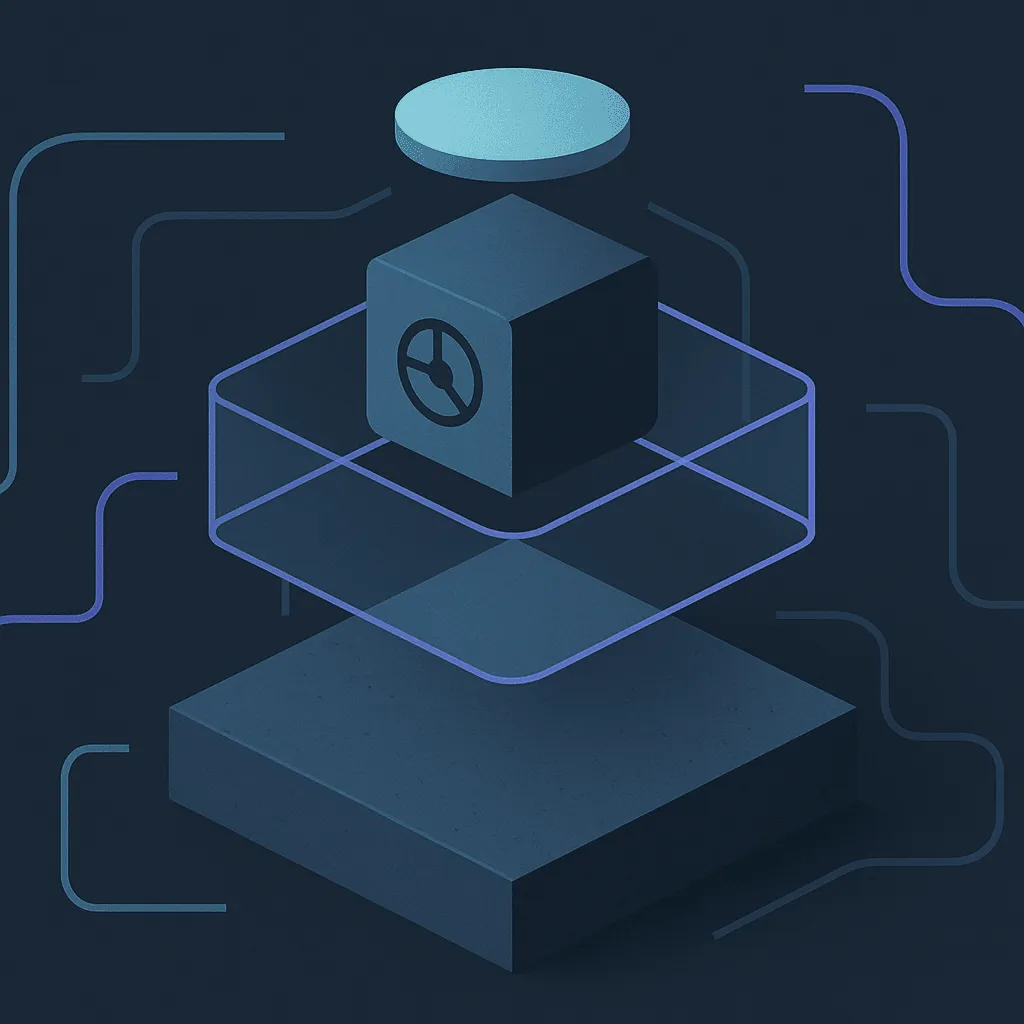
A tokenized equity is not a single thing; it is a stack of legal and technical components that together create a transferable on-chain representation of an off-chain share. The configurations differ across issuers, but the layers are consistent enough to describe generically.
At the base sits the settlement layer — the chain on which the token lives and transfers. Production deployments have so far split between public L1s (Ethereum mainnet for the largest dollar-weighted share of pilots, Solana for some retail-facing products), public L2s (Base, Arbitrum, and a growing list of equity-focused appchains), and permissioned ledgers operated by consortia of regulated entities. The choice is partly performance and cost, but more importantly it determines which counterparties can hold the token at all. A permissioned ledger lets a consortium of broker-dealers enforce KYC at the protocol level; a public L2 with a compliance contract enforces it at the token level.
Above settlement is the compliance wrapper. This is where the divergence from a vanilla ERC-20 happens. Most tokenized-equity tokens implement some form of transfer restriction — an allowlist of approved wallets, a deny-list against sanctioned addresses, jurisdictional flags, lockup logic, and hooks for forced transfers in the event of a court order or corporate action. Standards have started to coalesce here (ERC-3643 and ERC-1400 are the most cited), but in practice each issuer ships a slightly different variant tuned to its regulator’s specific demands.
The custody and registry layer is where the share itself actually lives. In nearly every live deployment, the on-chain token is a claim against a regulated custodian holding the underlying share, with a transfer agent or equivalent registry of record maintaining the legal book. Tokenization here is, in the most literal sense, a representation: the share exists in a traditional registry, and the token is the mobile claim against that registry. The few attempts to move the registry itself on-chain — to make the chain the legal book of record rather than a mirror of it — have so far been limited to private issuances or jurisdictions that have explicitly legislated the equivalence.
At the top sits the token interface — the part DeFi protocols see. Whether the token can be lent, posted as collateral, fractionalized, or wrapped depends on what the compliance layer allows. In the most permissive configurations, the token behaves like any other ERC-20 within a permissioned set of counterparties. In the most restrictive, it can only move between addresses on a single broker-dealer’s allowlist, which limits it to internal transfers and undermines most of the composability argument for being on-chain in the first place.
Why incumbents are funding their own disintermediation

The reflexive question, looking at the list of banks and exchanges actively building tokenization platforms, is why. Settlement fees, custody fees, and the float on T+1 settlement are real revenue lines for incumbents. A system where shares settle atomically against stablecoins on a public chain compresses several of those lines toward zero. The honest answer is that incumbents have done the math on three pressures and concluded that defending the current rails is the worse option.
The first pressure is collateral velocity. The largest broker-dealers and prime brokers operate enormous collateral books, and the operational cost of moving collateral between venues, jurisdictions, and counterparties under current settlement systems is substantial. Tokenized equities that can be posted as collateral within a regulated venue, recalled in minutes rather than days, and netted across legal entities programmatically offer real margin compression on the cost-to-serve side. The savings here likely dwarf the lost float, particularly in a lower-rate environment where float earns less.
The second pressure is 24/7 market expectations. Retail equity volume increasingly comes from participants who do not accept that the market closes on weekends or that international transfers take three business days. Crypto has anchored a generation of users to continuous markets, and the broker-dealers serving that user base see a competitive risk in being the slow venue. A tokenized share that can trade overnight on a regulated venue — even if final settlement against the registry happens in a batch the next morning — closes that gap without requiring the entire NMS to be rebuilt.
The third pressure is structural disintermediation if they do not build it. The example incumbents look at most closely is what happened in payments. Stablecoins were built largely outside the banking system, achieved enough scale that bank deposits and correspondent banking flows are now visibly affected, and only then attracted serious bank participation. The lesson, read narrowly, is that the optionality of building the rails yourself disappears once a non-bank alternative reaches escape velocity. Tokenized equity products from non-incumbent issuers — offshore platforms offering wrapped exposure to US-listed names, primarily — have grown enough to make that scenario plausible, and several incumbents have explicitly cited the desire to set the standard before someone else does.
There is a fourth, narrower reason worth naming. Some of the largest token issuers on Ethereum — stablecoin issuers, tokenized money market funds — generate fee streams that look like the early stages of what an asset manager or transfer agent earns from running a fund or registry. The economics of being the regulated wrapper for a tokenized share class are not yet proven at scale, but they are not zero, and the incumbents who already operate the relevant licenses are the natural candidates to capture them.
The regulatory recognition problem

The technical stack we described in the first section assumes that the token is a recognized form of the share. In most jurisdictions, as of late 2025, that is not yet straightforwardly true. The token is a claim against a custodian who holds the share, but the share itself remains on the traditional registry, and the legal effect of an on-chain transfer is mediated by the custodian’s books rather than recognized directly by the issuer’s transfer agent.
This is not a trivial distinction. It determines who has the legal right to vote the share, who is entitled to receive dividends as a matter of law (rather than as a matter of contract with the custodian), how stock splits and spin-offs are processed, and what happens if the custodian fails. In the live deployments we have observed, all of these are handled by the custodian as a matter of operational policy — dividends are paid through to token holders, votes are aggregated and submitted by the custodian, corporate actions are mirrored on the token — but the token holder’s legal recourse, in most jurisdictions, runs through the custodian rather than directly to the issuer.
A handful of jurisdictions have moved to close this gap. Switzerland’s DLT Act provides for ledger-based securities where the chain entry is itself the legal title. Several US states have updated their UCC provisions to recognize controllable electronic records. Singapore, Liechtenstein, and Luxembourg have created frameworks that, with varying degrees of precision, allow on-chain registries to serve as the official book of record for certain instruments. But the largest equity markets by capitalization — the US listed market in particular — have not yet provided a clear path for the chain to be the registry rather than a mirror of it.
The practical effect is that tokenized equities today operate in a two-tier model: the legal share lives in the traditional system, and the token is a regulated representation. This is workable for the use cases incumbents most care about — collateral mobility, extended-hours trading, programmatic settlement against stablecoins — but it limits the more ambitious claims about composability with on-chain protocols, because every transfer is gated by the compliance wrapper enforcing the issuer’s legal constraints.
Cross-border transfer
The cross-border case is harder still. A US-listed share tokenized by a US broker-dealer, and transferred to a wallet held by a non-US resident, raises every question that a traditional cross-border securities transaction raises — withholding tax on dividends, treaty eligibility, the local regulator’s view of whether the recipient is allowed to hold the security at all — and the chain does not solve any of them. In practice, current platforms handle this by restricting transfers to addresses associated with KYC-verified users in approved jurisdictions, which is to say that the cross-border problem is solved by not having the cross-border transfer.
There is a credible argument that tokenization will eventually push regulators to harmonize cross-border treatment, because the friction of maintaining strict territorial allowlists on a global ledger will become operationally and politically untenable. We are not there. For now, the cross-border story is more aspiration than mechanism.
How equities diverge from tokenized debt

The publication has previously covered tokenized Treasuries and on-chain credit instruments. It is worth being precise about where the equity architecture diverges, because the differences are not cosmetic.
A tokenized Treasury or money-market fund share is, in essence, a unit of a fund that holds the underlying instrument. The fund has a NAV, accrues yield, and supports subscription and redemption against cash. The token’s behavior is fully described by the fund’s offering documents. Corporate actions, in the equity sense, do not exist — there is no vote, no dividend that is not a pass-through of fund yield, no spin-off, no rights offering. The compliance wrapper needs to enforce eligibility (qualified purchaser, accredited investor, jurisdictional restrictions) but does not need to handle a calendar of corporate events.
A tokenized equity is structurally heavier. The token must support, at minimum:
- Dividend distributions, including the ability to snapshot holders as of a record date and pay through the custodian’s wallet to each address, with appropriate tax withholding logic for non-resident holders.
- Voting, either by aggregating signed messages from token holders and submitting them through the custodian, or by allowing direct on-chain voting that the custodian relays.
- Corporate actions — splits, reverse splits, spin-offs, mergers, tender offers — each of which requires either a token migration or an on-chain mechanism to reflect the change in the underlying share.
- Class structure, since many listed companies have multiple share classes with different voting and economic rights, each of which would need its own token.
- Beneficial ownership reporting, which in the US triggers disclosure obligations at certain thresholds and which the token contract may need to support natively if the issuer is to avoid manual reconciliation.
None of these are individually intractable, and most have been implemented in some form in live or pilot deployments. But the cumulative complexity means that tokenized equity contracts are meaningfully more involved than tokenized debt contracts, and the operational burden on the issuer, transfer agent, and custodian is correspondingly higher. The economics that work for a tokenized money market fund at a few hundred million dollars of AUM may not work for a tokenized equity at the same scale, simply because the per-token operational cost is higher.
Composability implications
The composability story is also different. A tokenized Treasury fund share, once it is held by a whitelisted address, behaves almost exactly like any other token within the permissioned set — it can be posted as collateral, lent, used in structured products, with the only constraint being that the counterparty must also be on the allowlist. A tokenized equity carries record-date snapshots, voting windows, and corporate-action freezes, each of which interacts awkwardly with lending markets and AMMs. If a tokenized share is lent out over a record date, who receives the dividend? If it is sitting in an AMM pool during a tender offer, who decides whether to tender?
These questions have answers — the existing securities lending market resolves analogous questions every day — but the answers require the on-chain protocols to be aware of off-chain corporate calendars, which is precisely the kind of cross-system dependency that on-chain composability was meant to eliminate. The pragmatic outcome, in current deployments, is that tokenized equities tend to be used in narrower composability contexts than tokenized debt: collateral within a single venue, intra-day settlement, but not yet broad deployment across DeFi money markets.
The distribution layer

A separate question, which the discourse around tokenization tends to elide, is who actually distributes these instruments to end users. The architecture above describes how a tokenized share is created and transferred between regulated parties. It does not describe how a retail or institutional buyer comes to hold one in the first place.
The traditional answer is that distribution happens through broker-dealers, who onboard customers, run suitability checks, and execute orders against the relevant venue. If a tokenized share is fungible with — or directly equivalent to — a traditional share, then the existing distribution channel applies and tokenization is essentially a back-office upgrade invisible to the end user. If the tokenized share is a distinct instrument (a separate share class, a wrapped product, an offshore equivalent), then it needs its own distribution channel, and the question of who runs that channel is open.
Several models are visible. Crypto-native exchanges have launched tokenized equity products aimed at users who already hold accounts there, treating the token as a new asset class alongside spot crypto. Traditional broker-dealers have begun offering tokenized share classes through their existing apps, with the on-chain leg largely invisible to the customer. Specialized platforms have emerged that focus on either primary issuance of tokenized private equity or secondary trading of tokenized public equities, often with a regional or jurisdictional focus. And a handful of efforts have tried to combine tokenized-asset distribution with on-chain token sales, with mixed results — the appetite for primary issuance of any kind has been uneven, and some platforms that aimed to be the on-chain equivalent of a syndicate desk have reported slow volumes through late 2025.
The distribution layer is where the incumbent advantage is most pronounced. A broker-dealer with millions of existing customers and a settled regulatory posture can roll out a tokenized share product with relatively low marginal friction. A new platform starting from zero has to acquire the customers, satisfy the regulators, and convince issuers to use its rails — a much steeper curve. The likely outcome is that distribution stays concentrated among incumbents while the back-end rails become more heterogeneous, which is roughly the opposite of how crypto-native participants tend to imagine the transition.
Settlement economics and the stablecoin question
Tokenized equities settle against something. In the live deployments, that something is overwhelmingly a regulated stablecoin — USDC for most US-facing products, EURC and a handful of bank-issued tokens for European deployments, and a small number of tokenized money-market fund shares used as a higher-yield cash leg in institutional contexts. The choice of cash leg is consequential, because it determines who earns the float, who bears the credit risk, and who controls the freeze and seizure rules that apply to the cash side of every trade.
For incumbents, the appeal of using a bank-issued stablecoin or a tokenized deposit on the cash leg is obvious: it keeps the deposit base within the banking system, preserves the float, and allows the bank to enforce its own compliance posture on transfers. For users, the appeal of using a widely held public stablecoin is also obvious: it minimizes the number of new instruments they need to onboard. The likely equilibrium is multi-rail, with different cash legs used for different counterparty pairs, and bridging between them handled by market makers who internalize the conversion cost.
This matters for the broader economics because settlement-on-chain only delivers its full operational savings if both legs — the security and the cash — are on the same chain or directly bridgable at low cost and low risk. A tokenized share that settles against a wire transfer captures very little of the available efficiency. A tokenized share that settles atomically against a stablecoin captures most of it. The growth of regulated stablecoin supply is, in this sense, a prerequisite for the equity tokenization story to deliver on its operational promises, and the two trends are tightly coupled even if they are usually discussed separately.
Implications and what to watch
The framing we would resist is the binary one in which either tokenized equities replace traditional rails or they fail to gain traction. The more likely path is a long period of coexistence, in which tokenized representations grow inside specific use cases — collateral mobility, extended-hours trading, programmatic settlement between regulated counterparties — while the traditional registry remains the legal book of record for the underlying shares. Whether that intermediate state ever resolves into the chain becoming the registry depends on regulatory recognitions that are not yet on a clear timeline in the largest equity markets.
Several specific developments would meaningfully change the trajectory. First, a US legal framework that treats on-chain entries as direct evidence of share ownership — not merely a claim against a custodian — would collapse much of the architectural complexity we described, since the compliance wrapper would no longer need to mediate between two systems of record. Second, the emergence of a tokenized-equity standard that several major incumbents commit to jointly, rather than each shipping a slightly different variant, would lower the integration cost for downstream protocols and accelerate composability. Third, a credible cross-border framework — even bilateral, between two large markets — would unlock the use cases that current jurisdictional allowlists explicitly exclude.
Several risks are worth tracking on the other side. The operational complexity of corporate actions on-chain has not been stress-tested at scale; a single mishandled spin-off or tender offer involving a tokenized share could prompt regulators to tighten rather than ease the recognition path. The dependence on regulated stablecoins for the cash leg concentrates risk in a small number of issuers whose own regulatory status is still evolving. And the concentration of distribution in incumbent broker-dealers means that the user-visible features of tokenized equities — particularly the composability features that justify being on-chain at all — may be deliberately limited to protect existing fee structures.
The honest read is that tokenized equities sit at an earlier point on the adoption curve than the discourse suggests, but with stronger institutional backing than any prior on-chain securities effort. The infrastructure is being built largely by the incumbents who would be most disrupted by it, which is both the strongest signal that something real is happening and the strongest reason to be careful about how much of the eventual value accrues to the on-chain layer rather than to the institutions wrapping it. What to watch, over the next several quarters, is less the headline tokenization announcements and more the quieter developments in the layers underneath: which compliance standard wins, which cash leg becomes the default, which jurisdictions extend legal recognition to the chain entry itself. Those are the decisions that determine whether tokenized equities end up as a meaningful new market structure or as a more efficient back office for the existing one.
들어가며
“주식시장을 토큰화한다”는 말은 지난 2년 사이 벤처 투자 덱의 화두에서 세계 최대 브로커딜러, 수탁기관, 거래소 운영사들의 공식 목표로 자리를 옮겼다. 이제 공개 주식이 어떤 형태로든 블록체인에 올라갈지 여부는 더 이상 논쟁거리가 아니다 — 주요 거래소의 파일럿 프로그램과 규제 발행인의 실제 상품이 이미 그 사실을 증명했다. 핵심 질문은 프로덕션 수준의 아키텍처가 어떤 모습이 될지, 누가 운영할지, 그리고 의미 있는 거래량이 오가기 전에 어떤 법적 인정이 추가로 필요한지다.
토큰화 분야에서 선두를 달린 것은 채권이었다. 소수의 규제 발행인이 내놓은 단기 국채 상품은 이미 수십억 달러 규모의 온체인 카테고리로 성장했고, 그 플레이북도 이제 어느 정도 정립됐다: 규제를 받는 펀드, 이전대리인, 퍼미션드 원장 또는 화이트리스트 ERC-20, 그리고 현금으로의 환매 채널. 그러나 주식은 이 패턴의 단순한 연장이 아니다. 채권은 기계적으로 보면 지급 흐름과 만기일의 조합이다. 주식은 권리의 묶음이다 — 의결권, 배당 수령권, 기업 행위 참여권, 소송권 — 이 모든 것이 체인이 인식하지 못하고 강제할 수도 없는 법인에 귀속된다.
이 차이는 스택의 모든 계층에 영향을 미친다. 이 글에서는 부상하는 토큰화 주식 아키텍처가 실제로 어떤 모습인지, 왜 기존 사업자들이 자신의 비즈니스를 잠식할 수 있는 이 기술에 투자하는지, 어디에 마찰 지점이 있는지, 그리고 설계 공간이 앞서 다뤘던 RWA 채무 상품과 어떻게 갈라지는지를 짚어본다.
스택의 구조
토큰화 주식은 단일한 무언가가 아니다. 오프체인 주식을 온체인에서 이전 가능한 형태로 표현하기 위해 법적·기술적 구성 요소가 층층이 쌓인 스택이다. 발행인마다 구성 방식은 다르지만, 계층 자체는 충분히 일관돼 일반적으로 서술할 수 있다.
가장 밑바닥에는 결제 레이어가 있다 — 토큰이 존재하고 이전되는 체인이다. 지금까지의 프로덕션 배포는 퍼블릭 L1(파일럿의 달러 비중 기준으로는 이더리움 메인넷이 가장 크고, 일부 리테일 상품에는 솔라나), 퍼블릭 레이어 2(Base, Arbitrum, 그리고 주식 특화 앱체인의 증가하는 목록), 규제 기관 컨소시엄이 운영하는 퍼미션드 원장으로 나뉜다. 이 선택은 부분적으로 성능과 비용의 문제이지만, 더 중요하게는 어떤 거래상대방이 토큰을 보유할 수 있는지를 결정한다. 퍼미션드 원장은 브로커딜러 컨소시엄이 프로토콜 수준에서 KYC를 강제할 수 있게 해주고, 컴플라이언스 컨트랙트를 갖춘 퍼블릭 레이어 2는 토큰 수준에서 이를 강제한다.
결제 위에는 컴플라이언스 래퍼가 있다. 여기서부터 일반 ERC-20과의 차이가 생긴다. 대부분의 토큰화 주식 토큰은 어떤 형태로든 이전 제한을 구현한다 — 승인된 지갑의 허용 목록, 제재 주소에 대한 차단 목록, 관할권 플래그, 락업 로직, 그리고 법원 명령이나 기업 행위 발생 시 강제 이전을 위한 훅이 그것이다. 이 영역에서 표준이 수렴하기 시작했고(ERC-3643과 ERC-1400이 가장 많이 인용된다), 실제로는 각 발행인이 규제 당국의 구체적인 요건에 맞게 약간씩 변형된 버전을 출시한다.
수탁 및 레지스트리 레이어는 주식 자체가 실제로 존재하는 곳이다. 거의 모든 라이브 배포에서 온체인 토큰은 기초 주식을 보유한 규제 수탁기관에 대한 청구권이며, 이전대리인 또는 이에 상응하는 법적 장부 레지스트리가 법적 기록을 관리한다. 이 맥락에서 토큰화는 가장 문자 그대로의 의미에서 표현(representation)이다: 주식은 전통적인 레지스트리에 존재하고, 토큰은 그 레지스트리에 대한 이동 가능한 청구권이다. 레지스트리 자체를 온체인으로 옮기려는 — 체인을 거울이 아닌 법적 기록 장부로 만들려는 — 시도는 지금까지 사모 발행이나 그 동등성을 명시적으로 입법화한 관할권에 한정됐다.
맨 위에는 토큰 인터페이스가 있다 — DeFi 프로토콜이 접하는 부분이다. 토큰을 대출하거나 담보로 제공하거나 분할하거나 래핑할 수 있는지는 컴플라이언스 레이어가 무엇을 허용하느냐에 달려 있다. 가장 허용적인 구성에서는 토큰이 퍼미션드 거래상대방 집합 내에서 여느 ERC-20처럼 동작한다. 가장 제한적인 구성에서는 단일 브로커딜러의 허용 목록에 있는 주소 간에만 이전할 수 있는데, 이는 사실상 내부 이전으로 제한되어 온체인에 있는 이유로 내세우는 컴포저빌리티 논거를 무색하게 만든다.
기존 사업자들이 자기 잠식에 투자하는 이유
토큰화 플랫폼을 적극적으로 구축하는 은행과 거래소의 명단을 보면 반사적으로 드는 질문이 있다: 왜? 결제 수수료, 수탁 수수료, T+1 결제에서 생기는 부동자금 수익은 기존 사업자들의 실질적인 매출원이다. 주식이 퍼블릭 체인에서 스테이블코인과 원자적으로 결제되는 시스템은 그 수익선 상당 부분을 0으로 압축한다. 솔직하게 답하자면, 기존 사업자들은 세 가지 압박을 계산한 끝에 현재의 인프라를 지키는 것이 더 나쁜 선택이라는 결론을 내렸다.
첫 번째 압박은 담보 이동성이다. 최대 규모의 브로커딜러와 프라임 브로커는 거대한 담보 장부를 운영하며, 현재의 결제 시스템 하에서 담보를 거래소·관할권·거래상대방 간에 이동시키는 운영 비용은 상당하다. 규제 거래소 내에서 담보로 제공되고, 며칠이 아닌 몇 분 안에 회수되며, 법인 간에 프로그래밍 방식으로 네팅되는 토큰화 주식은 서비스 비용 측면에서 실질적인 마진 개선을 제공한다. 이 절감 효과는, 특히 저금리 환경에서 부동자금 수익이 줄어드는 상황에서, 잃어버리는 float 수익을 크게 상회할 가능성이 높다.
두 번째 압박은 24/7 시장에 대한 기대다. 리테일 주식 거래량은 점점 더, 주말에 시장이 닫히거나 국제 이체에 영업일 3일이 걸리는 현실을 받아들이지 않는 참여자들로부터 나온다. 크립토는 한 세대의 사용자에게 연속적인 시장을 기준으로 각인시켰고, 이들을 고객으로 둔 브로커딜러들은 느린 거래소가 됐을 때의 경쟁 리스크를 인식한다. 규제된 거래소에서 야간에도 거래될 수 있는 토큰화 주식은 — 레지스트리 대상 최종 결제가 다음 날 아침 일괄로 이뤄지더라도 — NMS 전체를 재설계하지 않고도 그 간극을 메운다.
세 번째 압박은 직접 구축하지 않으면 구조적으로 탈중개된다는 것이다. 기존 사업자들이 가장 주목하는 선례는 결제 분야에서 일어난 일이다. 스테이블코인은 은행 시스템 밖에서 구축됐고, 충분한 규모에 이르러 은행 예금과 환거래 은행 흐름이 가시적으로 영향을 받게 된 후에야 은행의 진지한 참여를 이끌어냈다. 이 교훈을 좁게 읽으면, 비은행 대안이 탈출 속도에 도달하면 스스로 인프라를 구축할 선택지가 사라진다는 것이다. 미국 상장 종목에 대한 래핑된 익스포저를 제공하는 오프쇼어 플랫폼을 중심으로 한 비기존 사업자의 토큰화 주식 상품이 충분히 성장했고, 여러 기존 사업자들은 다른 누군가가 먼저 표준을 정하기 전에 자신들이 그것을 설정하겠다는 의지를 명시적으로 표명했다.
네 번째로 언급할 만한 보다 좁은 이유도 있다. 이더리움의 가장 큰 토큰 발행인들 — 스테이블코인 발행인, 토큰화 머니마켓 펀드 — 은 자산운용사나 이전대리인이 펀드나 레지스트리를 운영해 버는 것과 초기 단계에서 유사해 보이는 수수료 수익을 창출한다. 토큰화 주식 클래스의 규제 래퍼가 되는 경제성이 대규모에서 검증된 것은 아니지만, 0도 아니다. 그리고 관련 라이선스를 이미 보유한 기존 사업자들이 그것을 포착할 가장 자연스러운 후보다.
규제 인정 문제
첫 번째 섹션에서 설명한 기술 스택은 토큰이 주식의 인정된 형태라는 전제를 깔고 있다. 2025년 말 현재 대부분의 관할권에서, 그것은 아직 명확하게 사실이 아니다. 토큰은 주식을 보유한 수탁기관에 대한 청구권이지만, 주식 자체는 전통적인 레지스트리에 남아 있으며, 온체인 이전의 법적 효력은 발행인의 이전대리인에 의해 직접 인정되는 것이 아니라 수탁기관의 장부를 통해 매개된다.
이것은 사소한 구분이 아니다. 이는 누가 해당 주식에 대한 법적 의결권을 갖는지, 계약 관계가 아닌 법적 권리로서 배당을 누가 받을 자격이 있는지, 주식 분할과 분사가 어떻게 처리되는지, 수탁기관이 파산하면 어떻게 되는지를 결정한다. 우리가 살펴본 라이브 배포에서 이 모든 것은 수탁기관의 운영 정책 문제로 처리된다 — 배당은 토큰 보유자에게 전달되고, 의결권은 수탁기관이 집계해 제출하며, 기업 행위는 토큰에 반영된다 — 하지만 대부분의 관할권에서 토큰 보유자의 법적 구제 수단은 발행인에게 직접 향하는 것이 아니라 수탁기관을 통한다.
일부 관할권은 이 간극을 좁히는 방향으로 움직였다. 스위스의 DLT법은 체인 항목 자체가 법적 소유권이 되는 원장 기반 증권을 제공한다. 미국의 여러 주는 제어 가능한 전자 기록을 인정하도록 UCC 조항을 개정했다. 싱가포르, 리히텐슈타인, 룩셈부르크는 다양한 수준의 정밀도로 특정 금융상품에 대해 온체인 레지스트리를 공식 기록 장부로 사용할 수 있는 프레임워크를 만들었다. 그러나 시가총액 기준으로 가장 큰 주식 시장 — 특히 미국 상장 시장 — 은 체인이 레지스트리의 거울이 아닌 레지스트리 자체가 되기 위한 명확한 경로를 아직 제시하지 못했다.
실질적인 결과는 오늘날의 토큰화 주식이 이중 구조 모델에서 작동한다는 것이다: 법적 주식은 전통적인 시스템에 살고, 토큰은 규제된 표현이다. 이것은 기존 사업자들이 가장 중요하게 여기는 사용 사례 — 담보 이동성, 연장 거래 시간, 스테이블코인과의 프로그래밍 결제 — 에는 실용적이다. 그러나 온체인 프로토콜과의 컴포저빌리티에 관한 더 야심찬 주장은 제한된다. 모든 이전이 발행인의 법적 제약을 강제하는 컴플라이언스 래퍼에 의해 차단되기 때문이다.
국경 간 이전
국경 간 사례는 더욱 복잡하다. 미국 브로커딜러가 토큰화한 미국 상장 주식이 비미국 거주자의 지갑으로 이전되면, 전통적인 국경 간 증권 거래가 제기하는 모든 질문이 그대로 따라온다 — 배당에 대한 원천징수세, 조세 조약 적용 여부, 수취인이 해당 증권을 보유할 수 있는지에 대한 현지 규제 당국의 판단 — 그리고 체인은 이 중 어느 것도 해결하지 못한다. 실제로 현재 플랫폼들은 KYC 인증된 승인 관할권 사용자와 연결된 주소로만 이전을 제한함으로써 이 문제를 처리한다. 즉, 국경 간 이전 문제는 국경 간 이전 자체를 허용하지 않음으로써 해결된다.
글로벌 원장에서 엄격한 영역 허용 목록을 유지하는 마찰이 운영적으로나 정치적으로 지속 불가능해짐에 따라 토큰화가 결국 규제 당국의 국경 간 처리 방식 조화를 이끌어낼 것이라는 설득력 있는 주장이 있다. 우리는 아직 거기까지 가지 못했다. 지금으로서는 국경 간 이야기는 메커니즘보다는 열망에 가깝다.
토큰화 주식이 토큰화 채권과 갈라지는 지점
이 간행물은 이전에 토큰화 국채와 온체인 신용 상품을 다뤘다. 주식 아키텍처가 어디서 갈라지는지 정확히 짚고 넘어갈 가치가 있다. 그 차이는 표면적인 것이 아니기 때문이다.
토큰화 국채 또는 머니마켓 펀드 주식은 본질적으로 기초 상품을 보유한 펀드의 단위다. 펀드는 NAV를 갖고, 수익률을 발생시키며, 현금에 대한 청약과 환매를 지원한다. 토큰의 행동은 펀드의 투자설명서에 의해 완전히 기술된다. 주식적 의미의 기업 행위는 존재하지 않는다 — 의결권이 없고, 펀드 수익률의 통과분이 아닌 배당도 없으며, 분사도, 신주인수권도 없다. 컴플라이언스 래퍼는 적격 투자자 여부, 공인투자자 여부, 관할권 제한을 강제해야 하지만, 기업 이벤트 캘린더를 처리할 필요는 없다.
토큰화 주식은 구조적으로 더 무겁다. 토큰은 최소한 다음을 지원해야 한다:
- 배당 분배: 기준일 현재 보유자를 스냅샷하고, 비거주 보유자에 대한 적절한 세금 원천징수 로직을 포함해 수탁기관의 지갑을 통해 각 주소로 지급하는 기능.
- 의결권 행사: 토큰 보유자로부터 서명된 메시지를 집계해 수탁기관을 통해 제출하거나, 수탁기관이 중계하는 직접적인 온체인 투표를 허용하는 방식.
- 기업 행위 — 분할, 역분할, 분사, 합병, 공개매수 — 이 각각은 기초 주식의 변화를 반영하기 위해 토큰 마이그레이션 또는 온체인 메커니즘을 필요로 한다.
- 주식 종류 구조: 많은 상장사가 서로 다른 의결권과 경제적 권리를 가진 복수의 주식 종류를 발행하며, 각각 별도의 토큰이 필요하다.
- 실질 소유자 보고: 미국에서는 특정 지분 한도에서 공시 의무가 발생하며, 발행인이 수동 대사를 피하려면 토큰 컨트랙트가 이를 기본적으로 지원해야 할 수 있다.
이 중 개별적으로 해결 불가능한 것은 없으며, 대부분은 라이브 또는 파일럿 배포에서 어떤 형태로든 구현됐다. 하지만 누적된 복잡성은 토큰화 주식 컨트랙트가 토큰화 채권 컨트랙트보다 의미 있게 더 복잡하다는 것을 의미하며, 발행인·이전대리인·수탁기관의 운영 부담도 그에 비례해 높다. 수억 달러 규모의 AUM에서 토큰화 머니마켓 펀드에 맞는 경제성이 동일한 규모의 토큰화 주식에는 맞지 않을 수 있다. 토큰당 운영 비용이 더 높기 때문이다.
컴포저빌리티의 함의
컴포저빌리티 이야기도 다르다. 토큰화 국채 펀드 주식은 화이트리스트 주소에 보유되면, 퍼미션드 집합 내에서 다른 토큰과 거의 똑같이 동작한다 — 담보로 제공하거나, 대출하거나, 구조화 상품에 활용할 수 있으며, 유일한 제약은 거래상대방도 허용 목록에 있어야 한다는 것이다. 토큰화 주식은 기준일 스냅샷, 의결권 행사 기간, 기업 행위 동결을 수반하며, 이 각각이 대출 시장 및 AMM과 어색하게 상호작용한다. 토큰화 주식이 기준일에 걸쳐 대출된 상태라면, 배당은 누가 받는가? 공개매수 중에 AMM 풀에 묶여 있다면, 응모 여부는 누가 결정하는가?
이 질문들에 답이 없는 것은 아니다 — 기존 증권 대차 시장은 매일 유사한 질문을 해결한다 — 하지만 그 답은 온체인 프로토콜이 오프체인 기업 캘린더를 인식해야 한다는 것을 요구하며, 그것이 바로 온체인 컴포저빌리티가 없애려 했던 종류의 시스템 간 의존성이다. 현재 배포에서의 실용적인 결과는, 토큰화 주식이 토큰화 채권보다 더 좁은 컴포저빌리티 맥락에서 사용되는 경향이 있다는 것이다: 단일 거래소 내 담보, 당일 결제는 가능하지만, DeFi 머니 마켓 전반에 걸친 광범위한 배포는 아직이다.
유통 레이어
토큰화에 관한 담론이 흐리는 별개의 질문이 있다: 이 상품들을 최종 사용자에게 실제로 누가 유통하는가? 위에서 설명한 아키텍처는 토큰화 주식이 어떻게 만들어지고 규제 당사자들 간에 이전되는지를 설명한다. 리테일 또는 기관 투자자가 어떻게 처음에 그것을 보유하게 되는지는 설명하지 않는다.
전통적인 답은 유통이 브로커딜러를 통해 이뤄진다는 것이다 — 고객을 온보딩하고, 적합성 심사를 하고, 관련 거래소에서 주문을 실행하는. 토큰화 주식이 전통 주식과 호환 가능하거나 직접 동등하다면, 기존 유통 채널이 적용되며 토큰화는 본질적으로 최종 사용자에게는 보이지 않는 백오피스 업그레이드다. 토큰화 주식이 별도의 상품(별도 주식 클래스, 래핑된 상품, 오프쇼어 등가물)이라면, 자체 유통 채널이 필요하고, 누가 그 채널을 운영하는지는 열린 질문이다.
몇 가지 모델이 가시화되고 있다. 크립토 네이티브 거래소는 이미 계좌를 보유한 사용자들을 대상으로 토큰화 주식 상품을 출시하며, 스팟 크립토와 함께하는 새로운 자산 클래스로 취급한다. 전통 브로커딜러는 기존 앱을 통해 토큰화 주식 클래스를 제공하기 시작했고, 온체인 부분은 고객에게는 대부분 보이지 않는다. 토큰화 사모 주식의 1차 발행이나 토큰화 공개 주식의 2차 거래에 초점을 맞춘, 종종 지역적 또는 관할권적 초점을 가진 특화 플랫폼들이 등장했다. 그리고 일부 시도들은 토큰화 자산 유통을 온체인 토큰 판매와 결합하려 했는데, 결과는 엇갈렸다 — 어떤 종류든 1차 발행에 대한 수요는 고르지 않았고, 온체인 신디케이트 데스크의 역할을 목표로 했던 일부 플랫폼들은 2025년 말 기준으로 부진한 거래량을 보고했다.
유통 레이어는 기존 사업자의 우위가 가장 두드러지는 곳이다. 수백만 명의 기존 고객과 안정된 규제 입지를 가진 브로커딜러는 비교적 낮은 한계 마찰로 토큰화 주식 상품을 출시할 수 있다. 처음부터 시작하는 새 플랫폼은 고객을 확보하고, 규제 당국을 만족시키고, 발행인이 자신의 인프라를 사용하도록 설득해야 한다 — 훨씬 더 가파른 곡선이다. 유력한 결과는 유통이 기존 사업자에게 집중되는 반면 백엔드 인프라는 더 이질화된다는 것인데, 이는 크립토 네이티브 참여자들이 전환을 상상하는 방식과 대략 반대다.
결제 경제와 스테이블코인 문제
토큰화 주식은 무언가와 결제된다. 라이브 배포에서 그 무언가는 압도적으로 규제된 스테이블코인이다 — 미국 대상 상품 대부분은 USDC, 유럽 배포는 EURC와 소수의 은행 발행 토큰, 그리고 기관 맥락에서 현금 레그의 고수익 대안으로 소수의 토큰화 머니마켓 펀드 주식이 사용된다. 현금 레그의 선택은 중요하다. 누가 float를 얻는지, 누가 신용 리스크를 부담하는지, 모든 거래의 현금 측에 적용되는 동결 및 압류 규칙을 누가 통제하는지를 결정하기 때문이다.
기존 사업자들에게 은행 발행 스테이블코인이나 토큰화 예금을 현금 레그로 사용하는 매력은 명확하다: 예금 기반을 은행 시스템 내에 유지하고, float를 보존하며, 은행이 이전에 자체 컴플라이언스 입장을 강제할 수 있다. 사용자들에게 널리 보유된 퍼블릭 스테이블코인을 사용하는 매력도 명확하다: 새로 온보딩해야 할 상품의 수를 최소화한다. 유력한 균형점은 멀티 레일이 될 것이다 — 서로 다른 거래상대방 쌍에 서로 다른 현금 레그가 사용되고, 변환 비용을 내재화하는 시장 조성자들이 레그 간 브릿지를 담당한다.
이것이 더 넓은 경제에 중요한 이유는, 온체인 결제가 완전한 운영 절감을 제공하려면 두 레그 — 증권과 현금 — 가 모두 같은 체인에 있거나 낮은 비용과 낮은 리스크로 직접 브릿지 가능해야 하기 때문이다. 전신 송금에 대해 결제되는 토큰화 주식은 가용한 효율성을 거의 확보하지 못한다. 스테이블코인과 원자적으로 결제되는 토큰화 주식은 대부분을 확보한다. 이런 의미에서 규제된 스테이블코인 공급의 성장은 주식 토큰화 이야기가 운영적 약속을 이행하기 위한 전제 조건이며, 두 흐름은 보통 별개로 논의되더라도 긴밀하게 연결되어 있다.
시사점과 주목할 것들
우리가 거부하고 싶은 프레임은 토큰화 주식이 전통 인프라를 대체하거나 아니면 동력을 잃는다는 이분법이다. 더 유력한 경로는 긴 공존의 시기다. 토큰화 표현이 특정 사용 사례 — 담보 이동성, 연장 거래 시간, 규제 거래상대방 간 프로그래밍 결제 — 내에서 성장하는 동안, 전통 레지스트리는 기초 주식의 법적 기록 장부로 남아 있는. 그 중간 상태가 결국 체인이 레지스트리가 되는 것으로 해소될지는 가장 큰 주식 시장에서 아직 명확한 일정이 없는 규제 인정에 달려 있다.
몇 가지 구체적인 발전이 이 궤적을 의미 있게 바꿀 수 있다. 첫째, 온체인 항목을 — 수탁기관에 대한 청구권이 아닌 — 주식 소유의 직접적인 증거로 취급하는 미국 법적 프레임워크는 우리가 설명한 아키텍처 복잡성의 상당 부분을 해소할 것이다. 컴플라이언스 래퍼가 두 기록 시스템 사이를 매개할 필요가 없어지기 때문이다. 둘째, 주요 기존 사업자 여럿이 각자 약간씩 다른 변형을 출시하는 대신 공동으로 약속하는 토큰화 주식 표준의 등장은 다운스트림 프로토콜의 통합 비용을 낮추고 컴포저빌리티를 가속할 것이다. 셋째, 두 큰 시장 간 양자라도 좋을 신뢰할 수 있는 국경 간 프레임워크는 현재의 관할권 허용 목록이 명시적으로 배제하는 사용 사례들을 열어줄 것이다.
반대편에서도 몇 가지 리스크를 추적할 가치가 있다. 온체인 기업 행위의 운영 복잡성은 아직 대규모에서 스트레스 테스트를 받지 않았다. 토큰화 주식이 관련된 분사나 공개매수가 한 번 잘못 처리되면 규제 당국이 인정 경로를 완화하는 것이 아닌 강화하는 계기가 될 수 있다. 현금 레그에 대한 규제된 스테이블코인 의존은, 자체 규제 지위가 아직 진화 중인 소수 발행인에게 리스크를 집중시킨다. 그리고 기존 브로커딜러에게의 유통 집중은 토큰화 주식의 사용자 가시적 기능 — 특히 온체인에 있을 이유를 정당화하는 컴포저빌리티 기능 — 이 기존 수수료 구조를 보호하기 위해 의도적으로 제한될 수 있음을 의미한다.
솔직하게 읽으면, 토큰화 주식은 담론이 시사하는 것보다 도입 곡선의 더 이른 시점에 있지만, 그 어떤 이전의 온체인 증권 시도보다도 강력한 기관의 지원을 받고 있다. 인프라는 그것에 의해 가장 큰 타격을 받을 기존 사업자들에 의해 주로 구축되고 있다. 이것은 무언가 실질적인 일이 일어나고 있다는 가장 강한 신호이기도 하고, 결국의 가치가 온체인 레이어가 아닌 그것을 래핑하는 기관들에 얼마나 귀속될지에 대해 신중해야 할 가장 강한 이유이기도 하다. 앞으로 몇 분기 동안 주목할 것은 헤드라인을 장식하는 토큰화 발표보다 그 아래의 조용한 움직임들이다: 어떤 컴플라이언스 표준이 승리하는지, 어떤 현금 레그가 기본값이 되는지, 어떤 관할권이 체인 항목 자체에 법적 인정을 확장하는지. 토큰화 주식이 의미 있는 새로운 시장 구조가 될지, 아니면 기존 구조를 위한 더 효율적인 백오피스가 될지를 결정하는 것은 바로 이 결정들이다.
はじめに
「株式市場をトークン化する」というフレーズは、この2年間でベンチャー資料の決まり文句から、世界有数のブローカーディーラー、カストディアン、取引所運営者が明確な目標として掲げるものへと変わった。公開株式が何らかの形でブロックチェーン上に表現されるかどうかという問い自体は、もはや問う必要がない——主要な取引所でのパイロットプログラムや、規制を受けた発行体による実稼働製品がすでにその答えを出している。今問われているのは、本番環境のアーキテクチャがどのような形をとるのか、誰がそれを運営するのか、そして本格的な取引量を流すためにどのような法的承認がまだ必要なのか、という点だ。
トークン化された債券市場が先行してその道を切り開いた。規制を受けた少数の発行体による短期国債プロダクトは、すでにオンチェーンで数十億ドル規模のカテゴリーに成長しており、そのプレイブックは十分に理解されている——規制を受けたファンド、トランスファーエージェント、パーミッション型台帳またはホワイトリスト付きERC-20、そして現金への換金チャネル。株式は、そのパターンを単純に延長したものではない。債券は、仕組みとしては支払いストリームと満期日の組み合わせだ。一方、株式は権利の束であり——議決権、配当受領権、コーポレートアクションへの参加権、訴訟権——チェーンが認識できず強制執行もできない企業体に対して保有されるものだ。
この違いは、スタックのあらゆる層に影響を及ぼす。本稿では、新興のトークン化株式アーキテクチャが実際にどのような形をしているか、既存業者がなぜ自社ビジネスへの共食いリスクを承知でそれに資金を投じているか、どこに摩擦点があるか、そして設計空間がこれまで取り上げてきたRWA債務証書とどう異なるかを掘り下げる。
スタックの全体像
トークン化株式は単一の「もの」ではない。オフチェーンの株式をオンチェーンで移転可能な形に表現するための、法的・技術的な構成要素が積み重なったスタックだ。発行体によって構成は異なるが、各層は十分に共通しているため、一般的な形として説明できる。
最下層には決済レイヤーがある——トークンが存在し、移転される基盤となるチェーンだ。本番環境での展開は、公開L1(パイロットプログラムのドル建て比率で最大のイーサリアムメインネットと、一部の個人向けプロダクトではSolana)、公開レイヤー2(Base、Arbitrum、および株式に特化したアプリチェーンの増加)、そして規制を受けた事業体のコンソーシアムが運営するパーミッション型台帳の間で分かれている。選択は性能とコストによる部分もあるが、より重要なのは、どのカウンターパーティがそもそもトークンを保有できるかが決まるという点だ。パーミッション型台帳ではブローカーディーラーのコンソーシアムがプロトコルレベルでKYCを強制できる。コンプライアンスコントラクトを持つ公開レイヤー2では、トークンレベルでそれを強制する。
決済の上にはコンプライアンスラッパーがある。ここでバニラERC-20との分岐が生じる。トークン化株式のほとんどは何らかの転送制限を実装している——承認済みウォレットのアローリスト、制裁対象アドレスのデナイリスト、管轄フラグ、ロックアップロジック、そして裁判所命令やコーポレートアクションの発生時に強制移転を行うフックだ。この領域では標準の収束が始まっており(ERC-3643とERC-1400が最も多く引用される)、実際には各発行体が規制当局の個別要求に合わせたわずかに異なるバリアントを実装している。
カストディ・登録レイヤーは、株式そのものが実際に存在する場所だ。ほぼすべての本番環境での展開において、オンチェーントークンは原株式を保有する規制を受けたカストディアンへの請求権であり、トランスファーエージェントまたは同等の登録機関が法的な台帳を管理している。ここでのトークン化は、最も文字通りの意味で「表現」だ——株式は従来の登録機関に存在し、トークンはその登録機関に対するモバイルな請求権である。登録機関そのものをオンチェーンに移す試み——チェーンを鏡としてではなく法的な公式台帳にする試み——は今のところ、プライベートな発行か、明示的にその同等性を立法化した管轄区域に限定されている。
最上層にはトークンインターフェースがある——DeFiプロトコルが見る部分だ。トークンが貸し出せるか、担保として差し入れられるか、分割できるか、ラップできるかは、コンプライアンスレイヤーが何を許可するかによる。最も緩やかな設定では、トークンはパーミッションされたカウンターパーティの集合の中で他のERC-20とほぼ同じように振る舞う。最も厳しい設定では、単一のブローカーディーラーのアローリスト上のアドレス間でのみ移動でき、内部移転に限定されるため、オンチェーンにある意義の多くを損なうコンポーザビリティの論拠が崩れる。
既存業者が自らの非仲介化に資金を投じる理由
トークン化プラットフォームを積極的に構築する銀行や取引所のリストを見ると、「なぜか」という問いが反射的に浮かぶ。決済手数料、カストディ手数料、そしてT+1決済における資金フロートは、既存業者にとって実在する収益源だ。パブリックチェーン上でシェアがステーブルコインに対してアトミックに決済するシステムは、そのような収益源のいくつかをゼロに向けて圧縮する。率直に言えば、既存業者は3つの圧力について計算した結果、現在のレールを守ることがより悪い選択だと結論づけた。
第一の圧力は担保の流動性だ。最大手のブローカーディーラーやプライムブローカーは膨大な担保ブックを運用しており、現行の決済システムのもとで担保を拠点、管轄区域、カウンターパーティ間で移動させる運用コストは相当なものだ。規制を受けた拠点内で担保として差し入れられ、数日ではなく数分で回収でき、法的主体をまたいでプログラム的にネッティングできるトークン化株式は、コスト対サービスの面で実質的なマージン圧縮をもたらす。ここでの節約額は、失われるフロートを上回る可能性が高く、特にフロートの収益が低下する低金利環境ではなおさらだ。
第二の圧力は24時間365日の市場への期待だ。個人の株式取引量は、週末に市場が閉まることや国際送金に3営業日かかることを受け入れない参加者からますます多くなっている。暗号資産は一世代のユーザーにとって連続的な市場を当然のものとさせており、そのユーザー層を抱えるブローカーディーラーは、スロー・ベニューであることに競争リスクを感じている。規制を受けた拠点でオーバーナイト取引ができるトークン化株式——たとえ登録機関に対する最終決済が翌朝のバッチで行われるとしても——は、NMS全体を再構築することなくそのギャップを埋める。
第三の圧力は、自ら構築しなければ構造的に非仲介化されるリスクだ。既存業者が最も注目する先例は決済分野で起きたことだ。ステーブルコインは銀行システムの外で構築され、銀行預金やコルレス銀行の資金フローに目に見える影響を与えるほどのスケールに達し、そこで初めて銀行の本格的な参入を引き寄せた。その教訓を狭義に読めば、自らレールを構築するという選択肢は、非銀行の代替手段が脱出速度に達した時点で消えてなくなるということだ。米国上場銘柄へのラップされたエクスポージャーを提供するオフショアプラットフォームを中心に、非既存業者によるトークン化株式プロダクトは、そのシナリオを現実的にする規模にまで成長しており、複数の既存業者は他者に先んじて標準を打ち立てたいという意向を明示的に述べている。
もう一つ、言及に値する第四の、より限定的な理由がある。イーサリアム上の最大手トークン発行体の一部——ステーブルコイン発行体、トークン化マネーマーケットファンド——は、アセットマネージャーやトランスファーエージェントがファンドや登録機関を運営して得る収益の初期段階に似た手数料ストリームを生み出している。トークン化株式クラスの規制ラッパーとなることの経済性は、スケールでまだ証明されていないが、ゼロではない。そして関連ライセンスをすでに保有している既存業者は、その収益を獲得する最も自然な候補者だ。
規制上の承認問題
最初のセクションで説明した技術スタックは、トークンが株式の認定された形式であることを前提としている。2025年末時点で、ほとんどの管轄区域ではそれがまだ単純には当てはまらない。トークンは株式を保有するカストディアンへの請求権だが、株式そのものは従来の登録機関に残っており、オンチェーン移転の法的効果はカストディアンの台帳を介して調整され、発行体のトランスファーエージェントによって直接認識されるわけではない。
これは些細な区別ではない。誰が法的に議決権を持つか、配当を受け取る法的権利が誰にあるか(カストディアンとの契約上の問題としてではなく)、株式分割やスピンオフがどう処理されるか、そしてカストディアンが破綻した場合に何が起きるかを左右する。私たちが観察してきた本番環境の展開では、これらはすべてカストディアンが運用ポリシーとして処理している——配当はトークン保有者に支払われ、議決権はカストディアンが集計して提出し、コーポレートアクションはトークン上に反映される——しかし、ほとんどの管轄区域でトークン保有者の法的救済は、発行体への直接の経路ではなくカストディアンを通じる。
少数の管轄区域はこのギャップを埋める動きを見せている。スイスのDLT法は、チェーン上の記録それ自体が法的所有権となる台帳ベース証券を定めている。複数の米国州がUCC規定を更新し、制御可能な電子記録を認識するようにした。シンガポール、リヒテンシュタイン、ルクセンブルクは、精度の差こそあれ、特定の金融商品についてオンチェーン登録機関を公式な記録の台帳として機能させるフレームワークを整備した。しかし、時価総額で最大の株式市場——とりわけ米国の上場市場——は、チェーンが登録機関の鏡ではなく登録機関そのものになるための明確な道筋をまだ示していない。
実際的な影響として、今日のトークン化株式は二層モデルで運営されている。法的な株式は従来のシステムに存在し、トークンはそれを規制された形で表現したものだ。このモデルは、既存業者が最も重視するユースケース——担保の流動性向上、時間外取引、規制を受けたカウンターパーティ間のプログラム的決済——には対応できる。しかし、コンプライアンスラッパーが発行体の法的制約を強制するために、あらゆる移転を仲介しなければならないため、オンチェーンプロトコルとのコンポーザビリティに関するより野心的な主張は制限される。
クロスボーダー移転
クロスボーダーのケースはさらに難しい。米国ブローカーディーラーがトークン化した米国上場株式が、非米国居住者が保有するウォレットに移転された場合、従来のクロスボーダー有価証券取引が提起するすべての問い——配当への源泉徴収税、租税条約の適用可否、受取人がその有価証券をそもそも保有できるかについての現地規制当局の見解——が生じる。チェーンはそれらを何一つ解決しない。現実には、各プラットフォームは承認された管轄区域でKYC済みのユーザーに紐付いたアドレスへの移転に制限することでこれに対処している。つまりクロスボーダーの問題は、クロスボーダー移転を行わないことで解決されている。
トークン化がやがて規制当局にクロスボーダー扱いの調和を促すという説得力のある主張がある——グローバルな台帳上で厳格な地域別アローリストを維持するコストは、運用上・政治上の観点からやがて持続不可能になるためだ。しかし現時点ではそこに至っていない。今のところクロスボーダーの話は仕組みというより抱負に近い。
株式がトークン化債券と異なる点
本誌はこれまでトークン化国債とオンチェーンのクレジット商品を取り上げてきた。株式のアーキテクチャがどこで分岐するかを正確に述べることは価値がある。その違いは表面的なものではないからだ。
トークン化国債やマネーマーケットファンドの持分は、本質的には原商品を保有するファンドの1単位だ。ファンドはNAVを持ち、利回りを発生させ、現金との申込・換金に対応する。トークンの挙動はファンドの募集書類によって完全に記述される。株式的な意味でのコーポレートアクションは存在しない——議決権も、ファンドの利回りのパススルー以外の配当も、スピンオフも、ライツオファリングもない。コンプライアンスラッパーが適格性(適格購入者、適格投資家、管轄区域の制限)を強制する必要はあるが、コーポレートイベントのカレンダーを処理する必要はない。
トークン化株式は構造的により重い。トークンは最低限、以下をサポートしなければならない:
- 配当の分配:基準日時点の保有者のスナップショットを取得し、非居住者保有者には適切な源泉徴収税ロジックを適用しながら、カストディアンのウォレットを通じて各アドレスに支払う機能。
- 議決権行使:トークン保有者の署名済みメッセージを集約してカストディアンを通じて提出するか、カストディアンが中継するオンチェーン直接投票を認める。
- コーポレートアクション——分割、逆分割、スピンオフ、合併、公開買付け——それぞれがトークンの移行か、原株式の変化を反映するオンチェーンの仕組みを必要とする。
- クラス構造:多くの上場企業は議決権と経済的権利の異なる複数の株式クラスを持っており、それぞれが独自のトークンを必要とする。
- 実質的所有者の報告:米国では特定の閾値で情報開示義務が生じるが、発行体が手動での照合を回避するためには、トークンコントラクトがこれをネイティブにサポートする必要がある。
これらのいずれも個別には解決不可能ではなく、多くは本番環境またはパイロット環境で何らかの形で実装されている。しかし累積的な複雑さは、トークン化株式コントラクトがトークン化債券コントラクトよりも意味深く複雑であることを意味し、発行体、トランスファーエージェント、カストディアンへの運用負担もそれに応じて高くなる。数億ドルのAUMにおいてトークン化マネーマーケットファンドで機能する経済性は、同じ規模のトークン化株式では機能しない可能性がある。単純に、トークンあたりの運用コストが高いためだ。
コンポーザビリティへの影響
コンポーザビリティの話も異なる。トークン化国債ファンドの持分は、ホワイトリストに登録されたアドレスが保有するかぎり、パーミッションされた集合の中で他のほぼすべてのトークンとほぼ同様に振る舞う——担保として差し入れ、貸し出し、ストラクチャード商品に使用でき、唯一の制約はカウンターパーティもアローリストに入っていなければならないことだ。トークン化株式は基準日のスナップショット、議決権行使ウィンドウ、コーポレートアクションの凍結期間を伴い、それぞれがレンディングマーケットやAMMと厄介な形で干渉する。基準日をまたいでトークン化株式が貸し出されている場合、誰が配当を受け取るのか?公開買付けの期間中にAMMプールに入っている場合、誰が応募するかを決めるのか?
これらの問いには答えがある——既存の有価証券貸借市場は毎日これと類似した問いを解決している——しかしその答えは、オンチェーンプロトコルがオフチェーンのコーポレートカレンダーを把握していることを必要とする。これはまさに、オンチェーンのコンポーザビリティが排除することを意図していたクロスシステムの依存性だ。現在の展開における現実的な結果として、トークン化株式はトークン化債券よりも狭いコンポーザビリティの文脈で使われる傾向にある——単一拠点内での担保、日中決済はあるが、DeFiのマネーマーケット全体への広範な展開はまだない。
ディストリビューションレイヤー
トークン化をめぐる議論が曖昧にしがちな別の問いがある。これらの商品を実際にエンドユーザーに届けるのは誰か、という問いだ。上記のアーキテクチャは、トークン化株式が規制を受けた当事者間でどのように作成・移転されるかを説明している。個人または機関投資家の購入者が最初にそれを保有するに至る経緯は説明していない。
従来の答えは、ディストリビューションはブローカーディーラーを通じて行われる——顧客をオンボードし、適合性審査を行い、関連する取引所に対して注文を執行する。トークン化株式が従来の株式と互換性がある——あるいは直接等価である——なら、既存のディストリビューションチャネルが適用でき、トークン化はエンドユーザーには見えないバックオフィスの改善に過ぎない。トークン化株式が別の商品(別の株式クラス、ラップされたプロダクト、オフショアの同等品)であれば、独自のディストリビューションチャネルが必要であり、誰がそのチャネルを運営するかは未解決だ。
複数のモデルが見て取れる。暗号資産ネイティブの取引所は、すでにアカウントを持つユーザーを対象にトークン化株式プロダクトを立ち上げ、現物暗号資産と並ぶ新しいアセットクラスとして位置づけている。従来のブローカーディーラーは既存のアプリを通じてトークン化株式クラスの提供を始めており、オンチェーンの部分は顧客からはほぼ見えない。特化したプラットフォームが登場し、トークン化プライベートエクイティのプライマリー発行やトークン化公開株のセカンダリー取引に注力しており、多くは地域または管轄区域に特化している。そして少数の取り組みが、トークン化資産のディストリビューションとオンチェーンのトークンセールを組み合わせようとしたが、結果はまちまちだった——いかなる種類のプライマリー発行への需要も一様ではなく、シンジケートデスクのオンチェーン版を目指した一部のプラットフォームは2025年末にかけて低調な取引量を報告している。
ディストリビューションレイヤーは、既存業者の優位が最も際立つ場所だ。数百万人の既存顧客と安定した規制ポジションを持つブローカーディーラーは、比較的低い限界コストでトークン化株式プロダクトを展開できる。ゼロから始める新しいプラットフォームは、顧客獲得、規制の充足、発行体への自社レールの採用説得をすべて行わなければならない——はるかに急峻なカーブだ。考えられる結果は、ディストリビューションが既存業者に集中したまま、バックエンドのレールがより多様になるというものだ。これは、暗号資産ネイティブな参加者が一般的に想像する移行の方向とほぼ逆である。
決済の経済性とステーブルコインの問題
トークン化株式は何かに対して決済される。本番環境の展開では、その「何か」は圧倒的に規制を受けたステーブルコインだ——米国向けプロダクトのほとんどはUSDC、欧州展開にはEURCと少数の銀行発行トークン、そして機関投資家向けの文脈ではより高い利回りを持つ現金レッグとしてトークン化マネーマーケットファンド持分も少数使われている。現金レッグの選択は重要だ。誰がフロートを得るか、誰が信用リスクを負うか、そしてすべての取引の現金サイドに適用される凍結・差押えルールを誰が管理するかを決めるからだ。
既存業者にとって、現金レッグに銀行発行のステーブルコインやトークン化預金を使う魅力は明らかだ——預金基盤を銀行システム内に保ち、フロートを維持し、移転に対して銀行自身のコンプライアンスポジションを強制できる。ユーザーにとって、広く流通する公開ステーブルコインを使う魅力も明らかだ——新しく受け入れる必要のある商品の数を最小化できる。おそらくの均衡はマルチレールであり、異なるカウンターパーティペアに異なる現金レッグが使われ、その間のブリッジングはコンバージョンコストを内部化するマーケットメーカーが担う。
これは全体的な経済性にとって重要だ。なぜなら、オンチェーン決済がその完全な運用上の節約をもたらすのは、双方のレッグ——有価証券と現金——が同じチェーン上にあるか、低コスト・低リスクで直接ブリッジできる場合に限られるからだ。電信送金に対して決済するトークン化株式は、利用可能な効率性をほとんど獲得できない。ステーブルコインに対してアトミックに決済するトークン化株式は、そのほとんどを獲得できる。規制を受けたステーブルコイン供給の成長は、この意味で、株式トークン化の話がその運用上の約束を果たすための前提条件であり、通常は別々に議論されるにもかかわらず、この2つのトレンドは緊密に結びついている。
示唆と注目すべき点
私たちが抵抗したいのは、トークン化株式が従来のレールを置き換えるか、それとも普及しないかという二項対立の見方だ。より可能性の高い道筋は長い共存期間であり、その間にトークン化された表現は特定のユースケース——担保の流動性、時間外取引、規制を受けたカウンターパーティ間のプログラム的決済——の中で成長する一方、従来の登録機関が原株式の法的な公式台帳であり続ける。その中間状態がいつかチェーンが登録機関になる形で解消されるかどうかは、最大の株式市場においてまだ明確なタイムラインにない規制上の承認にかかっている。
いくつかの具体的な進展がトラジェクトリーを大きく変える可能性がある。第一に、オンチェーンのエントリーを株式所有権の直接的な証拠として——単なるカストディアンへの請求権ではなく——扱う米国の法的フレームワークが、私たちが説明したアーキテクチャの複雑さの多くを解消するだろう。コンプライアンスラッパーが2つの記録システムの仲介をする必要がなくなるためだ。第二に、複数の主要な既存業者が各自のわずかに異なるバリアントを出荷するのではなく共同でコミットするトークン化株式の標準が生まれれば、下流プロトコルの統合コストが下がり、コンポーザビリティが加速するだろう。第三に、信頼できるクロスボーダーフレームワーク——二国間であっても、2つの大きな市場の間でも——が、現在の管轄別アローリストが明示的に除外するユースケースを解放するだろう。
反対側にもいくつかのリスクを注視する価値がある。コーポレートアクションのオンチェーン処理の運用上の複雑さは、スケールでストレステストされていない。トークン化株式に関わるスピンオフや公開買付けが一件でも誤って処理されれば、規制当局が承認の道を緩めるどころか締め付ける可能性がある。現金レッグのために規制を受けたステーブルコインに依存することは、自身の規制ステータスがまだ変化し続けている少数の発行体にリスクを集中させる。そして、ディストリビューションが既存のブローカーディーラーに集中していることは、トークン化株式のユーザーに見える機能——特にオンチェーンにある意義を正当化するコンポーザビリティ機能——が、既存の手数料構造を守るために意図的に制限される可能性を意味する。
率直な見解は、トークン化株式はその言説が示唆するよりも採用曲線の早い段階にあるが、これまでのいかなるオンチェーン有価証券の取り組みよりも強固な機関的バックアップを持っているということだ。インフラは、最も大きな混乱を受けるであろう既存業者によって主に構築されており、これは何か本物のことが起きているという最も強いシグナルであると同時に、最終的な価値がオンチェーンレイヤーにどれだけ帰属するか、それともそれをラップしている機関にどれだけ帰属するかについて慎重であるべき最も強い理由でもある。次の数四半期で注視すべきは、見出しを飾るトークン化の発表よりも、むしろその下の層における静かな進展だ——どのコンプライアンス標準が勝つか、どの現金レッグがデフォルトになるか、どの管轄区域がチェーンのエントリーそのものに法的承認を拡張するか。それらこそが、トークン化株式が意味のある新しい市場構造として終わるか、それとも既存市場のより効率的なバックオフィスとして終わるかを決める意思決定だ。
引言
“股票市场代币化”这一说法,在过去两年里已从风险投资幻灯片上的噱头,演变为全球数家最大型券商、托管机构和交易所运营商的明确战略目标。问题已不再是公开股票是否会以某种形式上链——主要交易场所的试点项目和受监管发行方的实际产品已经回答了这个问题——而是生产级架构将呈现何种面貌、由谁来运营,以及在这套基础设施承载可观交易量之前,还有哪些法律认可尚待落地。
代币化固定收益产品完成了大部分早期探索。少数受监管发行方推出的短久期国债产品已发展为数十亿美元规模的链上品类,其操作框架如今已相当成熟:一个受监管的基金、一家过户代理机构、一条许可账本或白名单 ERC-20,以及一条兑回现金的赎回通道。股票并非这一模式的简单延伸。从机制上看,债券是一串支付流加上一个到期日;而股票是一束权利——投票权、股息收取权、参与公司行动的权利、诉讼权——这些权利指向一个区块链既无法感知、也无法强制执行的公司实体。
这一区别对技术栈的每一层都有深远影响。本文将逐一梳理:新兴的代币化股票架构究竟是什么样的、为何现有机构即便面临自我蚕食的风险仍在主动投入、摩擦点究竟在哪里,以及这一设计空间与我们此前研究过的 RWA 债务工具有何本质差异。
技术栈的形态
代币化股票并非一个单一的东西,而是一套由法律与技术组件叠加而成的栈结构,共同构建出链下股份在链上可流转的表示形式。不同发行方的具体配置有所差异,但各层级足够一致,可以作通用描述。
最底层是结算层——代币存续和转移所在的区块链。迄今为止,生产部署在以下几类链之间分化:公开 L1(按美元规模计,以太坊主网占试点项目最大份额;部分面向零售的产品选用 Solana)、公开 Layer 2(Base、Arbitrum,以及数量不断增加的股票专属应用链),以及由受监管机构联盟运营的许可账本。选择何种链,一方面取决于性能与成本,但更关键的是,它决定了哪些交易对手方可以持有该代币。许可账本允许券商联盟在协议层强制执行 KYC;而带有合规合约的公开 L2,则在代币层强制执行 KYC。
结算层之上是合规封装层。这是代币化股票与普通 ERC-20 产生分歧的地方。大多数代币化股票实现了某种形式的转让限制——已验证钱包白名单、针对受制裁地址的黑名单、司法管辖区标志、锁定逻辑,以及在法院命令或公司行动发生时进行强制转让的钩子函数。相关标准已开始收敛(ERC-3643 和 ERC-1400 被引用最多),但在实践中,每家发行方都会根据其监管机构的具体要求,推出略有不同的变体。
托管与登记层是股份本身实际存续之处。在几乎所有已上线的部署中,链上代币都是针对持有底层股份的受监管托管机构的债权主张,由过户代理机构或等效的法律登记机构维护法律账簿。此处的代币化,在最字面的意义上,是一种”表示”:股份存在于传统登记系统中,代币是针对该登记系统的可流动债权主张。少数将登记系统本身移至链上的尝试——即让区块链成为法律权威账簿而非其镜像——迄今仅限于私募发行或已通过立法明确认可这一等效性的司法管辖区。
顶层是代币接口层——DeFi 协议所感知的部分。代币能否被借出、作为抵押品、碎片化或被包装,取决于合规层的许可范围。在最宽松的配置下,代币在许可交易对手集合内的表现与任何其他 ERC-20 无异。在最严格的配置下,代币只能在单一券商的白名单地址之间流转,这将其局限于内部转账,也从根本上削弱了上链的可组合性价值主张。
为何现有机构正在资助自身的去中介化
看到银行和交易所积极构建代币化平台的名单,一个自然而然的问题是:为什么?结算手续费、托管费以及 T+1 结算的浮动资金,都是现有机构真实的收入来源。一个股份能在公共链上以稳定币进行原子化结算的系统,会将上述多条收入线压缩趋近于零。坦率地说,现有机构已经对三股压力做了测算,并得出结论:守护现有基础设施才是更糟糕的选择。
第一股压力是抵押品流转效率。最大型的券商和大宗经纪商管理着规模庞大的抵押品账簿,在现行结算体系下,在不同交易场所、司法管辖区和交易对手之间转移抵押品的运营成本十分可观。代币化股票能够在受监管场所内作为抵押品质押,数分钟内而非数日完成回购,并以程序化方式跨法律实体进行净额结算,可大幅压缩服务成本端的利差。这方面节省的成本很可能远超失去的浮动收益,在利率较低、浮动资金收益本就有限的环境下尤为如此。
第二股压力是全天候市场预期。零售股票交易量越来越多地来自不接受”市场周末休市”或”国际转账需要三个工作日”的参与者。加密货币已让一代用户习惯了连续不间断的市场,服务这类用户群体的券商面临着成为”慢场所”的竞争风险。一只可以在受监管场所夜间交易的代币化股票——即便针对登记系统的最终结算在次日早间批量处理——也能弥合这一差距,而无需重建整个全国市场系统(NMS)。
第三股压力是若袖手旁观将面临的结构性去中介化。现有机构最密切关注的先例是支付领域发生的一切:稳定币在很大程度上是在银行体系之外发展起来的,规模扩大到足以对银行存款和代理行资金流产生明显影响,此后才吸引到大规模的银行参与。这一教训读来简明:一旦非银行替代方案达到逃逸速度,自建基础设施的选择权就会消失。来自非现有机构发行方的代币化股票产品——主要是提供美国上市股票包装敞口的离岸平台——已足够大,使上述情景具有一定可信度,多家现有机构已明确表示希望在他人制定标准之前抢先布局。
还有第四个相对具体的原因值得一提。以太坊上一些最大的代币发行方——稳定币发行方、代币化货币市场基金——正在产生的收费流,已初具资产管理人或过户代理机构运营基金或登记系统所赚取收益的早期形态。在代币化股票份额类别中充当受监管封装方的经济模式,尚未经过规模验证,但绝非无利可图,而已持有相关牌照的现有机构,正是最自然的受益候选人。
监管认可问题
我们在第一节描述的技术栈,隐含了一个前提:代币是股份的公认形式。然而截至 2025 年底,在大多数司法管辖区,这一点尚无定论。代币是针对持有股份的托管机构的债权主张,但股份本身仍留存于传统登记系统,链上转让的法律效力由托管机构的账簿介导,而非由发行方的过户代理机构直接认可。
这一区别并非无关紧要。它决定了谁拥有合法的投票权、谁在法律意义上(而非合同意义上)有权获得股息、股票分拆和分拆子公司如何处理,以及托管机构违约时该怎么办。在我们观察到的已上线部署中,上述所有事项均由托管机构以运营政策方式处理——股息穿透至代币持有人、投票由托管机构汇总提交、公司行动在代币层面同步映射——但在大多数司法管辖区,代币持有人的法律追索权指向托管机构,而非直接指向发行方。
少数司法管辖区已着手弥合这一差距。瑞士的《分布式账本技术法》为基于账本的证券提供了框架,将账本条目本身作为合法所有权。美国数个州已更新《统一商法典》(UCC)条款,以认可可控电子记录。新加坡、列支敦士登和卢森堡已建立相关框架,以不同程度的精确性允许链上登记系统作为特定工具的官方权威账簿。但按市值计算最大的股票市场——尤其是美国上市市场——尚未为”链上即登记系统”而非”链上即镜像”提供清晰路径。
实际效果是,当今的代币化股票在两层模式下运行:法律层面的股份存续于传统系统,代币是受监管的表示形式。对于现有机构最关心的应用场景——抵押品流动性、延长交易时段、针对稳定币的程序化结算——这套模式是可行的。但它限制了那些关于与链上协议可组合性的更宏大主张,因为每一笔转账都须经过合规封装层的审查,以执行发行方的法律约束。
跨境转让
跨境场景更为复杂。一只由美国券商代币化的美国上市股票,若转让至非美国居民持有的钱包,将引发传统跨境证券交易的所有问题——股息预提税、税收协定资格、收款方所在地监管机构对其是否有权持有该证券的判定——而区块链无法解决其中任何一个问题。在实践中,现有平台通过将转账限制为经 KYC 认证、属于已批准司法管辖区的用户地址来处理这一问题,换言之,跨境问题的解决方式是:压根不允许跨境转账发生。
有一种可信的论点认为,代币化最终将推动监管机构协调跨境处理规则,因为在全球账本上维护严格地域白名单的运营与政治成本终将变得难以为继。但我们尚未到达那个时点。就目前而言,跨境叙事更多是愿景,而非现实机制。
股票代币化与债务代币化的分歧
本刊此前已报道过代币化国债和链上信贷工具。有必要精确说明股票架构与之的分歧所在,因为这些差异绝非表面。
代币化国债或货币市场基金份额,本质上是持有底层工具的基金单位。基金有净资产值(NAV),累计收益,并支持以现金进行申购和赎回。代币的行为完全由基金的发售文件描述。股权意义上的公司行动并不存在——没有投票权,没有非基金收益穿透式的股息,没有子公司分拆,没有供股。合规封装层需要执行合格购买者、合格投资者及司法管辖区限制等资格要求,但无需处理纷繁的公司事件日历。
代币化股票在结构上要重得多。代币至少需要支持以下功能:
- 股息分配:需要能够按登记日对持有人进行快照,并通过托管机构的钱包向各地址完成支付,并对非居民持有人执行相应的预提税逻辑。
- 投票:或通过汇总代币持有人的签名消息并由托管机构提交,或通过允许链上直接投票并由托管机构转达。
- 公司行动:分拆、反向分拆、子公司剥离、并购、要约收购——每一项都需要代币迁移或链上机制来反映底层股份的变化。
- 股份类别结构:许多上市公司设有多类股份,各自拥有不同的投票权和经济权利,每类股份都需要对应独立的代币。
- 实际受益所有权报告:在美国,超过一定阈值将触发披露义务,若发行方希望避免人工对账,代币合约可能需要原生支持这一功能。
上述每一点单独来看都并非无解,大多数已在已上线或试点部署中以某种形式实现。但累积的复杂性意味着代币化股票合约远比代币化债务合约复杂,发行方、过户代理机构和托管机构所承担的运营负担也相应更重。对于代币化货币市场基金而言行之有效的经济模型,在数亿美元资产管理规模下未必适用于代币化股票——仅仅因为每代币的运营成本更高。
可组合性的影响
可组合性叙事也大相径庭。一只代币化国债基金份额,一旦被白名单地址持有,在许可集合内的行为几乎与任何其他代币无异——可用于抵押、借出、构建结构化产品,唯一约束是对手方也必须在白名单上。代币化股票则附带登记日快照、投票窗口和公司行动冻结期,每一项都与借贷市场和 AMM 存在不协调之处。若代币化股份在登记日被借出,谁来收取股息?若它在要约收购期间存放于 AMM 池中,由谁决定是否应约?
这些问题并非无解——现有的证券借贷市场每天都在处理类似问题——但解答它们需要链上协议感知链下公司事件日历,而这恰恰是链上可组合性本欲消除的跨系统依赖。目前部署的务实结果是:代币化股票倾向于在比代币化债务更窄的可组合性场景中使用——在单一场所内作为抵押品、日内结算,但尚未广泛部署于 DeFi 货币市场。
分发层
还有一个问题,代币化讨论往往一笔带过,那就是:这些工具究竟通过谁分发给最终用户?上述架构描述的是如何在受监管方之间创建和转移代币化股份,而非零售或机构买家如何在一开始就持有它。
传统答案是:分发通过券商进行,由其完成客户入驻、适当性审查和在相关场所执行订单。若代币化股份与传统股份可替代或直接等价,则现有分发渠道适用,代币化本质上是一次对最终用户不可见的后台升级。若代币化股份是一种独立工具(独立股份类别、包装产品或离岸等价物),则需要自己的分发渠道,而谁来运营这条渠道,目前尚无定论。
几种模式清晰可见。加密原生交易所已向现有账户用户推出代币化股票产品,将其作为现货加密之外的新资产类别。传统券商开始通过现有应用提供代币化股份类别,链上环节对客户基本不可见。专业平台相继涌现,专注于代币化私募股权的一级发行或代币化公开股票的二级交易,通常具有区域性或司法管辖区聚焦。此外,少数尝试将代币化资产分发与链上代币销售结合的努力结果参差不齐——任何形式的一级发行需求都并不稳定,一些立志成为链上承销团的平台在 2025 年底前报告的交易量惨淡。
分发层是现有机构优势最为显著之处。一家拥有数百万现有客户和成熟监管资质的券商,推出代币化股票产品的边际摩擦相对较低。而从零起步的新平台则需要获客、取悦监管机构,并说服发行方使用其基础设施——这是一条陡峭得多的曲线。大概率的结果是:分发继续集中于现有机构,而后端基础设施则趋于多元化——这与加密原生参与者通常想象的过渡路径恰恰相反。
结算经济学与稳定币问题
代币化股票的结算需要以某种东西为对价。在已上线的部署中,这种东西压倒性地是受监管稳定币——面向美国市场的产品大多使用 USDC,欧洲部署使用 EURC 及少数银行发行的代币,另有少量代币化货币市场基金份额在机构场景中被用作较高收益的现金端。现金端的选择至关重要,因为它决定了谁赚取浮动收益、谁承担信用风险,以及谁控制着适用于每笔交易现金侧的冻结与没收规则。
对现有机构而言,在现金端使用银行发行的稳定币或代币化存款的吸引力显而易见:这使存款基础保留在银行体系内,维持浮动收益,并允许银行对转账执行自身的合规立场。对用户而言,使用广泛流通的公共稳定币的吸引力同样显而易见:最大限度地减少需要入驻的新工具数量。大概率的均衡是多轨并行——不同交易对手对之间使用不同的现金端,它们之间的切换由做市商完成,后者将转换成本内化。
这对整体经济学至关重要,因为链上结算只有在证券和现金两条腿都在同一条链上、或能以低成本低风险直接跨链时,才能兑现其全部运营效率。一只以电汇结算的代币化股票几乎无法获得任何效率提升;一只以稳定币原子化结算的代币化股票则能获得大部分效率收益。受监管稳定币供给的增长,在这个意义上,是股票代币化叙事兑现其运营承诺的先决条件,尽管两者通常被分开讨论,实则紧密相连。
启示与观察要点
我们不赞同的是那种非此即彼的框架——要么代币化股票取代传统基础设施,要么无法获得市场认可。更可能的路径是一段漫长的共存期:代币化表示在特定应用场景内持续增长——抵押品流动性、延长交易时段、受监管交易对手之间的程序化结算——而传统登记系统仍是底层股份的法律权威账簿。这种中间状态能否最终演变为”链即登记系统”,取决于在最大股票市场尚无明确时间表的监管认可。
若干具体进展将对这一进程产生实质性影响。首先,若美国出台法律框架,将链上条目视为股份所有权的直接证明——而非仅仅是针对托管机构的债权主张——将大幅削减我们所描述的架构复杂性,因为合规封装层将不再需要在两套记录系统之间进行介导。其次,若几家主要现有机构共同承诺采用同一代币化股票标准,而非各自推出略有差异的变体,将降低下游协议的集成成本,加速可组合性的发展。第三,一个可信的跨境框架——哪怕只是两大市场之间的双边框架——将解锁目前被司法管辖区白名单明确排除在外的应用场景。
另一侧有几项风险值得追踪。链上公司行动的运营复杂性尚未经过大规模压力测试;一次针对代币化股份的子公司剥离或要约收购处置不当,可能促使监管机构收紧而非放宽认可路径。对受监管稳定币作为现金端的依赖,使风险集中于少数自身监管地位仍在演变的发行方。而分发渠道集中于现有券商,意味着代币化股票面向用户侧的功能——尤其是那些真正体现上链价值的可组合性功能——可能被刻意限制,以保护现有收费结构。
坦率地读:代币化股票在采用曲线上所处的位置,早于当前讨论所暗示的程度,但其获得的机构支持强于以往任何链上证券努力。主导这一基础设施建设的,恰恰是最可能被其颠覆的现有机构——这既是真实进展正在发生的最强信号,也是要谨慎审视最终价值究竟归属链上层还是封装它的机构的最强理由。未来数个季度,值得关注的,与其说是那些高调的代币化公告,不如说是底层各层更为低调的进展:哪种合规标准胜出、哪种现金端成为默认选择、哪些司法管辖区将法律认可延伸至链上条目本身。正是这些决定,将决定代币化股票最终成为一种有意义的新市场结构,还是仅仅成为现有结构一个效率更高的后台。
Introducción
La frase “tokenizar el mercado de valores” ha pasado, en los últimos dos años, de ser un argumento recurrente en presentaciones de venture capital a convertirse en un objetivo declarado de algunos de los mayores broker-dealers, custodios y operadores de bolsa del mundo. La pregunta ya no es si las acciones públicas tendrán algún tipo de representación en una blockchain — los programas piloto en grandes plataformas y los productos en producción de emisores regulados ya lo han zanjado —, sino cómo será la arquitectura de nivel productivo, quién la operará, y qué reconocimientos legales todavía faltan para que los rieles soporten volumen real.
La renta fija tokenizada ha hecho la mayor parte del trabajo inicial. Los productos de Treasuries a corto plazo de un puñado de emisores regulados han crecido hasta convertirse en una categoría on-chain de varios miles de millones de dólares, y el manual operativo ya es razonablemente conocido: un fondo regulado, un agente de transferencia, un ledger permisionado o un ERC-20 con whitelist, y un canal de redención de vuelta a efectivo. Las acciones no son una simple extensión de ese esquema. Un bono es, mecánicamente, un flujo de pagos más una fecha de vencimiento. Una acción es un conjunto de derechos — votar, recibir dividendos, participar en acciones corporativas, demandar — ejercibles frente a una entidad corporativa que la cadena no ve ni puede hacer cumplir.
Esa distinción tiene consecuencias en cada capa del stack. En este artículo recorremos cómo es realmente la arquitectura emergente de renta variable tokenizada, por qué los incumbentes la están financiando a pesar del riesgo de canibalización de sus propios negocios, dónde están los puntos de fricción y cómo el espacio de diseño diverge de los instrumentos de deuda RWA que hemos analizado anteriormente.
La forma del stack
Una acción tokenizada no es una sola cosa; es un conjunto de componentes legales y técnicos que juntos crean una representación transferible on-chain de una acción off-chain. Las configuraciones difieren entre emisores, pero las capas son lo suficientemente consistentes como para describirlas genéricamente.
En la base se sitúa la capa de liquidación — la cadena en la que el token vive y se transfiere. Los despliegues en producción se han dividido hasta ahora entre L1 públicas (Ethereum mainnet acapara la mayor parte del volumen en dólares de los pilotos; Solana aparece en algunos productos orientados a retail), Layer 2 públicas (Base, Arbitrum y una lista creciente de appchains enfocadas en renta variable) y ledgers permisionados operados por consorcios de entidades reguladas. La elección responde en parte a rendimiento y coste, pero sobre todo determina qué contrapartes pueden siquiera mantener el token. Un ledger permisionado permite a un consorcio de broker-dealers aplicar KYC a nivel de protocolo; una Layer 2 pública con un contrato de cumplimiento normativo lo aplica a nivel de token.
Por encima de la liquidación está el wrapper de cumplimiento normativo. Aquí es donde se produce la divergencia respecto a un ERC-20 convencional. La mayoría de los tokens de renta variable tokenizada implementan alguna forma de restricción de transferencia — una allowlist de wallets aprobadas, una deny-list contra direcciones sancionadas, indicadores jurisdiccionales, lógica de lockup y hooks para transferencias forzadas en caso de orden judicial o acción corporativa. Los estándares han empezado a consolidarse (ERC-3643 y ERC-1400 son los más citados), pero en la práctica cada emisor despliega una variante ligeramente distinta, ajustada a las exigencias específicas de su regulador.
La capa de custodia y registro es donde la acción en sí realmente reside. En prácticamente todos los despliegues en producción, el token on-chain es una reclamación frente a un custodio regulado que mantiene la acción subyacente, con un agente de transferencia o registro equivalente que lleva el libro legal. La tokenización aquí es, en el sentido más literal, una representación: la acción existe en un registro tradicional, y el token es la reclamación móvil frente a ese registro. Los escasos intentos de mover el propio registro on-chain — de hacer de la cadena el libro legal de registro en lugar de un espejo de él — se han limitado hasta ahora a emisiones privadas o a jurisdicciones que han legislado expresamente la equivalencia.
En la cima está la interfaz del token — la parte que ven los protocolos DeFi. Si el token puede prestarse, publicarse como colateral, fraccionarse o envolverse depende de lo que permita la capa de cumplimiento. En las configuraciones más permisivas, el token se comporta como cualquier otro ERC-20 dentro de un conjunto permisionado de contrapartes. En las más restrictivas, solo puede moverse entre direcciones de la allowlist de un único broker-dealer, lo que lo limita a transferencias internas y socava en gran medida el argumento de componibilidad que justifica estar on-chain.
Por qué los incumbentes financian su propia desintermediación
La pregunta instintiva, al ver la lista de bancos y bolsas que construyen activamente plataformas de tokenización, es por qué. Las comisiones de liquidación, las comisiones de custodia y el float del settlement T+1 son líneas de ingreso reales para los incumbentes. Un sistema en el que las acciones liquidan atómicamente contra stablecoins en una cadena pública comprime varias de esas líneas hacia cero. La respuesta honesta es que los incumbentes han hecho los cálculos sobre tres presiones y han concluido que defender los rieles actuales es la peor opción.
La primera presión es la velocidad del colateral. Los mayores broker-dealers y prime brokers gestionan enormes libros de colateral, y el coste operativo de mover colateral entre plataformas, jurisdicciones y contrapartes bajo los sistemas de liquidación actuales es sustancial. Las acciones tokenizadas que pueden publicarse como colateral dentro de un venue regulado, recuperarse en minutos en lugar de días y compensarse entre entidades legales de forma programática ofrecen una compresión de márgenes real en el coste de servicio. Los ahorros aquí probablemente superen con creces el float perdido, especialmente en un entorno de tipos más bajos donde el float rinde menos.
La segunda presión son las expectativas de mercado 24/7. El volumen minorista en renta variable proviene cada vez más de participantes que no aceptan que el mercado cierre los fines de semana ni que las transferencias internacionales tarden tres días hábiles. Las criptomonedas han acostumbrado a toda una generación de usuarios a mercados continuos, y los broker-dealers que atienden a esa base de usuarios perciben un riesgo competitivo en ser el venue lento. Una acción tokenizada que pueda negociarse overnight en un venue regulado — aunque la liquidación final contra el registro ocurra en un batch a la mañana siguiente — cierra esa brecha sin necesidad de reconstruir todo el NMS.
La tercera presión es la desintermediación estructural si no construyen ellos. El ejemplo al que los incumbentes prestan más atención es lo que ocurrió en los pagos. Las stablecoins se construyeron en gran medida fuera del sistema bancario, alcanzaron suficiente escala como para que los flujos de depósitos bancarios y banca corresponsal se vieran visiblemente afectados, y solo entonces atrajeron una participación bancaria seria. La lección, leída en términos estrictos, es que la opcionalidad de construir los rieles uno mismo desaparece una vez que una alternativa no bancaria alcanza velocidad de escape. Los productos de renta variable tokenizada de emisores no incumbentes — plataformas offshore que ofrecen exposición envuelta a nombres cotizados en EE. UU., principalmente — han crecido lo suficiente como para que ese escenario sea plausible, y varios incumbentes han citado expresamente el deseo de fijar el estándar antes de que lo haga otro.
Hay una cuarta razón, más acotada, que merece mencionarse. Algunos de los mayores emisores de tokens en Ethereum — emisores de stablecoins, fondos del mercado monetario tokenizados — generan flujos de comisiones que se asemejan a las etapas iniciales de lo que un gestor de activos o un agente de transferencia percibe por operar un fondo o un registro. La economía de ser el wrapper regulado para una clase de acciones tokenizadas no está aún demostrada a escala, pero tampoco es nula, y los incumbentes que ya cuentan con las licencias pertinentes son los candidatos naturales para capturarla.
El problema del reconocimiento regulatorio
El stack técnico que describimos en la primera sección asume que el token es una forma reconocida de la acción. En la mayoría de las jurisdicciones, a finales de 2025, eso no es todavía directamente cierto. El token es una reclamación frente a un custodio que posee la acción, pero la acción en sí permanece en el registro tradicional, y el efecto legal de una transferencia on-chain está mediado por los libros del custodio en lugar de ser reconocido directamente por el agente de transferencia del emisor.
Esta no es una distinción trivial. Determina quién tiene el derecho legal a votar la acción, quién tiene derecho legal a recibir dividendos (no por contrato con el custodio, sino por ley), cómo se procesan los splits y spin-offs, y qué ocurre si el custodio quiebra. En los despliegues en producción que hemos observado, todo esto es gestionado por el custodio como política operativa — los dividendos se trasladan a los tenedores de tokens, los votos son agregados y enviados por el custodio, las acciones corporativas se reflejan en el token —, pero el recurso legal del tenedor del token, en la mayoría de las jurisdicciones, pasa por el custodio y no directamente al emisor.
Un puñado de jurisdicciones han avanzado para cerrar esta brecha. La Ley DLT de Suiza contempla valores basados en ledger donde el registro en la cadena es en sí mismo el título legal. Varios estados de EE. UU. han actualizado sus disposiciones del UCC para reconocer los registros electrónicos controlables. Singapur, Liechtenstein y Luxemburgo han creado marcos que, con distintos grados de precisión, permiten que los registros on-chain funcionen como libro oficial de registro para ciertos instrumentos. Pero los mayores mercados de renta variable por capitalización — el mercado cotizado de EE. UU. en particular — no han proporcionado todavía una vía clara para que la cadena sea el registro en lugar de un espejo de él.
El efecto práctico es que las acciones tokenizadas operan hoy en un modelo de dos niveles: la acción legal vive en el sistema tradicional, y el token es una representación regulada. Esto es viable para los casos de uso que más interesan a los incumbentes — movilidad del colateral, negociación en horario extendido, liquidación programática contra stablecoins —, pero limita las pretensiones más ambiciosas sobre componibilidad con protocolos on-chain, porque cada transferencia está condicionada por el wrapper de cumplimiento que hace cumplir las restricciones legales del emisor.
Transferencia transfronteriza
El caso transfronterizo es todavía más difícil. Una acción cotizada en EE. UU. tokenizada por un broker-dealer estadounidense y transferida a una wallet de un residente no estadounidense plantea todas las preguntas que genera una transacción transfronteriza de valores tradicional — retención fiscal sobre dividendos, elegibilidad por tratado, la postura del regulador local sobre si el destinatario tiene permitido poseer el valor — y la cadena no resuelve ninguna de ellas. En la práctica, las plataformas actuales gestionan esto restringiendo las transferencias a direcciones asociadas con usuarios verificados por KYC en jurisdicciones aprobadas, es decir, que el problema transfronterizo se resuelve sencillamente no permitiendo la transferencia transfronteriza.
Existe un argumento razonable de que la tokenización acabará presionando a los reguladores a armonizar el tratamiento transfronterizo, porque la fricción de mantener allowlists territoriales estrictas en un ledger global se volverá operativa y políticamente insostenible. Pero no estamos ahí. Por ahora, la narrativa transfronteriza es más aspiración que mecanismo.
En qué diverge la renta variable de la deuda tokenizada
Esta publicación ha cubierto anteriormente los Treasuries tokenizados y los instrumentos de crédito on-chain. Vale la pena ser precisos sobre dónde diverge la arquitectura de renta variable, porque las diferencias no son cosméticas.
Un Treasury tokenizado o una participación en un fondo del mercado monetario es, en esencia, una unidad de un fondo que mantiene el instrumento subyacente. El fondo tiene un NAV, acumula rendimiento y admite suscripción y reembolso contra efectivo. El comportamiento del token está completamente descrito por los documentos de oferta del fondo. Las acciones corporativas, en el sentido de la renta variable, no existen — no hay votación, no hay dividendo que no sea un traslado del rendimiento del fondo, no hay spin-off, no hay oferta de derechos. El wrapper de cumplimiento necesita aplicar criterios de elegibilidad (comprador cualificado, inversor acreditado, restricciones jurisdiccionales), pero no necesita gestionar un calendario de eventos corporativos.
Una acción tokenizada es estructuralmente más pesada. El token debe soportar, como mínimo:
- Distribuciones de dividendos, incluyendo la capacidad de hacer un snapshot de los tenedores a fecha de registro y trasladar el pago a través de la wallet del custodio a cada dirección, con la lógica de retención fiscal correspondiente para tenedores no residentes.
- Votación, ya sea agregando mensajes firmados de los tenedores de tokens y enviándolos a través del custodio, o permitiendo la votación on-chain directa que el custodio transmite.
- Acciones corporativas — splits, contrasplits, spin-offs, fusiones, ofertas de adquisición — cada una de las cuales requiere o bien una migración del token o bien un mecanismo on-chain para reflejar el cambio en la acción subyacente.
- Estructura de clases, ya que muchas empresas cotizadas tienen múltiples clases de acciones con distintos derechos de voto y económicos, cada una de las cuales necesitaría su propio token.
- Reporte de titularidad efectiva, que en EE. UU. activa obligaciones de divulgación a ciertos umbrales y que el contrato del token puede necesitar soportar de forma nativa para que el emisor evite la conciliación manual.
Ninguno de estos es individualmente irresoluble, y la mayoría se ha implementado de alguna forma en despliegues en producción o pilotos. Pero la complejidad acumulada significa que los contratos de renta variable tokenizada son considerablemente más complejos que los contratos de deuda tokenizada, y la carga operativa sobre el emisor, el agente de transferencia y el custodio es correspondientemente mayor. La economía que funciona para un fondo del mercado monetario tokenizado con unos cientos de millones de dólares en AUM puede no funcionar para una acción tokenizada a la misma escala, simplemente porque el coste operativo por token es mayor.
Implicaciones para la componibilidad
La narrativa de componibilidad también es diferente. Una participación en un fondo de Treasuries tokenizado, una vez que la mantiene una dirección de la whitelist, se comporta casi exactamente como cualquier otro token dentro del conjunto permisionado — puede publicarse como colateral, prestarse, usarse en productos estructurados, con la única restricción de que la contraparte también debe estar en la allowlist. Una acción tokenizada lleva snapshots de fechas de registro, ventanas de votación y congelaciones por acciones corporativas, cada una de las cuales interactúa torpemente con los mercados de préstamos y los AMM. Si una acción tokenizada se presta durante una fecha de registro, ¿quién recibe el dividendo? Si está dentro de un pool de un AMM durante una oferta de adquisición, ¿quién decide si acudir a la oferta?
Estas preguntas tienen respuesta — el mercado de préstamo de valores existente resuelve preguntas análogas a diario —, pero las respuestas exigen que los protocolos on-chain sean conscientes de calendarios corporativos off-chain, que es precisamente el tipo de dependencia entre sistemas que la componibilidad on-chain pretendía eliminar. El resultado pragmático, en los despliegues actuales, es que las acciones tokenizadas tienden a utilizarse en contextos de componibilidad más acotados que los de la deuda tokenizada: colateral dentro de un único venue, liquidación intradía, pero todavía no un despliegue amplio en los mercados monetarios DeFi.
La capa de distribución
Una pregunta aparte, que el discurso sobre tokenización tiende a ignorar, es quién distribuye realmente estos instrumentos a los usuarios finales. La arquitectura descrita anteriormente explica cómo se crea y transfiere una acción tokenizada entre partes reguladas. No explica cómo un comprador minorista o institucional llega a poseerla.
La respuesta tradicional es que la distribución ocurre a través de broker-dealers, que incorporan a los clientes, realizan comprobaciones de idoneidad y ejecutan órdenes contra el venue correspondiente. Si una acción tokenizada es fungible con — o directamente equivalente a — una acción tradicional, entonces se aplica el canal de distribución existente y la tokenización es esencialmente una mejora de back-office invisible para el usuario final. Si la acción tokenizada es un instrumento distinto (una clase de acciones separada, un producto envuelto, un equivalente offshore), entonces necesita su propio canal de distribución, y la pregunta de quién lo gestiona está abierta.
Varios modelos son visibles. Los exchanges crypto-nativos han lanzado productos de renta variable tokenizada dirigidos a usuarios que ya tienen cuentas allí, tratando el token como una nueva clase de activo junto al crypto spot. Los broker-dealers tradicionales han empezado a ofrecer clases de acciones tokenizadas a través de sus apps existentes, con la pata on-chain en gran medida invisible para el cliente. Han surgido plataformas especializadas que se centran en la emisión primaria de private equity tokenizado o en la negociación secundaria de renta variable pública tokenizada, a menudo con un enfoque regional o jurisdiccional. Y varios esfuerzos han intentado combinar la distribución de activos tokenizados con ventas de tokens on-chain, con resultados dispares — el apetito por la emisión primaria de cualquier tipo ha sido irregular, y algunas plataformas que aspiraban a ser el equivalente on-chain de una mesa de sindicación han reportado volúmenes lentos hacia finales de 2025.
La capa de distribución es donde la ventaja de los incumbentes es más pronunciada. Un broker-dealer con millones de clientes existentes y una postura regulatoria consolidada puede lanzar un producto de acciones tokenizadas con una fricción marginal relativamente baja. Una nueva plataforma que parte de cero tiene que captar a los clientes, satisfacer a los reguladores y convencer a los emisores de que usen sus rieles — una curva considerablemente más pronunciada. El resultado probable es que la distribución permanezca concentrada entre incumbentes mientras los rieles de back-end se vuelven más heterogéneos, que es prácticamente lo contrario de cómo los participantes crypto-nativos suelen imaginar la transición.
Economía de la liquidación y la cuestión de las stablecoins
Las acciones tokenizadas liquidan contra algo. En los despliegues en producción, ese algo es abrumadoramente una stablecoin regulada — USDC para la mayoría de los productos orientados al mercado estadounidense, EURC y un puñado de tokens emitidos por bancos para despliegues europeos, y un pequeño número de participaciones en fondos del mercado monetario tokenizados utilizadas como pata de efectivo de mayor rendimiento en contextos institucionales. La elección de la pata de efectivo es determinante, porque define quién se queda con el float, quién asume el riesgo de crédito y quién controla las reglas de congelación e incautación que se aplican al lado del efectivo en cada operación.
Para los incumbentes, el atractivo de usar una stablecoin emitida por un banco o un depósito tokenizado en la pata de efectivo es obvio: mantiene la base de depósitos dentro del sistema bancario, preserva el float y permite al banco aplicar su propia postura de cumplimiento en las transferencias. Para los usuarios, el atractivo de usar una stablecoin pública ampliamente adoptada también es obvio: minimiza el número de nuevos instrumentos que necesitan incorporar. El equilibrio probable es multi-riel, con diferentes patas de efectivo utilizadas para diferentes pares de contrapartes, y la conversión entre ellas gestionada por market makers que internalizan el coste de conversión.
Esto importa para la economía general porque la liquidación on-chain solo genera sus plenos ahorros operativos si ambas patas — el valor y el efectivo — están en la misma cadena o pueden hacer bridge directamente a bajo coste y bajo riesgo. Una acción tokenizada que liquida contra una transferencia bancaria captura muy poco de la eficiencia disponible. Una acción tokenizada que liquida atómicamente contra una stablecoin captura la mayor parte. El crecimiento de la oferta de stablecoins reguladas es, en este sentido, un prerrequisito para que la narrativa de la tokenización de renta variable cumpla sus promesas operativas, y las dos tendencias están estrechamente acopladas aunque habitualmente se analicen por separado.
Implicaciones y qué vigilar
El enfoque que queremos evitar es el binario en el que o bien las acciones tokenizadas reemplazan los rieles tradicionales o bien no logran tracción. El camino más probable es un largo período de coexistencia, en el que las representaciones tokenizadas crecen dentro de casos de uso específicos — movilidad del colateral, negociación en horario extendido, liquidación programática entre contrapartes reguladas — mientras el registro tradicional permanece como el libro legal de registro de las acciones subyacentes. Si ese estado intermedio alguna vez se resuelve con la cadena convirtiéndose en el registro depende de reconocimientos regulatorios que todavía no tienen un calendario claro en los mayores mercados de renta variable.
Varios desarrollos concretos cambiarían significativamente la trayectoria. En primer lugar, un marco legal en EE. UU. que trate los registros on-chain como evidencia directa de titularidad de acciones — no meramente como una reclamación frente a un custodio — colapsaría gran parte de la complejidad arquitectónica que hemos descrito, ya que el wrapper de cumplimiento no necesitaría mediar entre dos sistemas de registro. En segundo lugar, la aparición de un estándar de renta variable tokenizada al que varios incumbentes importantes se comprometan conjuntamente, en lugar de que cada uno despliegue una variante ligeramente diferente, reduciría el coste de integración para los protocolos downstream y aceleraría la componibilidad. En tercer lugar, un marco transfronterizo creíble — incluso bilateral, entre dos mercados grandes — desbloquearía los casos de uso que las allowlists jurisdiccionales actuales excluyen explícitamente.
Hay varios riesgos que merece la pena seguir en el lado opuesto. La complejidad operativa de las acciones corporativas on-chain no ha sido sometida a prueba de estrés a escala; un solo spin-off u oferta de adquisición mal gestionada que involucre una acción tokenizada podría llevar a los reguladores a endurecer en lugar de facilitar el camino de reconocimiento. La dependencia de stablecoins reguladas para la pata de efectivo concentra el riesgo en un pequeño número de emisores cuyo propio estatus regulatorio sigue evolucionando. Y la concentración de la distribución en broker-dealers incumbentes significa que las características visibles para el usuario de las acciones tokenizadas — en particular las características de componibilidad que justifican estar on-chain — pueden ser deliberadamente limitadas para proteger las estructuras de comisiones existentes.
La lectura honesta es que las acciones tokenizadas se encuentran en un punto más temprano de la curva de adopción de lo que sugiere el discurso, pero con un respaldo institucional más sólido que cualquier esfuerzo anterior en valores on-chain. La infraestructura la están construyendo en gran medida los propios incumbentes que más se verían perjudicados por ella, lo que es a la vez la señal más fuerte de que algo real está ocurriendo y la razón más poderosa para ser cautelosos sobre cuánto del valor final acumulará la capa on-chain frente a las instituciones que la envuelven. Lo que hay que vigilar en los próximos trimestres es menos los grandes anuncios de tokenización y más los desarrollos silenciosos en las capas subyacentes: qué estándar de cumplimiento prevalece, qué pata de efectivo se convierte en la predeterminada, qué jurisdicciones extienden el reconocimiento legal al propio registro en la cadena. Esas son las decisiones que determinarán si las acciones tokenizadas acaban siendo una nueva estructura de mercado significativa o simplemente un back-office más eficiente para la existente.